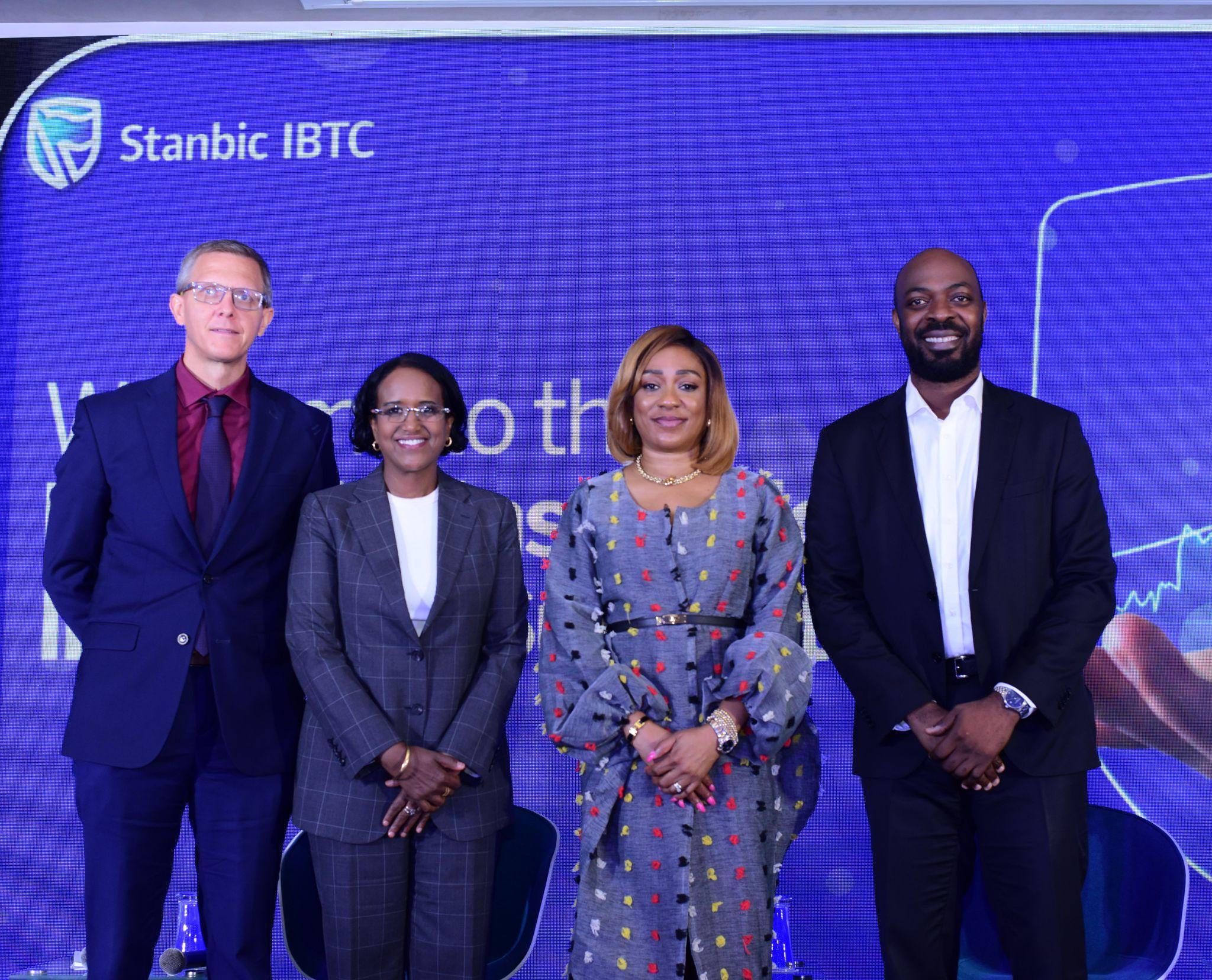
In Nigeria’s long effort to reform its oil and gas sector, the government has increasingly drawn on expertise from the private sector. The appointment of Seyi Bella, a partner at the commercial law firm Banwo & Ighodalo, to the Presidential Petroleum Reform & Value Optimisation Taskforce reflects that approach.
The taskforce was recently constituted by Bola Ahmed Tinubu, whose administration has sought to stabilise Nigeria’s energy sector and extract greater value from the country’s petroleum resources. Banwo & Ighodalo announced Bella’s appointment in a statement, congratulating its partner and expressing confidence in her ability to contribute to the national assignment.
“We are proud of this well-deserved appointment and extend our warm congratulations and best wishes in her discharge of this important national assignment,” the firm said. The role places Bella among a small group of professionals expected to advise the government on improving governance, efficiency and investment outcomes in the petroleum sector, which remains the backbone of Nigeria’s public finances.
A Career in Corporate and Finance Law
Bella is part of a generation of Nigerian commercial lawyers whose work has unfolded alongside the country’s expanding capital markets and increasingly complex energy sector transactions. She studied law at the University of Lagos, earning a Bachelor of Laws degree before proceeding to the Nigerian Law School, where she qualified as a barrister and solicitor of the Supreme Court of Nigeria.
Seeking further international training, she later obtained a Master of Laws degree from Harvard Law School, one of the world’s leading centres for legal scholarship. She is also admitted to practice law in the State of New York, an increasingly common credential among Nigerian lawyers engaged in cross-border financial work.
Over the course of her career, Bella has built a practice focused on banking and finance, project finance, mergers and acquisitions, and private equity transactions.
Her clients have included financial institutions, multinational companies and technology firms navigating Nigeria’s regulatory environment. In recent years she has also advised companies in the fintech sector, a fast-growing industry reshaping the country’s financial services landscape. Within Banwo & Ighodalo she rose through the ranks before becoming a partner, a milestone that placed her among the senior lawyers guiding the firm’s advisory work on complex corporate transactions.
Beyond legal practice, Bella has also been involved in civic and entrepreneurial initiatives. She serves as a director of FATE Foundation, an organisation that supports business founders and promotes entrepreneurship in Nigeria.
Banwo & Ighodalo and Nigeria’s Corporate Legal Landscape
Founded in 1991 by Asue Ighodalo and Femi Olubanwo, Banwo & Ighodalo has grown into one of Nigeria’s most influential commercial law firms.
The firm built its reputation advising on corporate finance transactions at a time when Nigeria’s private sector was becoming increasingly sophisticated and integrated into global markets.
Today, its lawyers work across a wide range of sectors including energy, banking and finance, capital markets, infrastructure, telecommunications and technology.
Banwo & Ighodalo frequently represents multinational corporations investing in Nigeria as well as major Nigerian companies seeking financing or pursuing mergers and acquisitions.
International legal directories such as Chambers and Partners, Legal 500 and IFLR1000 consistently rank the firm among the top tier of Nigerian commercial practices.
Its lawyers have played roles in many of the country’s landmark transactions, including major project finance deals, capital markets issuances and energy sector investments.
Reforming Nigeria’s Petroleum Sector
The creation of the Presidential Petroleum Reform & Value Optimisation Taskforce comes at a moment when Nigeria is attempting to reshape its energy sector after decades of inefficiencies.
Despite possessing Africa’s largest proven oil reserves, Nigeria has struggled with declining production, regulatory uncertainty and underinvestment in upstream assets.
The Petroleum Industry Act, passed in 2021 after nearly two decades of debate, was designed to overhaul the sector’s regulatory framework and improve transparency and investor confidence.

But implementing those reforms — and ensuring the country derives greater economic value from its oil resources — remains a complex challenge. The government’s decision to include private-sector professionals such as Bella in the taskforce reflects a broader recognition that the reforms will require not only regulatory changes but also practical insight into how capital markets, corporate transactions and international investment flows operate.
For lawyers and financiers who work at the intersection of law, policy and investment, the assignment represents an opportunity to shape the future structure of Nigeria’s most important industry.