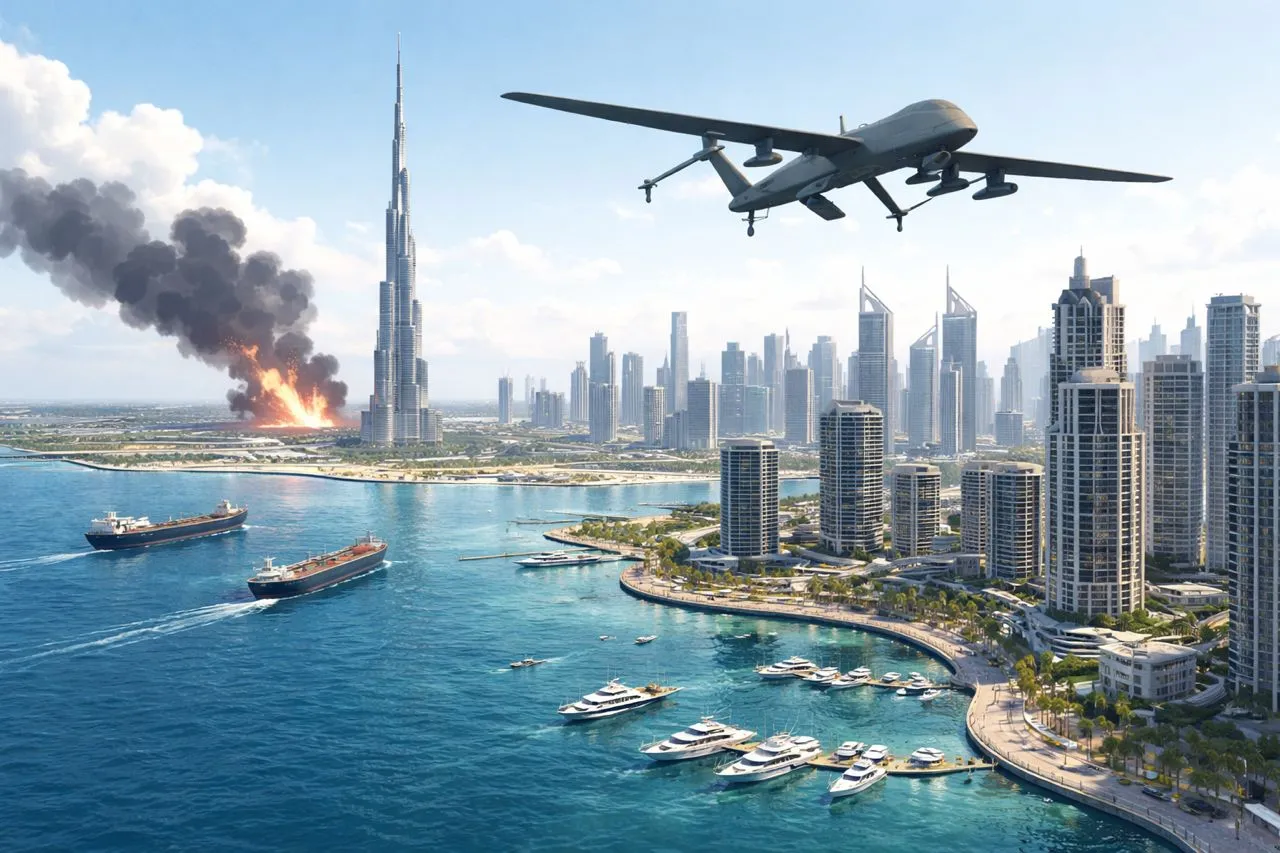
Dubai-bound commercial flights were forced to turn back after a drone attack sparked a fire near the emirate’s airport, underscoring the widening regional impact of the escalating Middle East conflict and raising fresh concerns about global oil supply routes.
The aviation disruption comes as the United States says it is working with international partners to reopen the Strait of Hormuz, one of the world’s most critical maritime corridors for energy shipments.
President Donald Trump warned that NATO allies could face a “very bad” future if they fail to assist Washington in securing the strait, signalling growing pressure on Western governments to support a coalition aimed at restoring safe passage for tankers.
The United States is reportedly discussing the formation of a multinational effort to force open the strait, although the president declined to specify which countries might participate.
Aviation Disruptions Highlight Regional Risks
Airlines began diverting flights after the drone incident triggered a fire near Dubai’s airport infrastructure, prompting heightened security alerts across Gulf aviation corridors.
Dubai International Airport is one of the world’s busiest hubs for long-haul travel, serving as a major transit point between Europe, Asia and Africa. Any sustained disruption to its operations could have ripple effects across global passenger and cargo networks.
The episode reflects how quickly geopolitical tensions in the Middle East can spill over into critical civilian infrastructure, including aviation routes and shipping lanes.
Strait of Hormuz: A Critical Energy Chokepoint
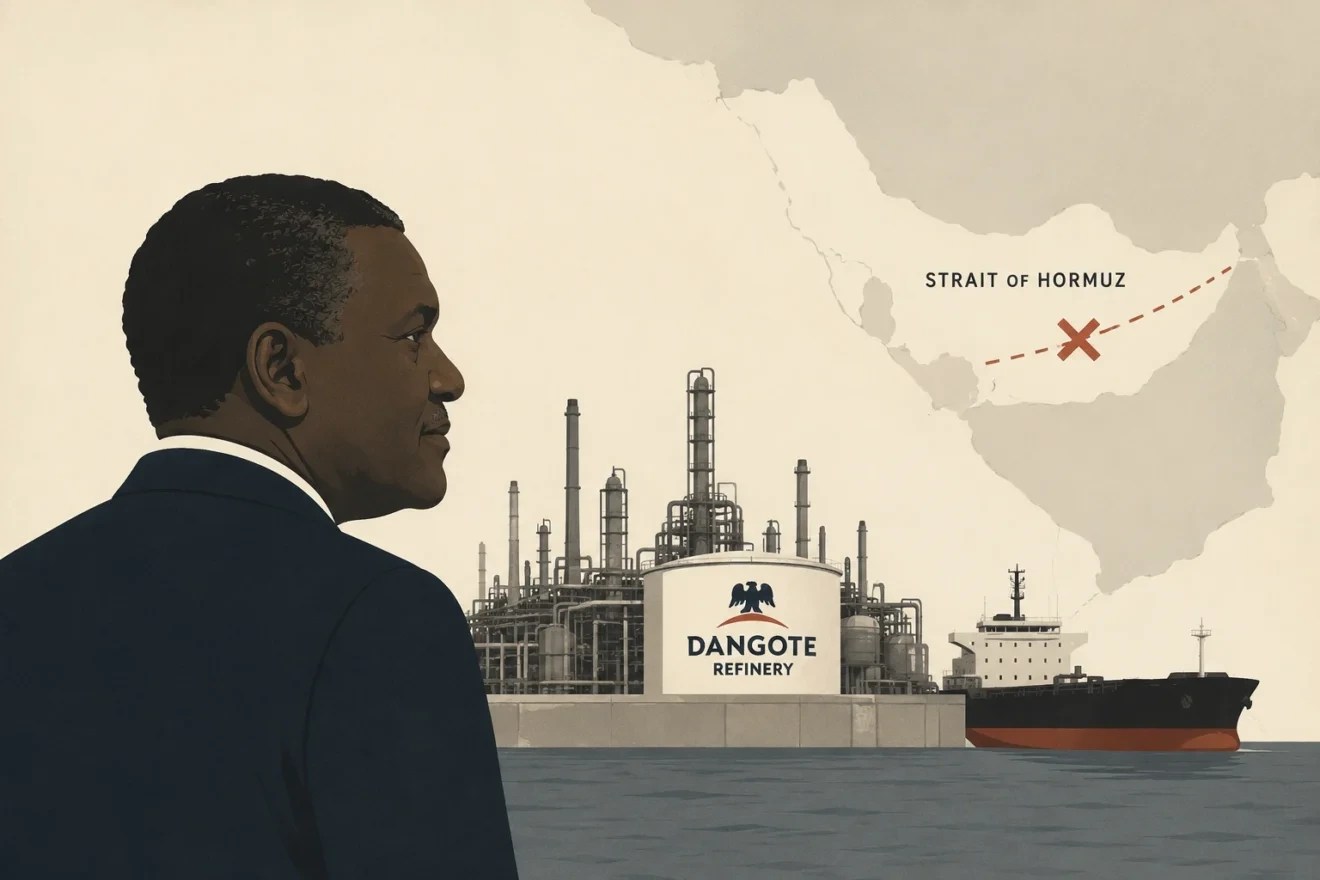
At the centre of the crisis lies the Strait of Hormuz, a narrow waterway linking the Persian Gulf with the Arabian Sea.
The corridor carries roughly 20 percent of global oil consumption, according to data from the U.S. Energy Information Administration. Tankers transporting crude from Saudi Arabia, Iraq, the United Arab Emirates, Kuwait and Iran must pass through the strait to reach international markets.
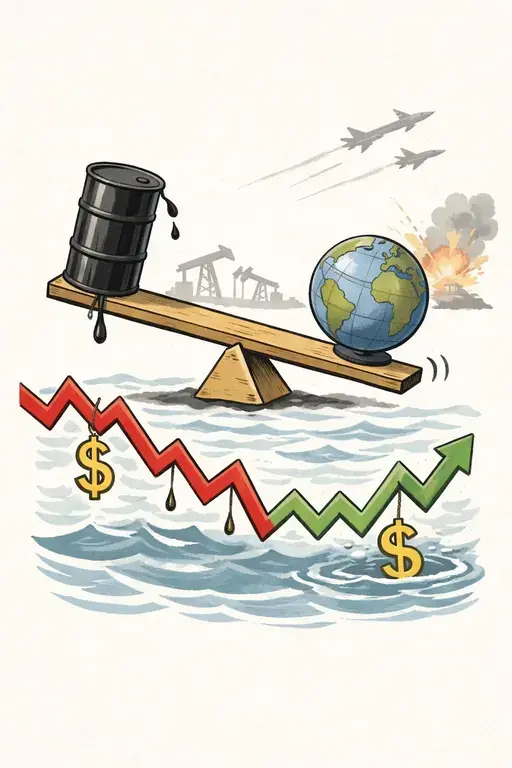
Because so much of the world’s oil flows through this single passage, even the threat of disruption can send prices sharply higher.
Previous confrontations involving tanker seizures or naval incidents in the region have triggered spikes in global oil markets, reflecting the vulnerability of energy supply chains to geopolitical shocks.
Global Reactions Remain Cautious
Despite Washington’s push for international support, several major economies have so far signalled reluctance to become directly involved.
Japan’s Prime Minister Sanae Takaichi told parliament that Tokyo had no plans to deploy naval vessels to escort shipping through the strait, reflecting the country’s cautious approach to military involvement abroad.
China also avoided endorsing U.S. proposals for a coalition, instead urging de-escalation and diplomatic dialogue to prevent further destabilisation of global trade routes.
Meanwhile, the Israel Defense Forces said they had expanded ground operations in southern Lebanon against Hezbollah, raising concerns that the conflict could broaden into a wider regional confrontation.
Oil Markets on Edge
Energy traders are closely monitoring developments around the Strait of Hormuz.
The global oil market remains sensitive to any threat to tanker traffic in the Gulf, and analysts say a prolonged disruption could lead to sharp price volatility.
Insurance costs for vessels transiting the region typically rise during periods of tension, increasing shipping costs and adding pressure to already fragile energy supply chains.
Implications for Nigeria
For Nigeria, rising oil prices often bring a mix of opportunity and risk.
The federal government’s 2026 budget benchmark assumes crude oil prices of about $75 per barrel, meaning higher global prices could boost government revenues if Nigeria maintains stable production levels.
However, the benefits depend heavily on output. Nigeria has frequently struggled to meet its production targets due to pipeline sabotage, oil theft and operational challenges.
Even when prices surge, lower output can limit the fiscal gains.
Nigeria’s energy landscape is also changing. The Dangote Refinery, which recently began large-scale production of refined petroleum products, is expected to reduce the country’s reliance on imported fuel.
Yet domestic fuel prices remain influenced by international crude markets. A sustained spike in global oil prices could therefore increase pump prices even as it raises Nigeria’s export earnings.
A Crisis With Global Economic Consequences
The latest incident near Dubai highlights how quickly conflicts in the Middle East can reverberate across global transport and energy systems.

With aviation routes under pressure and one of the world’s most important oil shipping lanes under threat, markets and governments are closely watching whether diplomacy can prevent further escalation.
If tensions continue to rise around the Strait of Hormuz, the consequences will be felt far beyond the Gulf — in oil markets, airline networks and the broader global economy.