The full enforcement of the cashless payment policy by the Federal Airports Authority of Nigeria (FAAN) began on March 1, and the first day delivered a blunt operational lesson: airport access is now digital, and those who failed to prepare paid the price in delays and missed departures.
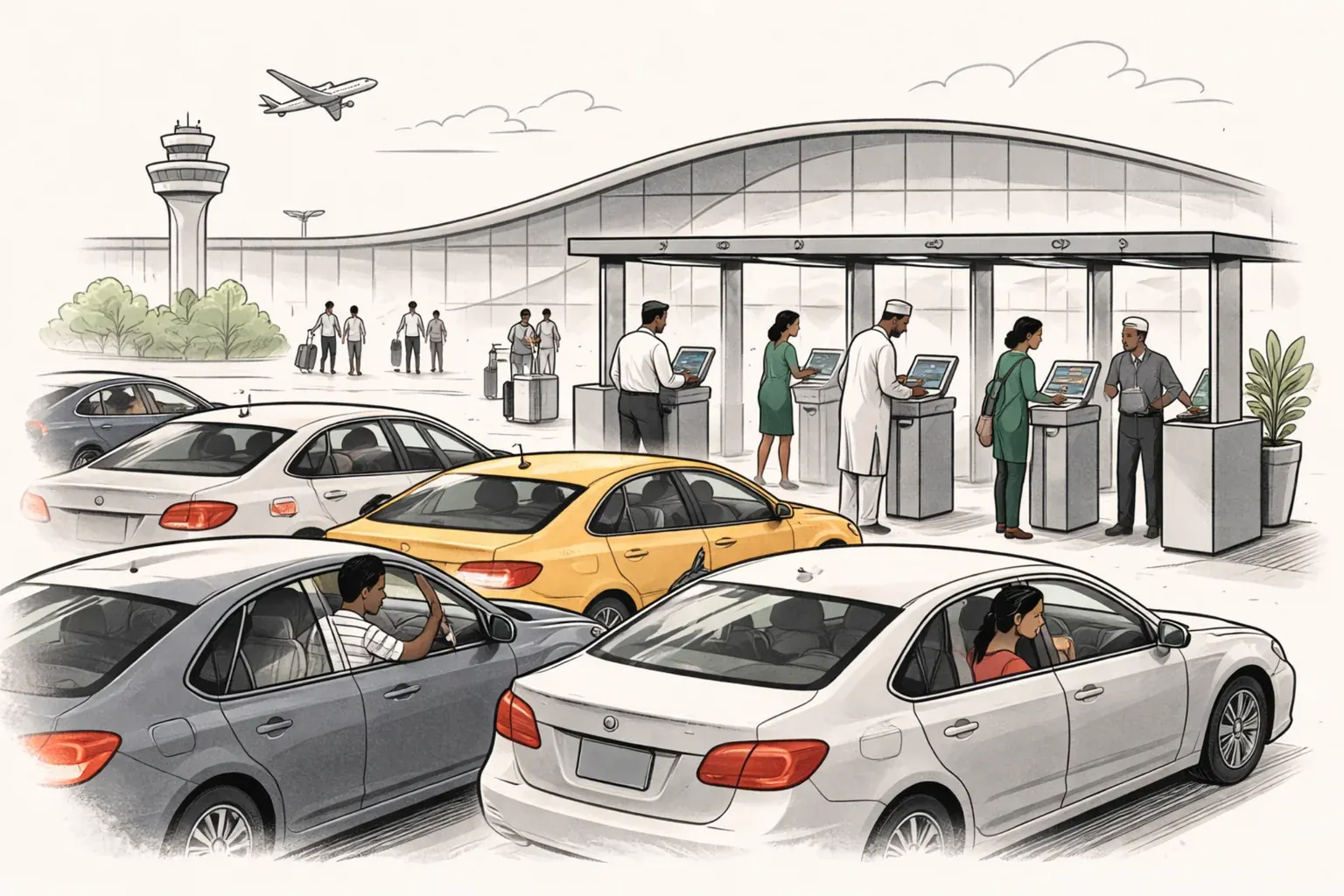
At both Murtala Muhammed International Airport (MMIA) and Nnamdi Azikiwe International Airport (NAIA), long vehicle queues built up at access gates as motorists attempted to register for FAAN’s GoCashless cards on arrival — despite months of prior notice urging early registration.
The disruption did not stem from a collapse of the payment infrastructure, FAAN officials said. It stemmed from behaviour.
“We tried to publicise this as much as possible, but a lot of people waited till the last minute before getting their cards. The implementation of the cashless programme started today,” FAAN spokesperson Henry Agbebire said.
What Changed on March 1
From March 1, FAAN formally prohibited cash payments at all its revenue points nationwide. The scope is broader than many motorists assumed.
The policy covers:
-
Airport access gates
-
Car parks
-
Executive and VIP lounges
-
Protocol services
-
Other FAAN-controlled collection points
This is not a parking reform. It is a full access payment transition.
The initiative aligns with the broader digitisation agenda championed by the Central Bank of Nigeria (CBN) and the Federal Government’s drive to reduce cash handling, improve transparency and block revenue leakages across public institutions.
Piloted in late 2025 in Lagos and Abuja, the system had until now operated with limited enforcement. Sunday marked its first strict activation.
What Happened at the Gates
Instead of arriving with pre-registered and funded GoCashless cards, a significant number of motorists attempted registration at airport toll lanes.
The consequences were immediate:
-
Vehicles backed up for kilometres
-
Slow transaction processing at entry points
-
Confusion among first-time users
-
Some passengers abandoning vehicles to catch flights
Airports are unforgiving environments. Time lost at the gate can cascade into missed boarding calls, rescheduled flights and financial losses.
Several passengers described the experience as avoidable. One frequent flyer in Lagos said he had to park his vehicle outside the main access point and walk in order to make his departure. Others reported spending more than an hour attempting to complete registration or process payments.
Although alternative digital payment channels were technically available, execution friction compounded delays.
New Policy vs. Passenger Readiness
From a governance perspective, FAAN’s policy is rational.
Cash-heavy systems at public access points have historically been vulnerable to inefficiencies, leakages and reconciliation gaps. Digitisation promises:
-
Real-time transaction logging
-
Clear audit trails
-
Reduced human discretion in collections
-
Improved revenue assurance
In a revenue-constrained fiscal environment, such reforms are strategic.
However, policy logic does not automatically guarantee smooth implementation.
Large-scale transitions require four elements to align simultaneously:
-
Public awareness
-
Early behavioural adoption
-
Infrastructure resilience under peak load
-
On-site operational coordination
Sunday’s disruption revealed that while awareness existed, compliance lagged.
The gap between announcement and behavioural adjustment remains one of Nigeria’s most persistent reform challenges.
FAAN’s enforcement has effectively shifted the burden of preparedness to airport users.
Motorists are now expected to:
-
Register for GoCashless cards before travel
-
Fund cards ahead of arrival
-
Avoid peak-hour on-site registration
-
Arrive earlier during the adjustment period
The policy is not provisional. It is now operational reality.
For frequent travellers, corporate drivers, ride-hailing operators and airport service providers, early compliance is becoming a necessity rather than a convenience.
What Happens Next
FAAN says it has deployed additional personnel to assist with on-site digital registration and increased card-issuance desks at access points to ease congestion. Officials expect traffic to stabilise as more users complete registration and familiarity improves. Initial friction is common in digital transitions. Whether this episode becomes a one-day shock or a recurring operational challenge will depend on:
-
System reliability under sustained demand
-
Public compliance rates
-
Speed of troubleshooting at access gates
If adoption accelerates, the reform could ultimately deliver the efficiency gains FAAN envisions.
If behavioural resistance persists, airport access may continue to experience periodic bottlenecks.

Beyond the Airport Gates
The cashless airport transition forms part of a wider public-sector digitisation wave in Nigeria — from customs and immigration processes to port collections and tax administration.
The objective is clear: increase transparency and strengthen revenue capture without raising statutory charges. Sunday’s gridlock therefore represents more than a traffic story. It is an early stress test of Nigeria’s capacity to execute institutional reform in time-sensitive environments. The reform has begun. The adjustment period is underway. For now, the message to airport users is unmistakable: register before you travel.