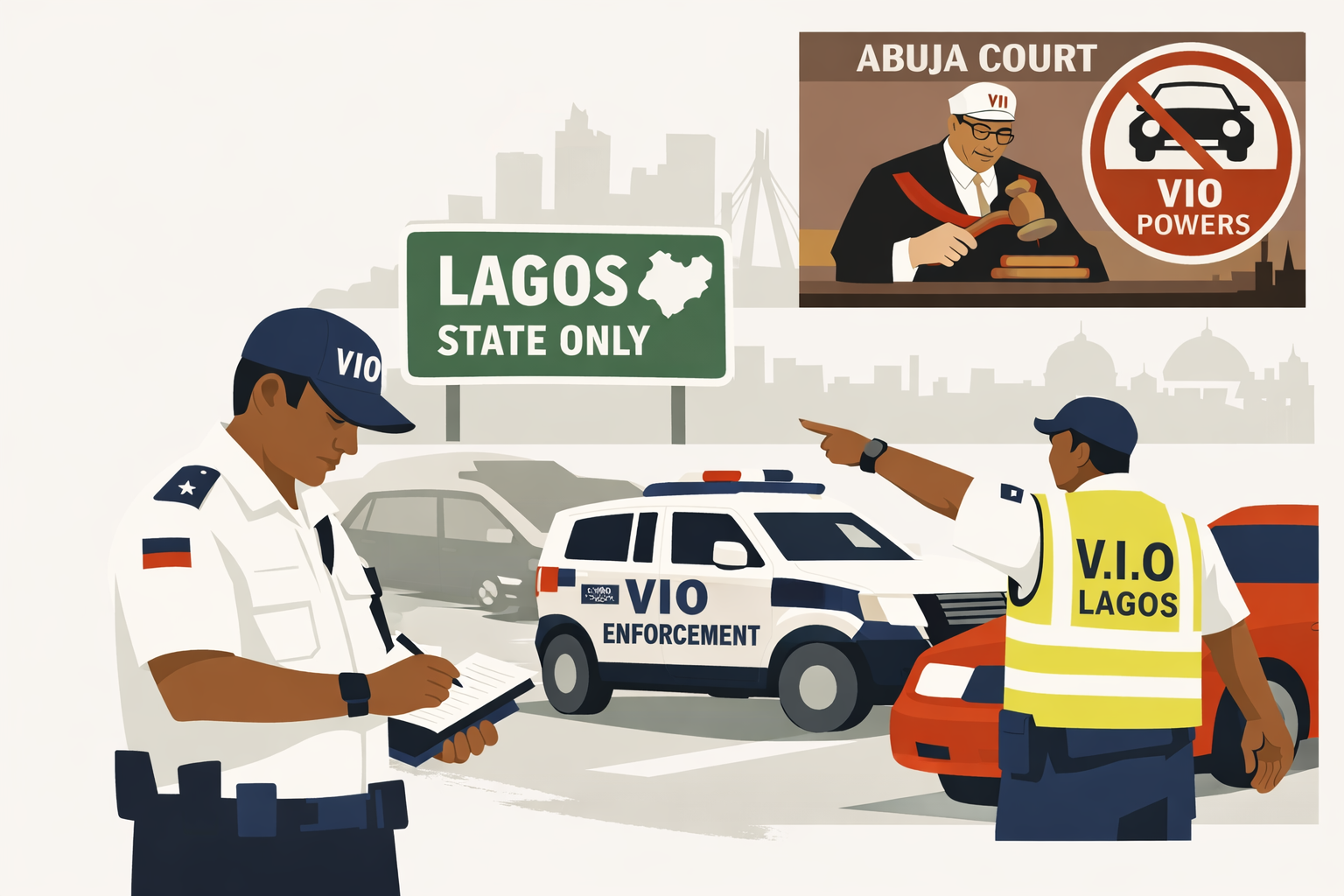
The Lagos State Government has clarified that a recent court ruling in Abuja restraining Vehicle Inspection Officers from impounding vehicles or fining motorists does not extend to Lagos.
The clarification was issued in a statement by Lawal Pedro, who explained that the judgment referenced in public reports applies strictly to the Federal Capital Territory and does not invalidate enforcement powers exercised within Lagos.
According to the statement, the decision affirmed by the Court of Appeal upheld an earlier ruling of the Federal High Court that officials in the FCT lacked statutory authority to stop, impound, or confiscate vehicles or impose fines. However, the ministry stressed that the ruling binds only parties to the suit and jurisdictions without enabling laws.
Lagos State Peculiarity
Officials emphasised that Lagos operates under its own legal framework, which expressly empowers the Vehicle Inspection Service to inspect vehicles, issue roadworthiness certificates, and enforce compliance. They noted that vehicle inspection and traffic regulation fall within residual legislative matters reserved for states under Nigeria’s federal system.
The Abuja case originated from a suit filed by Abubakar Marshal, who challenged enforcement practices. Delivering judgment, Evelyn Maha held that the respondents lacked statutory authority and granted a perpetual injunction restraining such actions within the FCT.
Lagos authorities said the clarification became necessary following widespread public misunderstanding of the ruling’s scope, reiterating that enforcement activities in the state remain lawful and constitutionally grounded.

Beyond the legal position, the state has intensified technology-driven traffic enforcement, including speed cameras and digital monitoring systems installed across major corridors such as those in Ikeja. Officials also confirmed collaboration with Huawei Technologies to expand intelligent transport infrastructure.
The government added that motorists retain the right to challenge any citation in court but warned that obstruction or assault of enforcement officers will attract prosecution.