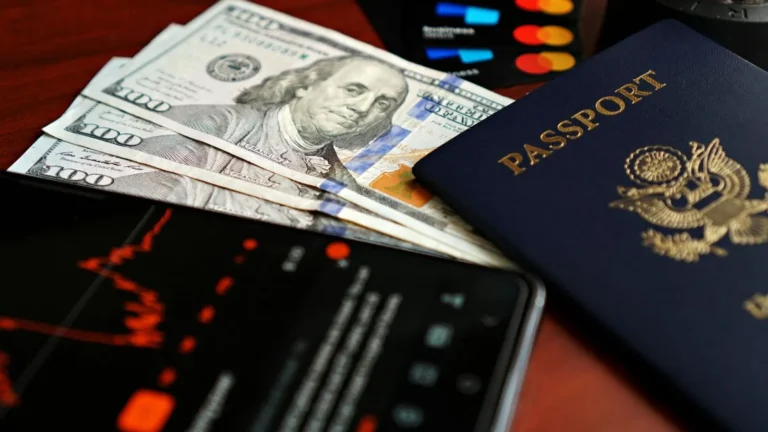
The United States wants to attract 100 million international visitors a year by 2030. But one of the administration’s toughest visa policies is emerging as a potential obstacle to that ambition, particularly for travellers from Africa.
President Donald Trump met travel-industry executives at the White House on September 2 as the administration sought to reverse a decline in international tourism following the temporary boost from the 2026 FIFA World Cup.
The meeting brought together executives from airlines, hotels, cruise companies, casinos and travel platforms, including American Airlines, Marriott, Hilton, IHG Hotels & Resorts, Booking.com, Carnival and MGM Resorts.
The industry’s message was straightforward: the United States needs to make itself easier to visit if it wants to capture a larger share of global tourism.
The problem is that Washington is simultaneously making entry more expensive and, for some nationalities, more complicated.
The gap between 85 million and 100 million visitors
The industry’s proposed target is substantially higher than the US government’s existing tourism forecast.
The National Travel and Tourism Office expects the United States to receive about 70.5 million international visitors in 2026, rising to 85.2 million by 2030. That means the industry’s 100 million target would require roughly 15 million more visitors than the government’s current projection.
Geoff Freeman, president and chief executive of the U.S. Travel Association, said reaching 100 million visitors could generate an additional $81 billion in spending and support more than 400,000 US jobs.
The target would also put the United States in direct competition with France for the position of the world’s most visited country, according to Freeman.
The association said the World Cup, the country’s 250th-anniversary celebrations and a strong summer travel season demonstrated the scale of demand that major international events can generate.
But the underlying trend is less encouraging.
The Commerce Department’s forecast assumes continued growth after 2026, while international arrivals from overseas markets excluding Canada and Mexico were still declining during the first seven months of this year, according to figures cited in reporting around the White House meeting.
That leaves Washington trying to turn an event-driven increase in travel into a sustained recovery.
The visa policy that tourism executives want Washington to reconsider
The most direct conflict is the US visa-bond programme.
The State Department currently lists 50 countries whose nationals can be required to post a bond when applying for B-1 or B-2 visitor visas.
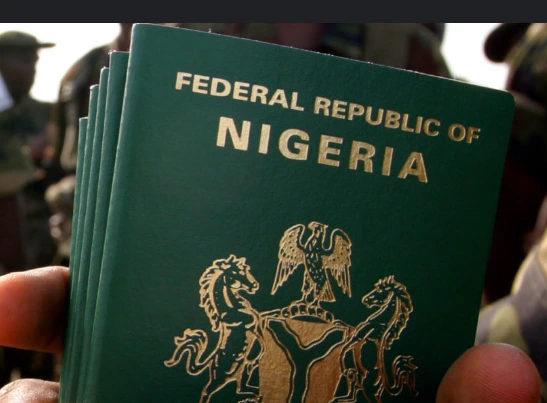
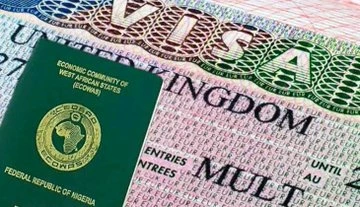
Nigeria is on that list, alongside countries including Algeria, Ethiopia, Senegal, Tanzania, Tunisia, Uganda and Zambia.
Under the programme, an applicant who is otherwise eligible for a visitor visa can be required to post a financial bond before the visa is issued.
The State Department’s current guidance lists bonds of $5,000, $10,000 or $15,000, while the final rule that made the programme permanent provides for amounts of $10,000, $15,000 or $20,000.
The bond is not simply another visa fee. It is designed as a financial guarantee tied to compliance with the terms of the visitor’s stay. The government says the money can be posted by the applicant or by a third party and warns applicants to use the official US government payment system rather than outside websites.
For many prospective tourists, the distinction may matter less than the cash requirement itself.
A Nigerian planning a family holiday, a business trip or another short visit to the United States can therefore face a potential financial commitment running into thousands of dollars before travelling.
That creates a very different proposition from the one implied by Washington’s tourism campaign: encouraging more international visitors to choose America.
The programme has already changed demand
The administration argues that visa bonds serve an enforcement purpose, particularly by discouraging applicants considered more likely to overstay.
The data in the government’s own rulemaking documents, however, show that the programme has also reduced demand.
During the first 10 months of the pilot, roughly 20,000 visa applications were subject to the bond requirement and nearly half of those applicants did not ultimately post the bond. Visa issuances to nationals of countries covered by the programme fell sharply during the period.
The U.S. Travel Association has gone further, saying arrivals from the affected countries have fallen by about 80%. Freeman argued after the White House meeting that the United States cannot reach 100 million visitors while maintaining a policy that discourages travellers from those markets.
That argument exposes the central contradiction in the administration’s tourism strategy.
Washington is trying to maximise the number of people entering the country while using financial and immigration controls to reduce the number of people it considers risky.
Both objectives can coexist in principle. But they do not affect all travellers equally.
Africa sits disproportionately inside the visa-bond system
The policy has particular implications for Africa because a large share of the countries covered by the bond programme are African.
Nigeria, Africa’s most populous country and one of the continent’s largest sources of international travellers, has been subject to the bond requirement since January 21, 2026.
For Nigerians, the bond is also only one part of a more restrictive US visa environment.
The State Department announced in 2026 that routine visa services in Abuja would be realigned to a regional hub, alongside changes affecting several other African locations. The department explicitly said that visa-bond requirements and other visa restrictions remained in force.
Separately, Nigeria was included among countries affected by the Trump administration’s January 2026 restrictions on certain visa categories. The United States partially suspended issuance of B-1/B-2 visitor visas, as well as certain student and exchange visas, to Nigerian nationals under Presidential Proclamation 10998, subject to specified exceptions.
That combination matters for tourism because international travel is highly sensitive to friction.
A traveller does not assess a destination only by the price of an airline ticket. They also consider whether a visa can be obtained, how long the appointment takes, how much money must be committed, the probability of approval and how predictable the process appears.
Every additional barrier narrows the pool of people willing or able to travel.
Washington is trying to remove friction elsewhere
The administration is not ignoring the problem.
Trump told travel executives that visa wait times had fallen by 40%, while the White House has also promoted changes intended to make airport connections and security processing easier.
One example is the Transportation Security Administration’s One Stop Security programme, which allows eligible passengers arriving from participating foreign airports to connect to domestic flights without undergoing another security screening.
The government is also investing billions of dollars in modernising the US air traffic control system.
These measures address genuine sources of travel friction. But they operate on a different side of the journey from the visa bond.
An easier connection at an American airport is of limited value to a traveller who decides not to board the plane because obtaining the visa is too costly or uncertain.
The World Cup showed what America can attract
The timing of the White House meeting reflects what the World Cup demonstrated.
The 2026 tournament brought unprecedented international attention to the United States, with matches staged across major American cities alongside venues in Canada and Mexico.
The event created precisely the kind of international exposure the travel industry wants to convert into repeat visits.
But major sporting events have a temporary effect. The harder task is persuading visitors to return when there is no World Cup match, Olympic ceremony or other once-in-a-generation event providing a reason to travel.
The next major test will come with the 2028 Los Angeles Olympics.
That gives the administration less than two years to convert event-driven demand into a broader tourism recovery.
The US is competing against countries with fewer barriers
The underlying competition is not only between Washington and its own visa bureaucracy.
Travellers have choices.
France, Spain, Italy, the United Kingdom, the United Arab Emirates and other major destinations compete for the same international tourists, business travellers and high-spending visitors.
The United States has enormous advantages: global cities, national parks, entertainment, universities, business centres and some of the world’s largest airports. But those advantages do not eliminate the effect of entry restrictions.
For a discretionary traveller choosing between several destinations, a requirement to demonstrate financial capacity through a large refundable bond can become a decisive consideration.
That is particularly relevant for emerging-market travellers, whose incomes may be high enough to afford international travel but nowhere near high enough to treat a $10,000 or $20,000 deposit as inconsequential.
The White House meeting did not change the visa rules
For now, there is no new visa concession.
The September 2 meeting produced a tourism target rather than an announced rollback of the visa-bond programme. The State Department’s list of covered countries remains in effect, and Nigeria remains among them.
That leaves the US travel industry with a difficult policy equation.
To reach 100 million international visitors by 2030, the United States would need to add roughly 30 million visitors to the 2025 level of 68.3 million — an increase of almost 47%. The government’s own forecast reaches only 85.2 million by 2030.
The difference cannot be closed simply by shorter visa queues or a successful summer of football.
It will require persuading millions of people who have alternatives that the United States is worth the cost, paperwork and uncertainty of entering.

For travellers from countries such as Nigeria, that calculation now includes a question that did not exist before the bond programme: how much money are they prepared to lock up simply to obtain permission to visit?
That is the tension Washington must resolve if its ambition of 100 million visitors is to become more than a tourism-industry target.