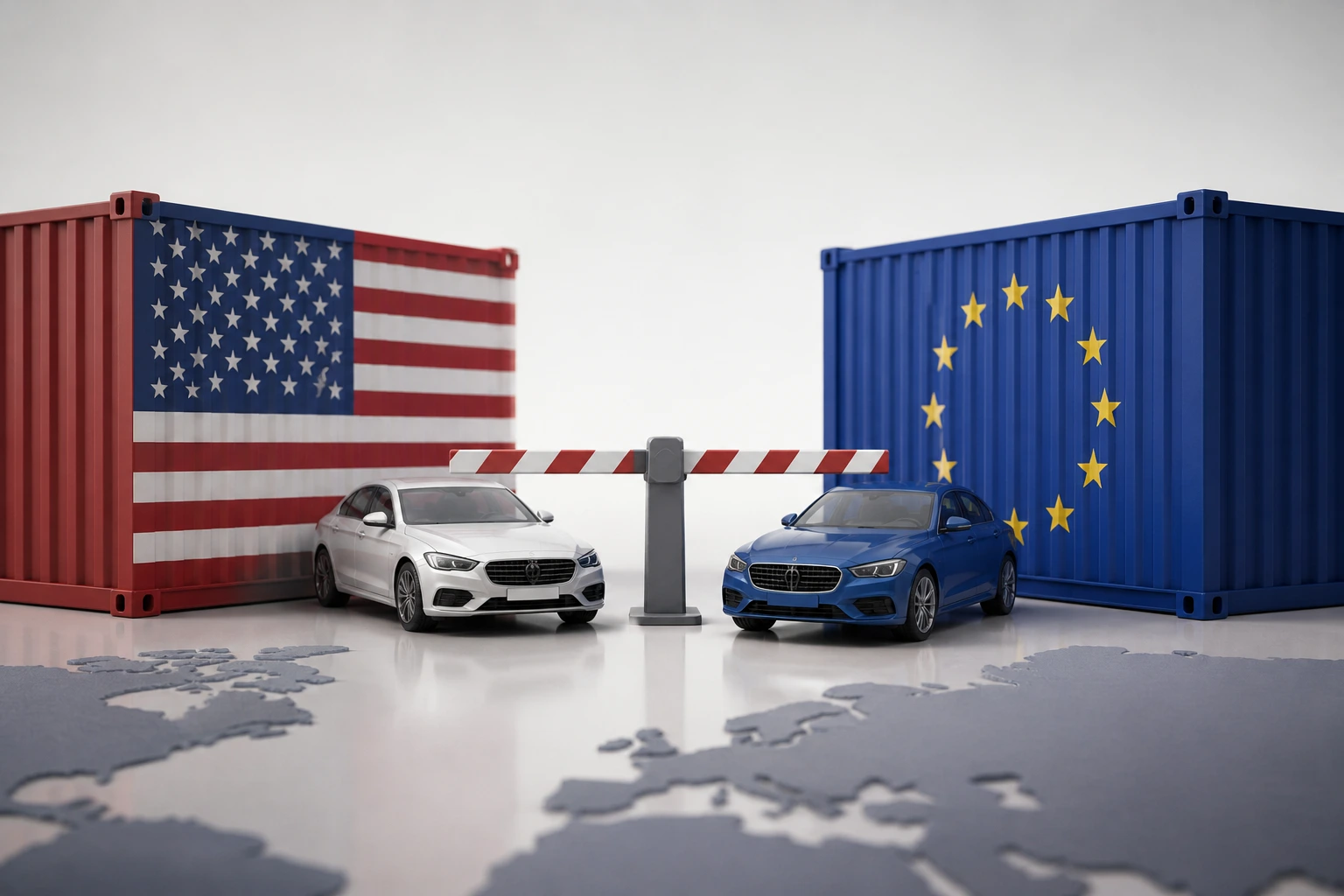
The United States is preparing to impose sweeping new tariffs on imported European vehicles, a move that could sharply escalate trade tensions with the European Union and reshape the global auto industry.
In a statement attributed to US President Donald Trump, the U.S. signaled plans to raise tariffs on cars and trucks from the EU to 25%, with implementation expected as early as next week.
Tariffs as Leverage
The proposed measure is framed as a response to what Washington describes as the EU’s failure to comply with an existing trade agreement.
The transatlantic automotive trade is one of the largest in the world, with European manufacturers exporting millions of vehicles annually to American consumers. A 25% tariff could:
Significantly increase vehicle prices in the U.S.
Disrupt established supply chains
Force automakers to accelerate relocation or expansion of U.S.-based factories

President Trump also highlighted ongoing investment trends, noting that over $100 billion is already being committed to new automobile and truck plants in the U.S., suggesting the tariff threat is reinforcing a shift toward localized production.
Trade experts warn the European Union is unlikely to leave such a move unanswered. Previous disputes ranging from steel tariffs to aircraft subsidies have triggered retaliatory tariffs on American goods, including agriculture and consumer products.