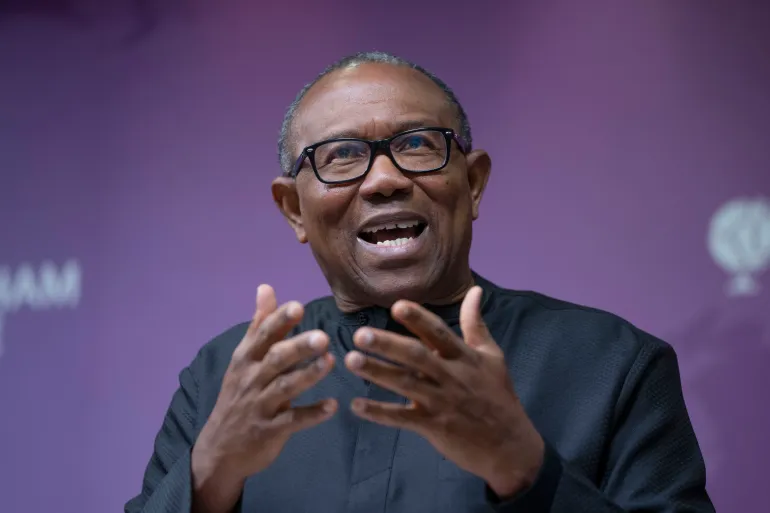
Former Labour Party presidential candidate Peter Obi has called for the implementation of Nigeria’s newly approved state policing framework to be postponed until after the 2027 general elections, warning that the initiative could be vulnerable to political abuse if introduced under the current circumstances.
Obi made the remarks in a statement reacting to the National Assembly’s passage of the State Police Bill, describing the development as an important milestone in Nigeria’s quest to reform its security architecture while expressing concern over the manner in which the legislation was processed.
Supports State Police as a Long-Standing Reform
According to Obi, decentralising policing has been a long-standing demand by Nigerians, security experts and regional stakeholders who believe the country’s centralized policing structure is ill-suited to Nigeria’s size, diversity and security challenges.
He said state policing represents a commendable step toward improving security but argued that the legislative and constitutional framework surrounding its implementation remains inadequate.
“The recent passage of the State Police Bill by the National Assembly marks a significant legislative milestone in addressing a long-standing demand of the Nigerian people,” Obi said.
Questions Legislative Process
The former Anambra State governor criticized what he described as the hurried passage of the bill, arguing that legislation on such a sensitive national issue should have involved broader public consultation.
He said policing reforms should be rooted in community participation, with stronger visibility at local government and grassroots levels.
Obi maintained that the absence of public hearings and what he described as a rushed legislative process had raised questions about the motives behind the legislation.
According to him, the process has generated suspicion among observers over possible political considerations.
Warns Against Political Manipulation
Obi said his greatest concern was not the logistics of establishing state police but the possibility that governors could use the new security structure for political purposes.
He warned that without sufficient institutional safeguards, state-controlled police forces could be deployed to intimidate political opponents, disrupt opposition activities and influence elections.
He stressed that public concerns over potential abuse are rooted in Nigeria’s political history and should not be ignored.
Calls for Independent Oversight
To prevent political interference, Obi urged lawmakers to strengthen the legal framework by creating independent state-level oversight institutions.
He proposed the establishment of autonomous State Police Service Commissions insulated from executive control, arguing that such bodies would help ensure police accountability and professionalism.
According to him, state policing should serve the public interest rather than the interests of those in political office.
Implementation Should Wait Until After 2027, Obi Says
Obi further argued that the current political climate provides insufficient assurances that state policing would not be exploited during the next general election.
He said concerns about possible political misuse by proxy make it necessary to postpone implementation until after the 2027 polls.

“In view of that possibility and the danger it poses to the polity, it is necessary to defer its implementation until after the general election,” he stated.
While acknowledging the potential benefits of state police in addressing Nigeria’s security challenges, Obi insisted that reforms must be accompanied by robust institutional safeguards capable of protecting democratic processes and public confidence.