The Federal Government of Nigeria has signed a $1 billion agreement with Indian steel manufacturer Rashmi Metaliks Group in a major push to revive domestic steel production and reduce dependence on imports.
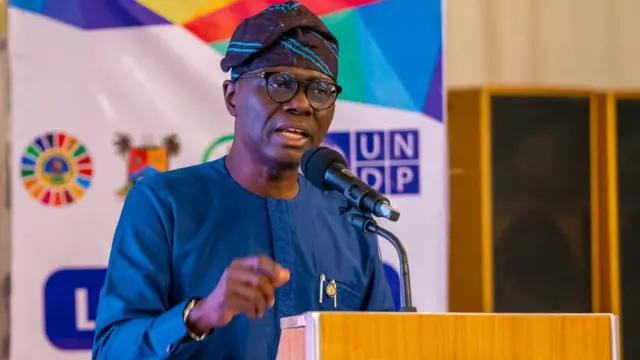
The deal, formalised through a Memorandum of Understanding (MoU), was signed by the Minister of Steel Development, Shuaibu Abubakar Audu, during an official visit to India. According to the Ministry, the agreement will span three years and target investments across steel production, processing, and supporting infrastructure.
Government officials say the partnership is central to efforts to reposition Nigeria’s steel industry as a key driver of industrialisation, job creation, and foreign direct investment. The minister highlighted the advanced, integrated production systems observed at Rashmi Metaliks’ facility in Kolkata as a model Nigeria aims to replicate.
Despite possessing over three billion tonnes of iron ore, much of it high-grade, Nigeria continues to rely heavily on imported steel, with annual demand estimated at around $10 billion. This structural imbalance has contributed to price volatility, with steel rod prices rising sharply in recent years due to exchange rate pressures and import dependence.
Nigeria’s Steel Production Revival
The agreement aligns with the economic agenda of President Bola Ahmed Tinubu, which prioritises industrial expansion and increased foreign investment. Officials expect the deal to deliver technology transfer, strengthen local capacity, and improve Nigeria’s competitiveness in the global steel market.
Complementary policy measures are also in motion. The government plans to implement the End-of-Life Vehicle (ELV) Policy and the Vehicle Conformity Assessment Programme (VehCAP) in 2026. These initiatives are designed to support local manufacturing by promoting recycling and enforcing stricter standards on imported vehicles and parts. Recycled scrap metal from decommissioned vehicles is expected to serve as a key input for domestic steel production.
However, longstanding challenges persist. Successive administrations have pledged to revive the Ajaokuta Steel Company, widely seen as critical to the sector’s revival, but tangible progress has remained limited. President Tinubu previously described the facility as a “monument to abandoned ambition,” underscoring the urgency of reform.
Industry analysts view the Rashmi Metaliks deal as a potentially pivotal step in reversing Nigeria’s reliance on imports and stabilising prices in sectors such as construction, automotive, telecommunications, and defence, all of which depend heavily on steel.