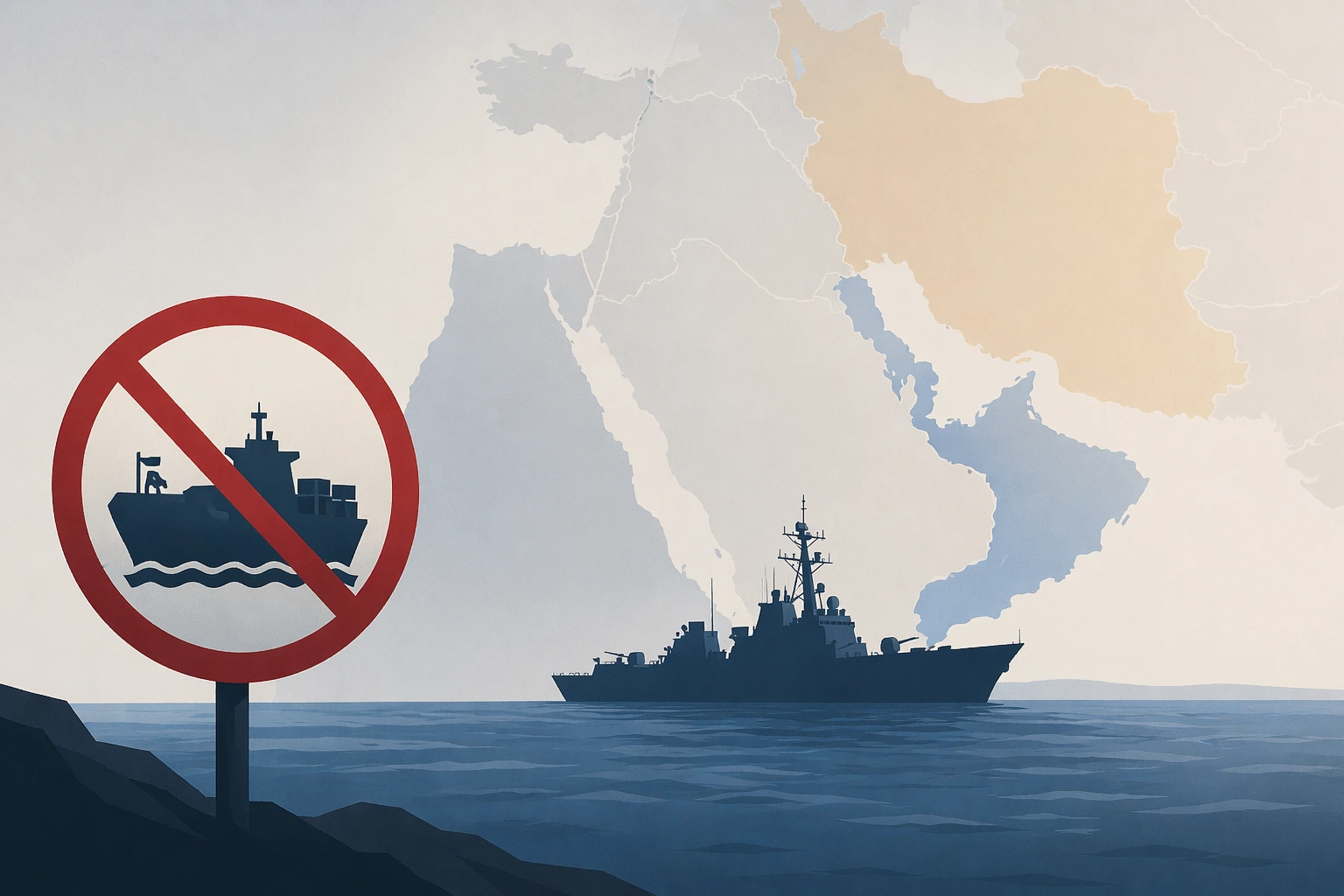
Iran has issued a stark warning that it could block major international shipping routes, including the Red Sea, if the United States maintains its naval blockade on Iranian ports—raising fears of a wider disruption to global trade and energy supplies.
The warning came from Ali Abdollahi, head of Iran’s military central command centre, who said Tehran would act decisively to counter what it described as economic aggression.
“The armed forces of the Islamic Republic will not allow any exports or imports to continue” through strategic waterways if the blockade persists, Abdollahi said in a statement aired on state television.
Key waterways at risk
Iran’s threat extends across some of the world’s most critical maritime corridors:
- Red Sea – a vital link between Europe and Asia via the Suez Canal
- Persian Gulf – a major hub for global oil exports
- Sea of Oman – connecting the Gulf to the open ocean
- Strait of Hormuz – through which roughly a fifth of the world’s oil supply passes
Any disruption in these regions could significantly impact global energy markets and international shipping.
US Naval Blockade
The United States imposed the naval blockade earlier this week following the collapse of high-level talks with Iran held in Pakistan. The negotiations, aimed at easing tensions tied to an ongoing conflict, ended without agreement.
Washington’s move is seen as an attempt to pressure Tehran economically by restricting its oil exports and commercial shipping activities.
In response, Iranian officials have framed the blockade as a violation of international norms and warned it could undermine an already fragile ceasefire environment.
Early indications suggest that the blockade has not completely halted Iranian maritime activity.
Shipping data and Iranian media reports indicate that: Several vessels have departed from southern Iranian ports in recent days, Some ships have successfully navigated through the Strait of Hormuz and commercial cargo continues to move toward international destinations
Iran’s Tasnim news agency quoted informed sources as saying that shipping operations have continued uninterrupted over the past 24 hours.
Global economic implications
Experts warn that any attempt by Iran to follow through on its threat could have immediate and severe consequences:

- Oil price surge: Disruptions in the Strait of Hormuz alone could trigger sharp spikes in global crude prices
- Supply chain shocks: The Red Sea route is essential for goods moving between Asia, Europe, and Africa
- Insurance and shipping costs: Risk premiums for vessels operating in the region could skyrocket
- Military escalation: Increased naval presence from global powers could heighten the risk of confrontation
For countries heavily dependent on imported fuel, including many in Africa, the ripple effects could include higher inflation and increased economic pressure.
The Red Sea remains one of the most critical shipping lanes globally, linking the Mediterranean Sea via the Suez Canal to the Indian Ocean. Any instability in this corridor could force vessels to reroute around the Cape of Good Hope, adding significant time and cost to global trade.