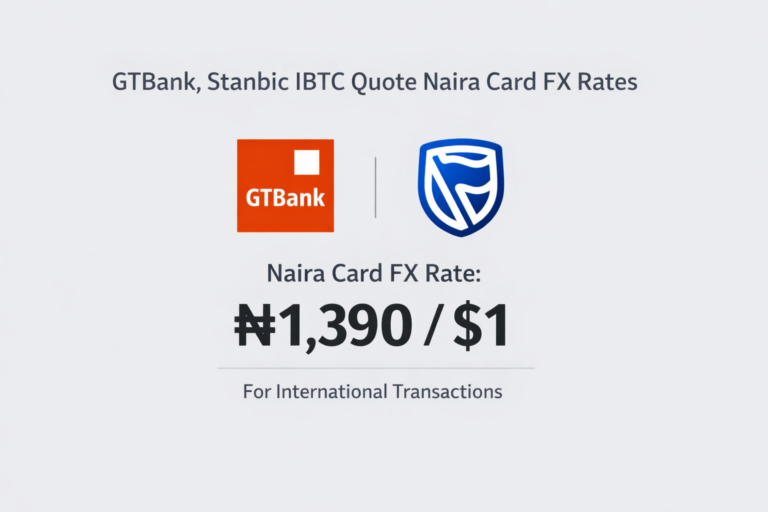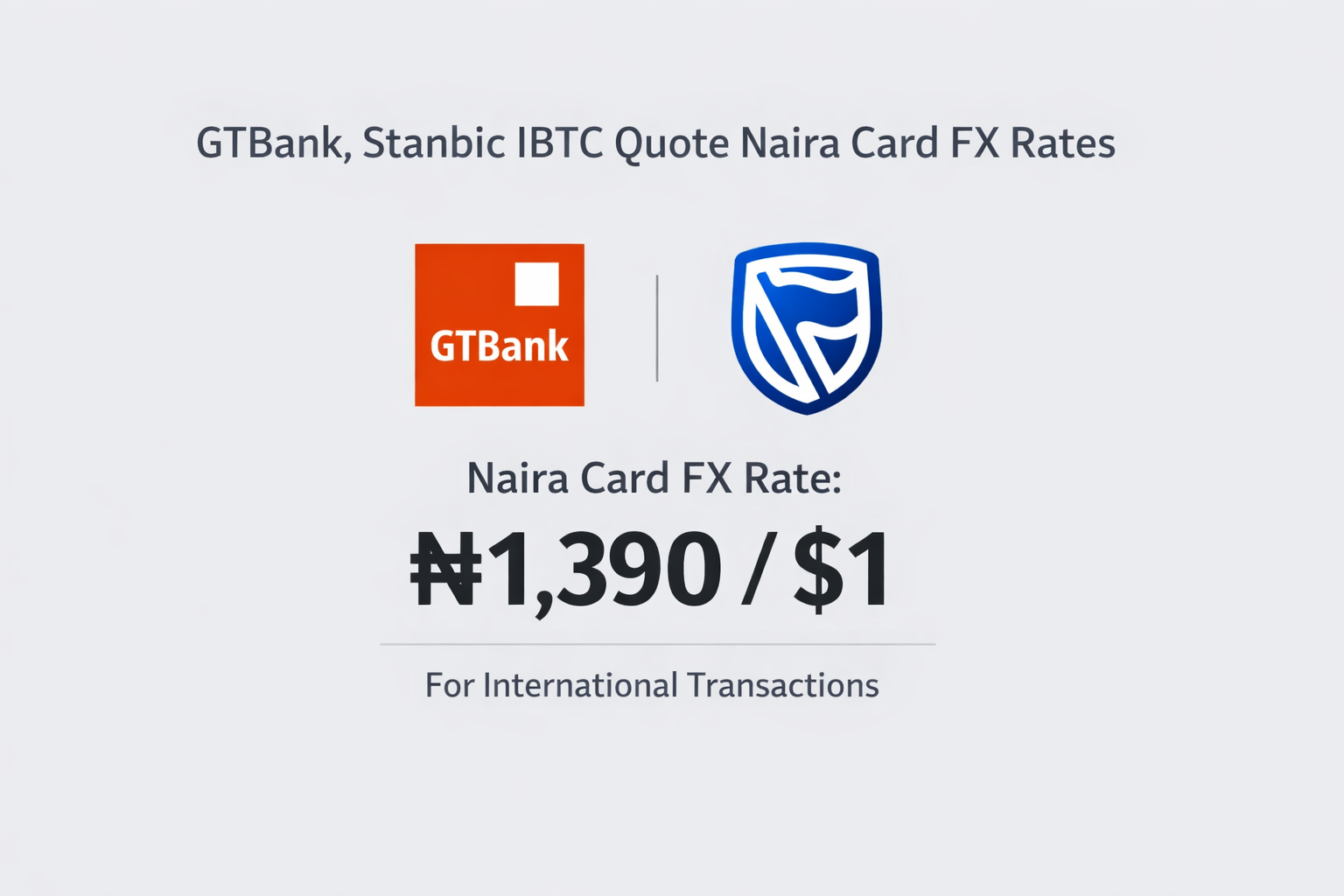
Two Nigerian banks — Guaranty Trust Bank (GTBank) and Stanbic IBTC Bank — have announced foreign exchange rates close to ₦1,390 per dollar for international transactions made with naira-denominated debit cards.
A notification sent to customers shows that GTBank fixed its FX rate for international payments at ₦1,385/$, while Stanbic IBTC quoted ₦1,395/$ for transactions conducted with naira cards.
The rates apply to purchases made on international platforms such as streaming services, software subscriptions, online retail platforms, and foreign travel bookings.
The announcements reflect the gradual restoration of cross-border card payments by Nigerian banks, which had been severely restricted for several years due to foreign exchange shortages.
Spending Limits Remain in Place
Alongside the FX rate announcement, the banks reiterated spending caps on naira cards.
GTBank: Quarterly international spending limit of $6,000
Stanbic IBTC: Quarterly international spending limit of $4,000
Banks noted that the quoted FX rate is subject to change depending on prevailing market conditions, meaning customers may see variations depending on when transactions are processed.
Why Nigerian Banks Previously Suspended International Card Payments
Between 2022 and early 2024, many Nigerian banks suspended or sharply restricted international transactions on naira cards.
The restrictions were triggered by:
Severe foreign exchange shortages
Limited dollar supply from the Central Bank of Nigeria (CBN)
Rising demand for foreign payments by Nigerian consumers
During that period, customers increasingly relied on:
Dollar-funded domiciliary cards
Virtual dollar cards from fintech platforms
Parallel market purchases of foreign currency
The situation disrupted payments for services such as Netflix, Apple subscriptions, airline bookings, and international education fees.
FX Market Reforms Begin to Ease Pressure
The re-introduction of international naira card payments coincides with reforms introduced by the Central Bank of Nigeria since 2023 aimed at stabilising the country’s foreign exchange market.
Key reforms include:
Unification of Nigeria’s multiple exchange rate windows
Greater reliance on market-driven FX pricing
Increased participation of banks in the Nigerian Autonomous Foreign Exchange Market (NAFEM)
These changes have improved dollar liquidity relative to the period when banks were forced to halt international card payments.
Card Rates Close to Official Market Levels
The rates quoted by banks for international transactions typically track the official interbank FX market, but often include a margin covering card network costs and settlement risks.
Recent trading in Nigeria’s official FX market has hovered in the ₦1,300–₦1,500 per dollar range, depending on supply and demand conditions.
The proximity of bank card rates to market levels suggests that banks are increasingly able to source dollars more reliably, though limits remain to prevent sudden spikes in demand.
Digital Payments Expanding Nigeria’s Financial System
The gradual return of international card payments also reflects the rapid growth of digital payments in Nigeria, where millions of consumers increasingly rely on online services and cross-border digital platforms.

As digital transactions grow, banks are under pressure to support international payments while maintaining compliance with foreign exchange regulations.
The restoration of these services is seen by analysts as an indication that Nigeria’s banking system is slowly regaining flexibility in handling cross-border consumer transactions.