The headline figures in Aradel Holdings Plc’s 2025 audited results have understandably attracted attention.
Profit after tax surged by 192% to ₦757.3 billion. Total assets expanded by 466% to ₦9.9 trillion. The acquisition of an additional 40% stake in ND Western Limited transformed the scale of the company and increased its effective interest in Renaissance Africa Energy Company to 53.3%. Yet buried within the results is another figure that may prove equally important over the long term.
Gas production rose by 59% during the year to an average of 51.4 million standard cubic feet per day (mmscf/d), while peak production reached a record 83.8 mmscf/d. The numbers suggest that while Aradel remains an oil producer, its future growth story may increasingly be centred on natural gas.
Following the Direction of Nigeria’s Energy Policy
For decades, Nigeria’s oil industry generated most of the country’s energy revenues while its vast gas resources remained underdeveloped. That is beginning to change.
Successive governments have increasingly positioned natural gas as the foundation of Nigeria’s industrialisation strategy. Gas is expected to play a critical role in power generation, manufacturing, fertiliser production, petrochemicals, compressed natural gas (CNG), liquefied petroleum gas (LPG), and export-oriented LNG projects.
Unlike crude oil, much of Nigeria’s gas demand is domestic and long-term in nature. Industrial users, power plants and manufacturing companies require reliable supplies over many years, creating opportunities for producers capable of building integrated gas businesses. Aradel appears to be positioning itself to benefit from that shift.
Gas Is Growing Far Faster Than Oil
The contrast between Aradel’s oil and gas production trends is striking. Crude oil production increased by just 3% in 2025 to 14,100 barrels per day.
Gas production, by comparison, rose by 59%. That divergence reflects a broader trend visible across Nigeria’s energy sector. Oil production growth is often constrained by infrastructure limitations, security concerns, regulatory requirements and the natural decline of mature fields.
Gas development, meanwhile, is increasingly supported by government policy, infrastructure investment and growing domestic demand. For Aradel, the stronger growth in gas production may provide a preview of where future volumes are likely to come from.
A Long-Term Bet That Is Beginning to Pay Off
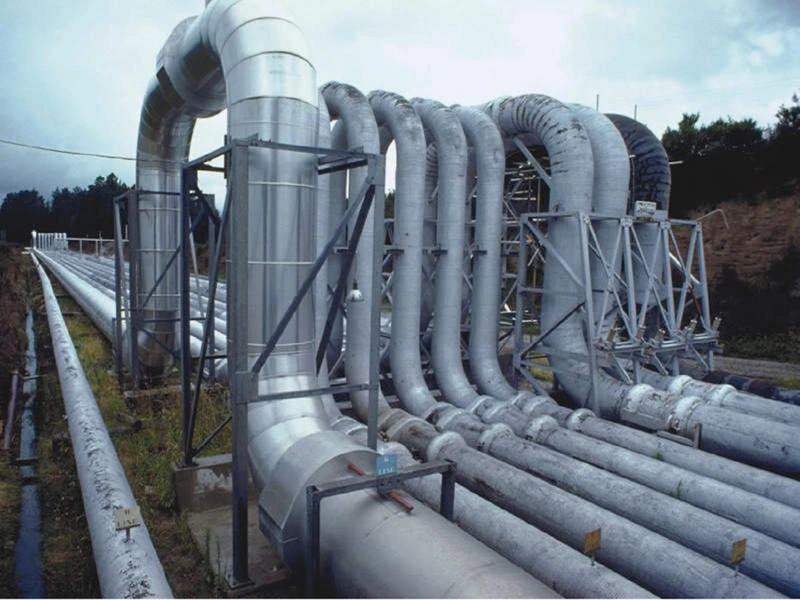
Unlike some indigenous producers that remained focused almost exclusively on crude oil, Aradel invested early in gas infrastructure. The company developed gas processing facilities at Ogbele and built an integrated model that combines upstream production, gas processing and refining.
Those investments required substantial capital and offered lower immediate returns than crude oil production. However, they also positioned Aradel to participate in the expansion of Nigeria’s domestic gas market. The 2025 results suggest that those investments are beginning to deliver meaningful scale.
Gas production reached an average of 51.4 mmscf/d during the year, while the company achieved a peak production rate of 83.8 mmscf/d. Those figures place Aradel among the more significant indigenous participants in Nigeria’s domestic gas value chain.
Renaissance Could Supercharge the Gas Opportunity
The strategic significance of Aradel’s increased exposure to Renaissance Africa Energy extends beyond oil production.
The former SPDC assets acquired by Renaissance contain substantial gas reserves, gas gathering systems, processing facilities and strategic infrastructure serving both domestic and export markets.
As Aradel integrates the enlarged portfolio, investors are likely to focus increasingly on the group’s gas reserves, gas processing capacity and ability to supply Nigeria’s growing domestic gas market.
The acquisition therefore strengthens not only Aradel’s oil position but also its ability to participate in what could become one of the most important growth segments of Nigeria’s energy industry.
Why Gas May Matter More Than Oil
Much of the market discussion around Aradel remains focused on crude oil production, reserves and acquisition-driven expansion. Yet gas offers several advantages. Gas demand is supported by domestic power generation and industrial activity. It aligns closely with government policy. It is increasingly attractive to investors seeking lower-emissions hydrocarbon opportunities. And unlike crude oil, it provides exposure to both domestic and export markets.
For Aradel, gas may also provide a more diversified and potentially more stable earnings stream over time.
The company’s 2025 results suggest that management is not simply building a larger oil company. It is building a broader energy platform.
From Oil Producer to Integrated Energy Company
Chief Executive Officer Adegbite Falade has consistently described Aradel as an integrated energy company rather than simply an upstream oil producer. The distinction matters. Oil producers are largely dependent on crude production volumes and international oil prices. Integrated energy companies generate value across multiple segments, including gas processing, refining, energy infrastructure and domestic energy supply. Aradel’s recent investments, operational performance and acquisition strategy all point in that direction.
The record profits reported in 2025 may have been driven largely by acquisitions and accounting gains. The company’s long-term growth trajectory, however, may increasingly depend on its ability to monetise gas resources across a rapidly evolving Nigerian energy market. As investors assess the enlarged Aradel, the most important question may no longer be how much oil it can produce. It may be how large a gas business it can build.