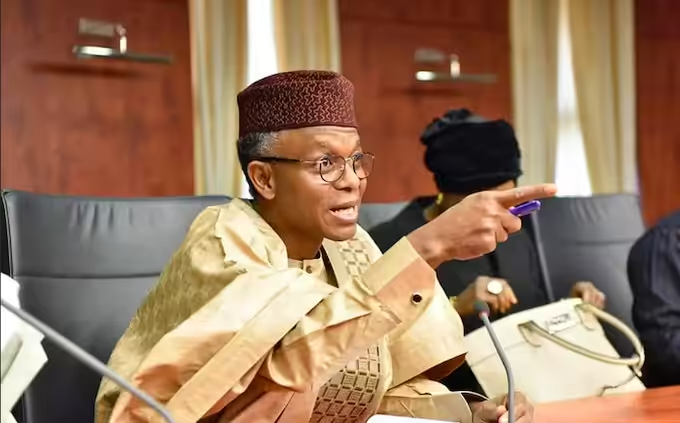
Former Kaduna State Governor, Nasir El-Rufai, has denied intercepting telephone conversations involving National Security Adviser (NSA) Nuhu Ribadu or directing anyone to monitor the security chief’s communications.
El-Rufai made the denial on Wednesday while testifying before the Federal High Court in Abuja in his ongoing phone-tapping case.
The former governor told the court that he neither possessed the equipment required to intercept telephone calls nor had the technical expertise to carry out such operations.
Led in evidence by his counsel, Paul Erokoro, a Senior Advocate of Nigeria (SAN), El-Rufai also denied having access to Ribadu’s communication devices or the NSA’s communication networks.
According to Channels Television, he maintained that his controversial comments during a February interview with Arise Television had been exaggerated and were not an admission that he monitored the NSA’s telephone conversations.
Explaining his choice of words, the former governor said his reference to “we” was directed at opposition politicians, while his use of the word “tapped” was intended as political rhetoric.
“I used ‘we’ to refer to opposition politicians. When I said ‘tapped’, it was an embellishment intended to make the government feel the pain we are feeling,” he told the court.
He added that his comments were rhetorical and exaggerated, describing them as an attempt to engage in political retort rather than disclose an actual phone interception operation.
Phone-tapping Controversy
The interview came a day after security operatives reportedly attempted to arrest the former governor at the Nnamdi Azikiwe International Airport in Abuja following his return from Cairo, Egypt.
Although the operatives reportedly seized his international passport, they did not take him into custody at the airport.
During the television interview, El-Rufai alleged that Ribadu had ordered the attempted arrest.

He claimed he knew about the directive because he and other individuals had listened to a telephone conversation in which the NSA allegedly instructed security operatives to arrest him.
The comments subsequently triggered controversy and raised questions about the alleged interception of the NSA’s telephone communications.