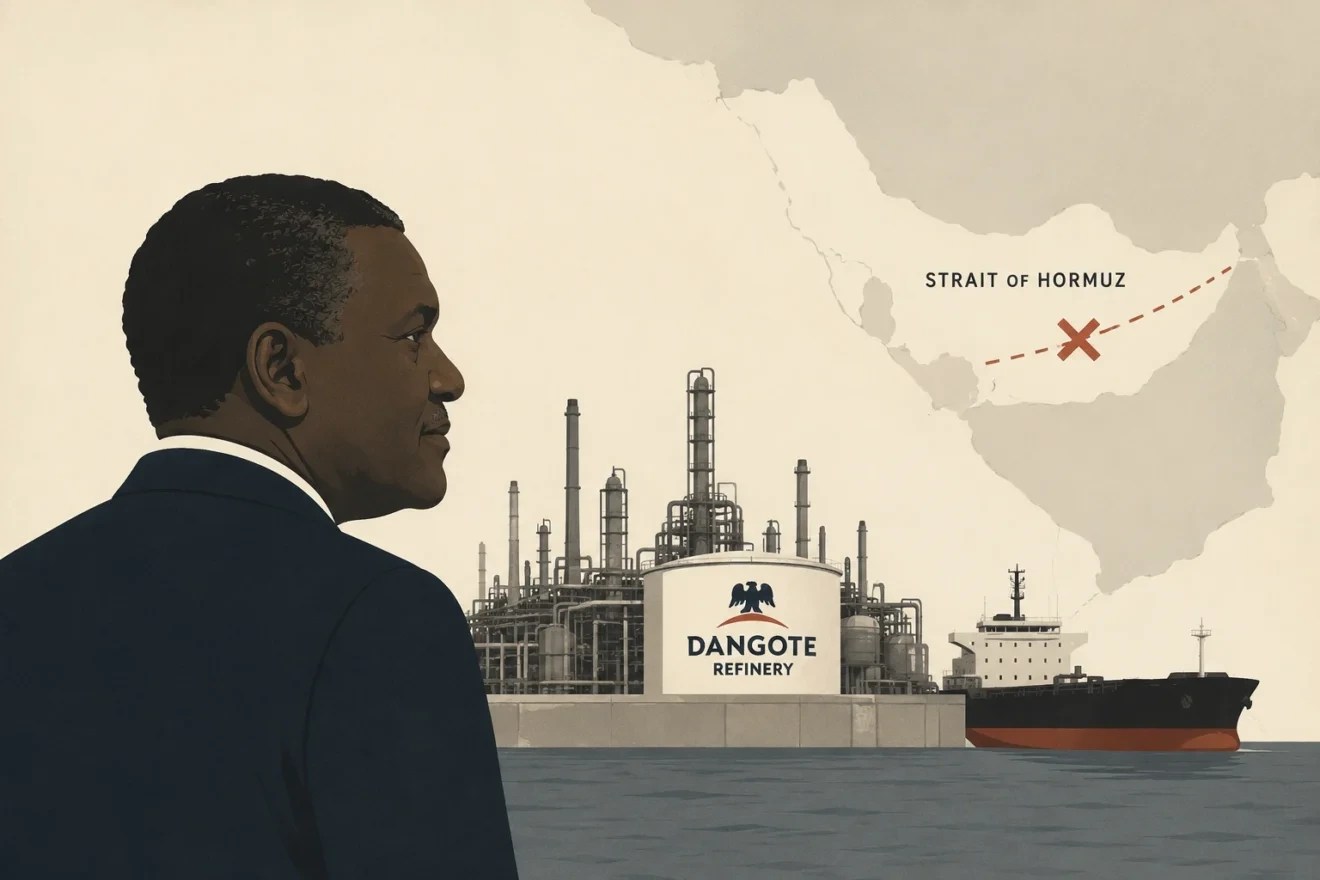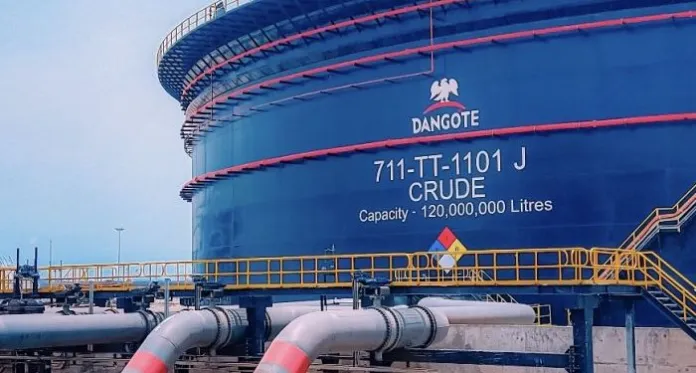
Dangote Petroleum Refinery has strongly refuted claims that petroleum products exported from its facility are being re-imported into Nigeria through the offshore ship-to-ship (STS) trading hub in Lomé, Togo, describing the allegation as inaccurate and commercially implausible.
In a statement issued on Tuesday, the refinery dismissed reports suggesting that fuel exported from its Lagos-based facility was finding its way back into Nigeria through traders operating from the Lomé offshore hub.
The company described the claim as a “web of falsehoods,” insisting that neither trade data nor market economics support such assertions.
Claims Contradict Business Strategy
According to Dangote Refinery, facilitating the re-importation of its own products would directly contradict its business strategy of becoming Nigeria’s leading supplier of refined petroleum products and reducing the country’s dependence on imports.
The refinery outlined several reasons why it believes the allegations are unfounded, emphasizing that the economics of such transactions make little commercial sense.
“The estimated logistics cost of moving products from Dangote Refinery to Lomé and subsequently back into Nigeria is approximately $82–90 per metric ton. These additional costs would significantly erode margins and make such transactions commercially unattractive,” the company stated.
It further noted that it does not provide export discounts large enough to offset such costs or create arbitrage opportunities between export and domestic markets.
“Simply put, there is no evident commercial incentive for a producer to incur additional shipping, storage, financing, and handling costs only for the product to return and compete in its largest and closest market,” the refinery added.
Commitment to Local Refining
Dangote Refinery reiterated its long-standing advocacy for increased local refining capacity, arguing that higher levels of imported fuel undermine domestic industrial growth, place pressure on Nigeria’s foreign exchange reserves, and discourage investments in local refining infrastructure.
The company stressed that its operations are aligned with Nigeria’s broader objective of achieving energy security and reducing dependence on imported petroleum products.
Origin of Controversy
The controversy followed comments reportedly made by Matthew Tracey-Cook of S&P Global Commodity Insights during a webinar organised by the Major Energy Marketers Association of Nigeria (MEMAN).
According to reports from the event, Tracey-Cook stated that a significant proportion of petroleum products imported into Nigeria between March and May originated from Dangote Refinery and were routed through Lomé before returning to the Nigerian market.
He reportedly noted that “Dangote volumes on a coastal basis do arrive back in Lagos from Lomé” and claimed that more than 70–80% of fuel imported into Nigeria during the period originated from the refinery.
Responding to the remarks, Dangote Refinery said it maintains detailed records covering product sales, vessel nominations, lifting locations, counterparties, and destination declarations where applicable.
The company emphasized that contractual restrictions and compliance procedures prevent buyers from engaging in activities that could undermine the refinery’s commercial interests.
“Any suggestion that the refinery is knowingly facilitating re-importation is inconsistent with the contractual restrictions imposed on buyers and the refinery’s established compliance procedures,” the statement noted.
Nigeria’s Petrol Import Rise Despite Stronger Domestic Output
The debate comes amid a recent increase in Nigeria’s petrol imports despite growing domestic refining capacity.
Data released by the Nigerian Midstream and Downstream Petroleum Regulatory Authority (NMDPRA) showed that average daily imports of Premium Motor Spirit (PMS) rose by 59.5% to 5.9 million litres per day in May 2026, compared to 3.7 million litres recorded in April.
The figures suggest that marketers continued to supplement local supplies with imported products to meet nationwide demand.

However, domestic refineries remained the dominant source of fuel supply, contributing approximately 41.5 million litres per day during the same period, compared with imported volumes of 5.9 million litres.
This means locally refined products accounted for nearly 88% of Nigeria’s total petrol supply in May, highlighting the growing role of domestic refining in meeting the country’s energy needs.