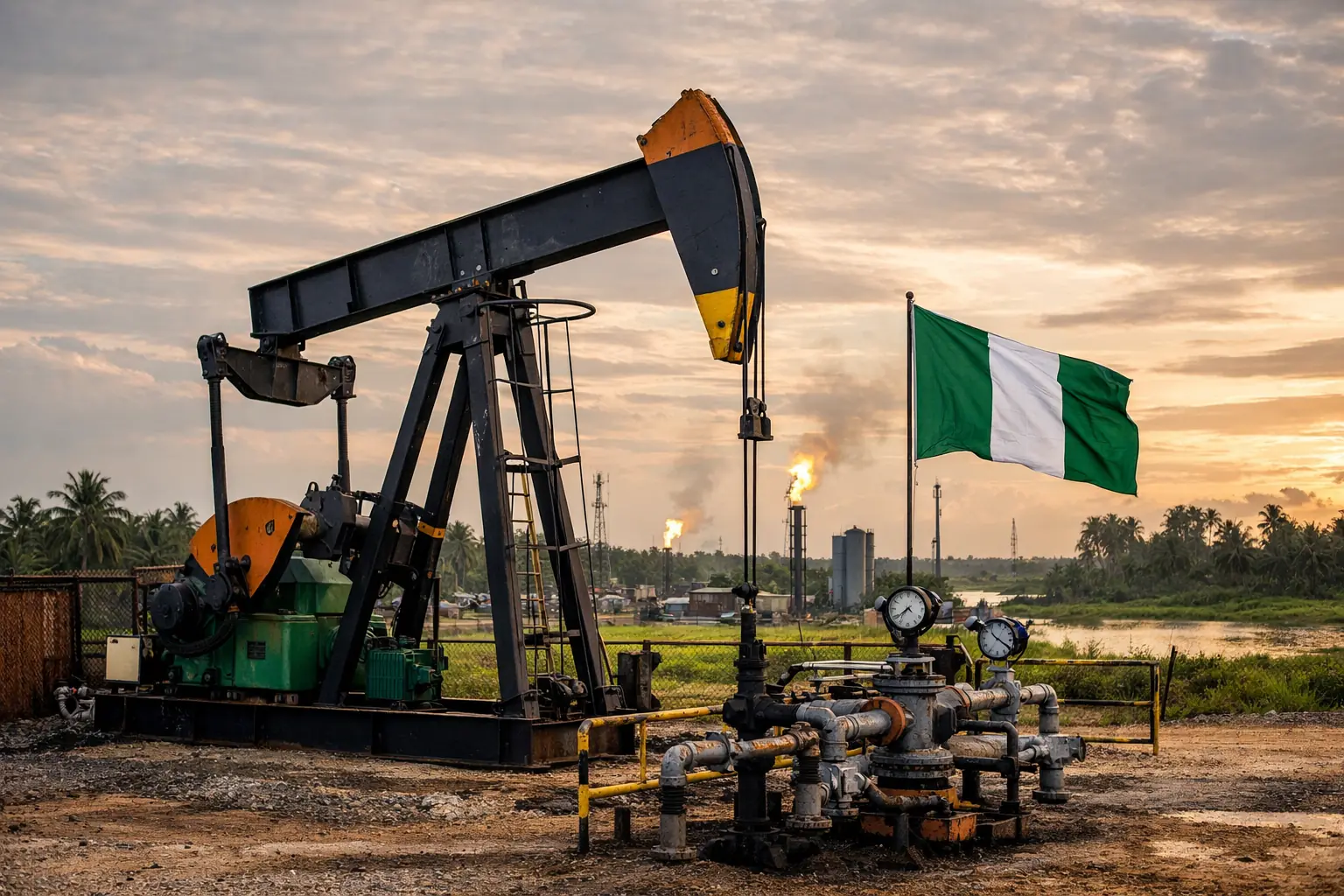
ExxonMobil’s announcement that it will invest $1 billion in expanding production at the Usan deepwater oil field has been welcomed by Nigerian regulators as a landmark vote of confidence in the country’s petroleum sector. Yet behind the headline figures lies a more important question: will the project genuinely increase Nigeria’s oil production, or simply slow the decline of a mature asset?
The answer will determine whether the investment becomes a turning point for Nigeria’s upstream industry or another isolated success in a sector that has struggled with falling production and years of underinvestment.
Through its Nigerian subsidiary, Esso Exploration and Production Nigeria Limited (EEPNL), ExxonMobil will commence the Usan Infill Project in Oil Mining Lease (OML) 138 next month. The company says the development will unlock approximately 40,000 barrels of additional oil per day, with first production expected within six months and peak output achieved in about 18 months.
The project will be executed alongside joint venture partners NNPC Limited, Chevron, TotalEnergies and Nexen.
The crucial question: Additional production or replacement barrels?
At first glance, an additional 40,000 barrels per day appears to be a significant boost for Nigeria’s crude output. However, experienced industry observers caution that the figure should be viewed in context.
The Usan field is not a newly discovered oil field. It has been producing crude for more than a decade, meaning the new wells are being drilled into a mature producing asset rather than opening an entirely new source of production.
The project is an infill drilling campaign—a common strategy in mature oil fields where operators drill additional wells to recover oil that existing wells cannot efficiently access. Such projects are designed to sustain production and improve recovery from existing infrastructure.
This raises an important question: How much of the announced 40,000 barrels per day represents genuinely new production, and how much simply replaces barrels that would otherwise have been lost as older wells decline?
Without field-level production data, the net increase to Nigeria’s overall crude output remains uncertain.
Mature fields naturally lose production
Oil reservoirs do not produce at constant rates indefinitely. As pressure within a reservoir falls over time, production naturally declines unless operators drill additional wells or introduce enhanced recovery techniques.
Industry analysts note that infill drilling campaigns are often intended to slow this decline rather than create entirely new production.
If existing Usan wells have already experienced significant production decline, the new wells may initially restore output before adding incremental barrels.
That distinction matters because headline production figures do not always translate directly into equivalent increases in national output.
Why the project still matters
Even if part of the new production offsets natural decline, the investment remains strategically important.
The project marks ExxonMobil’s first drilling campaign in Nigeria since 2016, ending nearly a decade without new drilling activity by the company.
It also represents one of the largest recent deepwater capital commitments announced in Nigeria, signalling renewed investor confidence after years of regulatory uncertainty and declining upstream investment.
According to ExxonMobil, the project has been designed as a fast-track development using existing subsea infrastructure, allowing first oil to be produced far sooner than a conventional greenfield project.
The company estimates the investment will generate approximately $1.2 billion in additional government revenue over the next four years, while supporting production from one of Nigeria’s major offshore assets.
A test of Nigeria’s reform agenda
Government officials have linked the renewed investment to reforms introduced under the Petroleum Industry Act (PIA) and subsequent executive orders intended to improve Nigeria’s competitiveness for upstream investment.
The Nigerian Upstream Petroleum Regulatory Commission (NUPRC) described the project as evidence that recent reforms are beginning to restore investor confidence in the country’s deepwater sector.
However, the broader test is whether ExxonMobil’s investment becomes the first of several large-scale offshore developments or remains an isolated project.
For much of the past decade, multinational oil companies delayed investments amid concerns over fiscal uncertainty, approval delays, security challenges and declining returns from onshore operations.
Should other operators—including Shell, Chevron and TotalEnergies—accelerate similar projects, Nigeria could begin reversing years of declining production.
One project cannot solve Nigeria’s production challenge
Nigeria’s oil sector has lost hundreds of thousands of barrels per day over the past decade because of underinvestment, pipeline vandalism, crude theft, operational disruptions and ageing infrastructure.
Against that backdrop, an additional 40,000 barrels per day—even if fully incremental—would represent only a modest contribution toward the country’s long-term production ambitions.
The greater significance of the Usan project lies not in the production figure alone but in what it signals.
If the investment demonstrates that regulatory reforms can attract sustained capital back into Nigeria’s upstream sector, it may encourage other international operators to revive delayed offshore developments.

If it proves to be a one-off commitment, however, Nigeria’s broader production recovery will remain dependent on addressing deeper structural issues that have constrained investment for years.
Ultimately, ExxonMobil’s $1 billion commitment is best understood not simply as a production story but as a confidence test for Nigeria’s oil industry. The success of the Usan Infill Project will be measured not only by the barrels it produces, but by whether it persuades the wider industry that Nigeria has once again become a competitive destination for long-term energy investment.