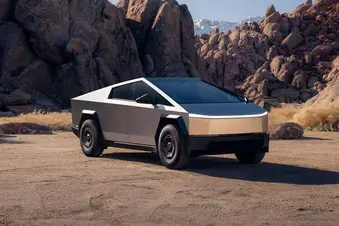
Tesla plans to wind down production of its Cybertruck electric pickup at its Texas factory next year, as Chief Executive Officer Elon Musk shifts manufacturing capacity towards the company’s self-driving Cybercab vehicles.
Musk disclosed the decision in a post on X, saying the move would “make room” for increased production of the Cybercab, Tesla’s planned autonomous passenger vehicle.
Although he did not explicitly confirm whether Cybertruck production would end completely or be transferred to another facility, comments from the vehicle’s lead engineer, Wes Morrill, suggested that Tesla could be preparing to discontinue the model.
Morrill described the Cybertruck as an “incredible technology development platform” and added that it “lives on through Cybercab”, fuelling speculation that the electric pickup’s production run could be approaching its end.
Musk also appeared to acknowledge the possibility of discontinuation after responding “true” to a Tesla supporter who described the vehicle as the company’s best product and lamented its expected discontinuation next year.
However, Musk added that the existing Cybertruck fleet would remain in operation for a long time.
Cybertruck Struggles With Sales, Recalls and Pricing
Unveiled in November 2019, the Cybertruck attracted considerable attention because of its unconventional angular design and stainless-steel exterior.
Musk initially claimed the vehicle had received 146,000 orders while it was still under development, generating expectations that it could become a major competitor in the American pickup market.
However, the vehicle did not reach customers until 2023, following several delays.
Its distinctive appearance divided consumers. While supporters praised its futuristic styling, critics questioned its practicality and suitability for the traditional American truck market.
The Cybertruck also faced several recalls, including one in 2025 involving more than 46,000 vehicles over concerns that an exterior trim component could detach.
Pricing Challenge
Musk previously acknowledged the need to make the vehicle affordable, but its high-end specifications and pricing limited its appeal to a broader consumer market.
In 2026, Tesla’s Cyberbeast variant is priced at approximately $102,000, while the vehicle’s original high-specification launch configuration was priced at around $61,000.
The combination of high prices, production delays and quality concerns has raised questions about the Cybertruck’s ability to compete in the highly competitive US pickup market.
From Cybertruck to Cybercab
The Cybercab is designed as a self-driving passenger vehicle intended to operate within Tesla’s proposed robotaxi network.
By reallocating manufacturing capacity at its Texas facility, Tesla appears to be prioritising autonomous vehicles over the Cybertruck as it pursues its longer-term mobility strategy.
The decision also highlights the challenges facing Tesla as it attempts to balance ambitious new products with commercial demand for its existing electric vehicles.

Despite the production uncertainty, Musk has maintained his enthusiasm for the Cybertruck, previously describing it as one of Tesla’s best products.
The next phase will test whether its Cybercab ambitions can deliver the commercial success that the Cybertruck struggled to achieve.