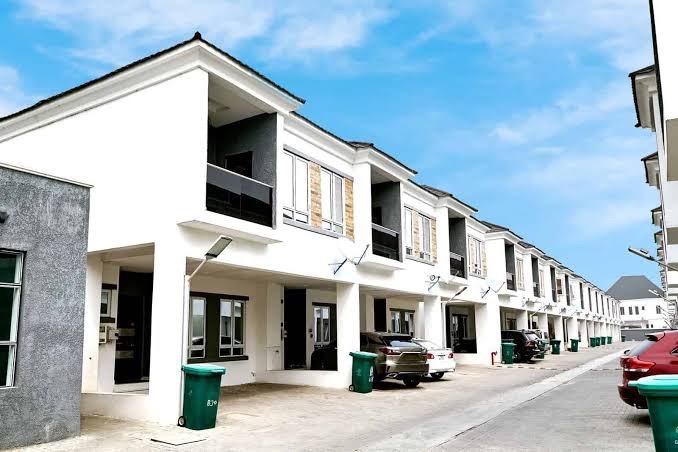
Landlords, estate agents and property management companies in the Federal Capital Territory (FCT) could face fines of up to ₦20 million for violating proposed rent regulations aimed at curbing excessive advance rent demands and protecting tenants.
The proposed Federal Capital Territory Advance Rent Regulation and Tenants’ Protection Bill, 2026 (HB.2839), jointly sponsored by Paul Nnamchi and Ahmed Doro, passed its second reading in the House of Representatives on November 4, 2026.
The bill seeks to prohibit landlords, estate agents and property managers from demanding or compelling tenants to pay more than 12 months’ rent upfront as a condition for securing, renewing or continuing a tenancy.
Following its second reading, the proposed legislation will proceed to committee consideration, where its provisions are expected to undergo further scrutiny before additional legislative stages.
Proposed Fines for Landlords and Property Companies
Under the proposed legislation, individual landlords, estate agents and property managers found guilty of knowingly demanding or receiving unlawful advance rent could face fines ranging from ₦500,000 to ₦5 million.
Corporate organisations, including property management companies, could face substantially higher penalties of between ₦5 million and ₦20 million.
The bill also proposes a fine of up to ₦1 million for individuals or organisations that fail to comply with a valid compliance notice issued by the proposed regulatory authority.
In addition to financial penalties, courts could order landlords or property managers to refund unlawfully collected rent and compensate affected tenants for proven losses.
The proposed restrictions would also cover attempts to circumvent the 12-month limit through intermediaries, compulsory service charges, artificial tenancy renewals or separate agreements designed to extract more than one year’s rent.
The proposed legislation however does not prohibit advance rent payments altogether and landlords would remain entitled to demand a full year’s rent upfront, provided the amount does not exceed the proposed 12-month limit.
However, the bill makes an exception for tenants who voluntarily offer to pay more than 12 months’ rent, provided the arrangement is initiated without coercion, threats, discrimination or retaliation and is properly documented in writing.
New Authority to Regulate Abuja’s Rental Market
Another major provision is the proposed establishment of the Federal Capital Territory Rent Regulation and Tenants’ Protection Authority.
The authority would oversee rental transactions, receive and investigate complaints, monitor landlords and estate agents, facilitate dispute resolution and issue compliance notices.
It would also have powers to order refunds of unlawfully collected rent, with affected landlords or property managers required to make the refunds within 30 days.
The proposed agency would establish complaint offices and electronic reporting channels across the FCT, including satellite communities, to make it easier for tenants to report violations.
Written Tenancy Agreements and Stronger Eviction Protections
The bill seeks to make written tenancy agreements compulsory, with contracts required to clearly state rental amounts, payment schedules, tenancy duration, refundable deposits, additional charges and the respective obligations of landlords and tenants.
Landlords and their authorised agents would also be required to disclose compulsory charges before concluding tenancy agreements and provide receipts or verifiable electronic evidence of payments.
On eviction, the proposed legislation seeks to prohibit landlords from using intimidation, threats or violence to force tenants out of their properties.
Other prohibited practices would include disconnecting essential services, removing tenants’ belongings or changing locks without lawful authority.
However, landlords would retain the right to recover outstanding rent or possession of their properties through established legal procedures.
No Cap on Rent
Despite its proposed restrictions on advance rent, the legislation does not seek to introduce a ceiling on rental prices in Abuja.
It also does not prescribe limits on annual rent increases or establish maximum charges for agency fees, agreement fees or caution deposits.
Consequently, tenants could continue to face high accommodation costs even if the legislation becomes law.
The proposal is primarily focused on regulating advance rent demands, improving transparency in rental transactions, strengthening documentation requirements and providing mechanisms for resolving landlord-tenant disputes.

Having passed its second reading on November 4, 2026, the bill will proceed to committee consideration, where relevant stakeholders, including landlords, tenants, estate surveyors, property managers and real estate professionals, are expected to contribute to its review.
The legislation must subsequently pass the third reading in the House of Representatives, receive concurrence from the Senate and obtain presidential assent before becoming law.