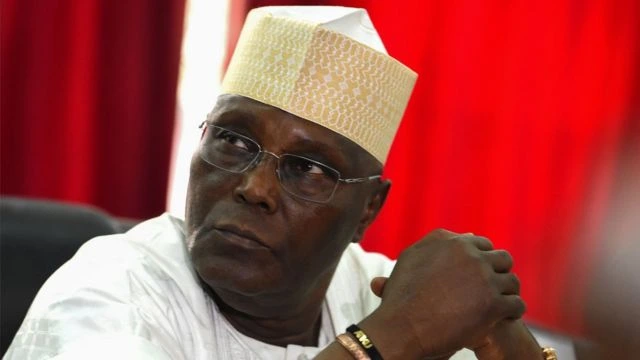
Paul Ibe, a spokesperson for former Vice President Atiku Abubakar, has challenged former Ekiti State Governor Kayode Fayemi to debate the economic merits of Atiku’s proposed production-anchored fuel subsidy rather than dismissing the proposal as an election strategy.
Ibe, in a statement posted on Facebook, described Fayemi’s comparison of Atiku’s proposal with the APC’s Muslim-Muslim presidential ticket in 2023 as “ridiculous”, arguing that the political consequences of an economic policy do not invalidate its underlying economic proposition.
Ibe said Atiku was not advocating a return to the former subsidy system, which he described as opaque and vulnerable to corruption, questionable import claims and rent-seeking.
Instead, he said Atiku’s proposal was based on a production-anchored model that would link government intervention to domestic petroleum production and refining.
“The distinction is crucial,” Ibe said, arguing that the proposed mechanism would seek to reduce the cost of locally produced fuel while encouraging domestic refining, expanding productive capacity and creating jobs.
According to him, lower domestic fuel costs could also reduce transportation and logistics expenses, with wider effects on the prices of goods and services and household welfare.
Ibe challenged Fayemi to demonstrate the economic weaknesses of the proposal if he believes it is unworkable.
He said a substantive critique should establish the projected fiscal cost of the intervention, explain why a production-linked subsidy would fail, identify possible inflationary and market distortions and present an alternative mechanism for lowering energy costs.
“Simply saying that it is a political strategy does not answer any of those questions,” Ibe argued.
He also rejected the suggestion that the timing of a policy proposal should determine whether it is considered economically legitimate.
“By Fayemi’s logic, any economic policy announced during an election cycle can be dismissed as political,” he said.
The deeper disagreement, according to Ibe, is not whether government intervention in fuel prices should exist in the abstract, but what is being subsidised, who receives the benefit, how much the intervention costs and whether it produces a measurable economic return.
“Subsidy removal without addressing the underlying cost structure of petroleum products, domestic refining capacity, energy costs, transportation and the wider productive economy simply transfers the burden from government to citizens,” he said.
Direct Challenge to Fayemi
Paul Ibe positioned Atiku’s proposal as an attempt to change the architecture of petroleum intervention rather than restore the old import-dependent subsidy regime.

He described the proposed shift as one from subsidies anchored on imported refined products to an intervention tied to domestic production; from opacity to transparency; from rent-seeking to productive capacity; and from import dependence to greater domestic refining.
“If it is bad economics, show Nigerians the numbers. If it is fiscally unsustainable, demonstrate why. If there is a better way to reduce the cost of petrol and diesel while protecting consumers and encouraging domestic production, put it on the table,” he said.