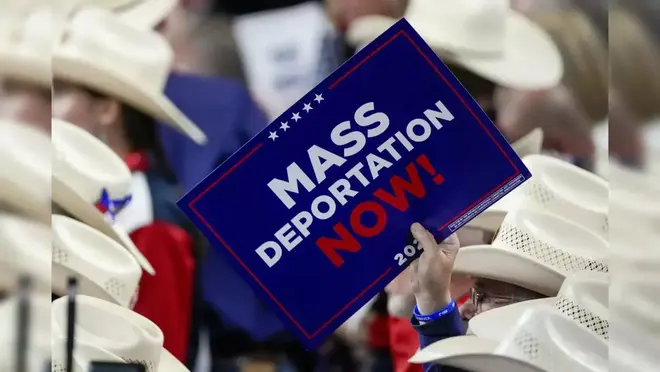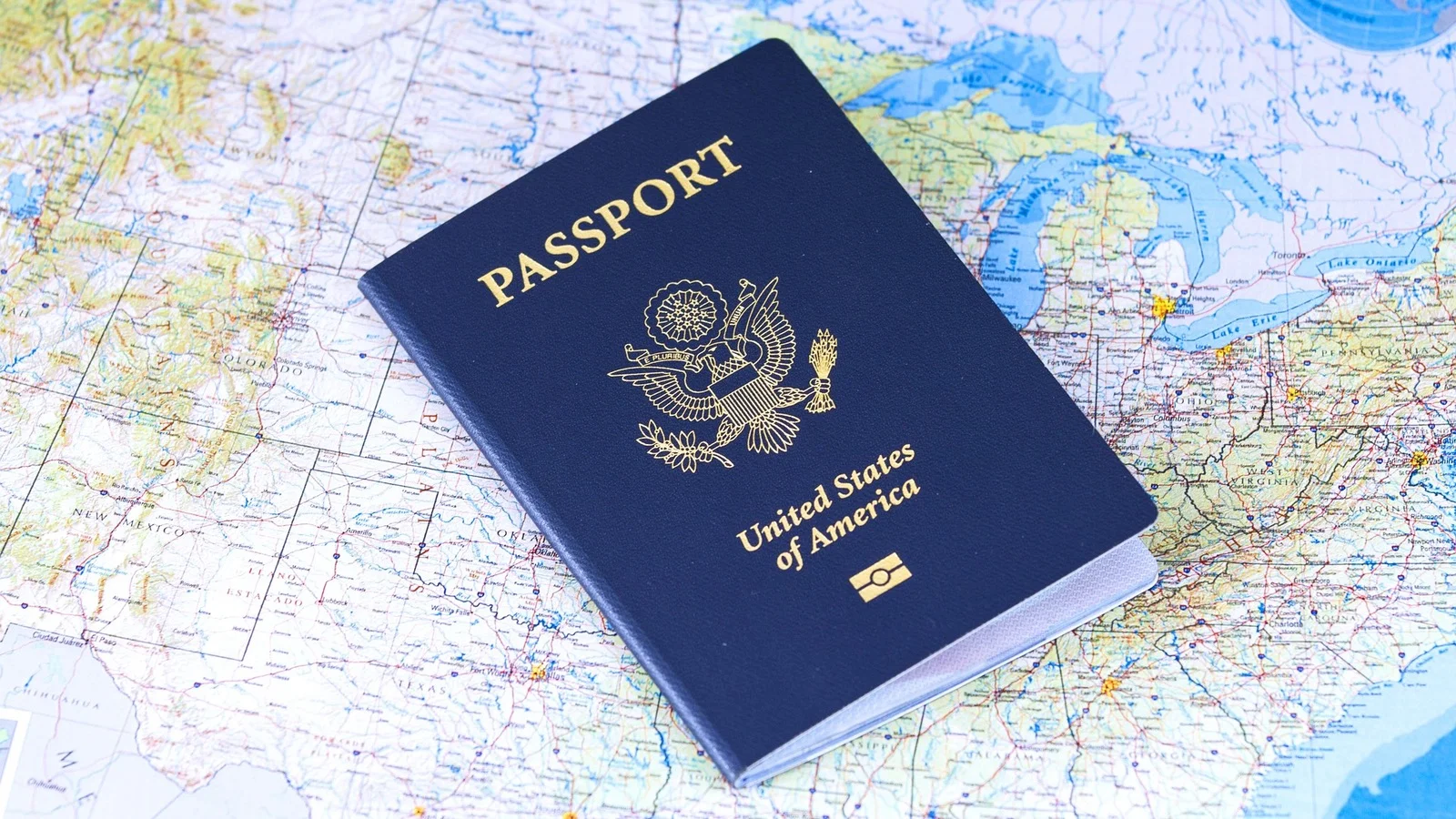
Parents applying for US passports for children born in America could face additional documentation requirements under proposed guidance from the US Department of State, as the Trump administration moves to change how birthright citizenship rules are applied.
Under the proposed process, parents or legal guardians could be asked to provide evidence of their own US citizenship or immigration status before a passport is issued to a child.
Documents could include a parent’s US passport or birth certificate, an I-94 arrival record or a permanent resident card, commonly known as a green card.
The proposed requirement is not yet an established rule. It is part of draft guidance linked to the Trump administration’s efforts to enforce its latest executive order on birthright citizenship.
What could change for US passport applications?
The proposed guidance could make information about a child’s parents more important when the State Department considers a passport application.
Passport officials could be required to collect information about the parents and examine evidence of their citizenship or immigration status when determining whether the child falls within categories covered by President Donald Trump’s August 6 executive order.
For parents who are US citizens, the documents could include a valid US passport or US birth certificate.
For parents who are not US citizens, officials could request documents showing their immigration status, including an I-94 arrival record or green card.
This would add a layer of documentation to the passport application process for some families.
Is the new US passport requirement already in effect?
No.
The proposed passport requirement is not currently a universal rule requiring all parents of US-born children to prove their immigration status before their children can receive passports.
The State Department guidance is part of a proposed framework for implementing Trump’s latest birthright-citizenship order. Its final form and how it will be enforced could depend on further government action and ongoing court challenges.
Parents should therefore distinguish between the proposed guidance and an established passport requirement.
Who could be affected?
The proposed changes could be particularly relevant to families where one or both parents are foreign nationals.
Potentially affected families could include:
- Children born in the United States to foreign-national parents
- Children whose parents have different citizenship or immigration statuses
- Children whose parents are lawful permanent residents
- Children whose parents entered the US temporarily
- Families who travelled to the United States to give birth
The proposed guidance does not mean that every child born in America would automatically be denied a passport or citizenship.
Instead, officials could use information about the parents to determine whether a particular child falls within the categories covered by the administration’s executive order.
What Nigerian parents in the US need to know?
The development could be significant for Nigerians who have children born in the United States.
A Nigerian parent applying for a US passport for a US-born child could potentially face requests for documents showing the parent’s immigration status if the proposed guidance is implemented.
That could make documents such as an I-94 record, green card or other evidence of immigration status more important in some applications.
However, Nigerian parents should not assume that the proposal means their US-born children will automatically lose citizenship or become ineligible for US passports.
The key issue is whether a particular child falls within the categories targeted by the executive order and how the State Department ultimately implements the guidance.
What documents could parents be asked to provide?
The draft guidance reported by Reuters identifies several types of documents that could be used to establish a parent’s status.
| Parent’s status | Possible evidence |
|---|---|
| US citizen | US passport or US birth certificate |
| Lawful permanent resident | Permanent resident card (green card) |
| Non-citizen with US immigration records | I-94 arrival record or other relevant documentation |
The exact documentation requirements could change if the proposed guidance is revised or formally implemented.
Why is Trump changing the process?
The proposed passport guidance is connected to the Trump administration’s wider effort to restrict the circumstances in which children born in the United States automatically acquire citizenship.
The administration has argued that the existing system encourages what it calls “birth tourism”, in which foreign nationals travel to the United States to give birth and obtain US citizenship for their children.
Trump’s first executive order seeking to restrict birthright citizenship attempted to deny automatic citizenship to certain children born in the US unless at least one parent was an American citizen or lawful permanent resident.
That order was challenged in court.
The administration’s August 6 order takes a narrower approach, targeting specific categories of children rather than attempting to broadly redefine birthright citizenship.
Those categories include children whose parents are foreign government employees, children whose parents are allegedly involved in fraud or commercial arrangements intended to obtain citizenship, and children whose parents fall under the administration’s “alien enemy” classification.
Trump’s earlier attempt to restrict birthright citizenship faced a major legal challenge.
The US Supreme Court ruled against the order in a 6-3 decision, finding that it violated the Citizenship Clause of the 14th Amendment to the US Constitution.
The administration’s latest order is narrower, but it could also face legal challenges over how it interprets and applies existing citizenship protections.
That legal uncertainty is important because the proposed passport guidance is intended to help government officials determine how the latest order should be applied to individual passport applications.
Could getting a US passport become more complicated?
Potentially, for some families.
Under the proposed approach, obtaining a passport for a US-born child could involve more than establishing the child’s identity and relationship to the parent.
Officials could also examine the parents’ citizenship or immigration status when determining whether the child falls within the categories covered by the executive order.
That could mean additional paperwork for families whose immigration circumstances are more complicated.
For families with straightforward cases, the practical impact may be limited. But for families involving foreign-national parents, temporary immigration status or other circumstances covered by the executive order, the process could become more demanding.
Legal challenges are already underway
The Trump administration’s broader birthright-citizenship policy is already facing legal opposition.
Lawyers representing babies who could have been affected by the earlier order have filed class-action lawsuits challenging the administration’s efforts.
One of the cases is before US District Judge Deborah Boardman in Greenbelt, Maryland.
At a recent hearing, Boardman expressed scepticism about what she described as an unprecedented order and allowed the plaintiffs to amend their lawsuit so she could consider whether to block its implementation.
Justice Department lawyers have argued that a restraining order would be inappropriate because the legal challenge is premature and federal agencies had not yet issued public guidance explaining how the executive order would be enforced.
The outcome of those legal challenges could affect how the administration’s policy is ultimately implemented.
What should parents do now?
For now, parents should not treat the proposed passport guidance as a final requirement.
Families applying for US passports for children should continue to keep important documents available, including:
- The child’s birth certificate
- Evidence of the parent-child relationship
- The parent’s identification
- Evidence of the parent’s US citizenship, where applicable
- Immigration records such as an I-94 or green card, where applicable
Parents with complicated immigration circumstances should check the latest official guidance before submitting an application.
What happens next?
The State Department’s proposed guidance could determine how passport officials implement Trump’s latest birthright-citizenship order.
The guidance could still be revised, while ongoing legal challenges could affect whether and how the executive order is enforced.

For families with children born in the United States, the immediate issue is therefore not that US passports have already become subject to a new universal parental immigration-status requirement.
Rather, the proposed guidance signals that parents’ citizenship and immigration status could become more important when the US government determines whether certain children qualify for passports and citizenship under the administration’s new birthright-citizenship policy.