Decart was barely two years old when it began attracting the kind of attention usually reserved for much larger technology companies.
Now, the Israeli-founded AI startup is at the centre of reported acquisition talks with Anthropic, the company behind Claude. A deal could value Decart at about $6 billion, according to Bloomberg, although negotiations remain ongoing and could still collapse.
The reported price is striking. But Decart’s technology explains why a company that emerged from stealth in 2024 has become valuable so quickly.
Unlike AI startups whose main product is a chatbot or a large language model, Decart is working on the layer underneath AI: the software and models needed to make advanced systems operate in real time.
Its ambition is to make AI fast enough to respond at the speed of the physical world.
What is Decart?
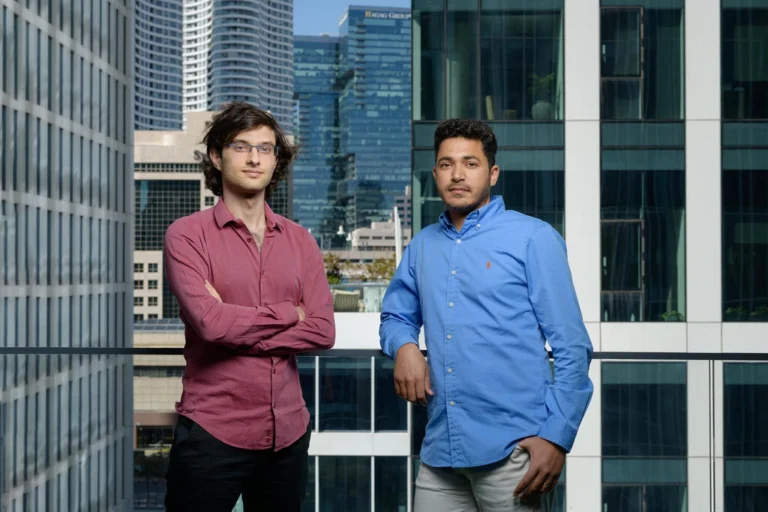
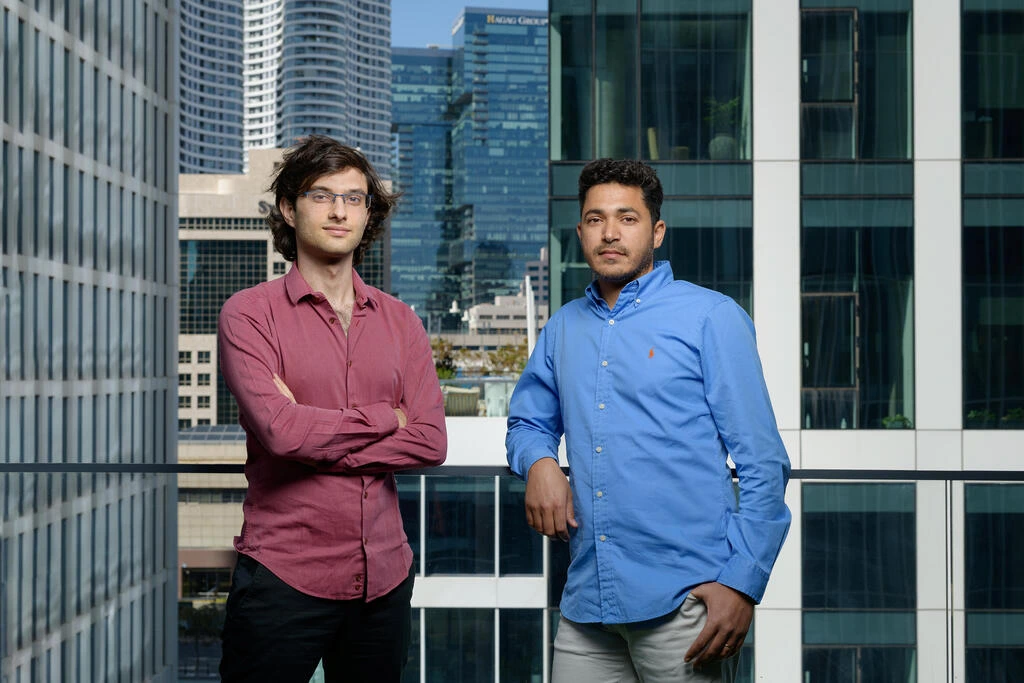
Decart is an AI research and infrastructure company founded in 2023 by Israeli engineers Dean and Orian Leitersdorf and Moshe Shalev. The company operates from San Francisco while maintaining roots and operations in Israel.
Its business is built around three connected areas: AI infrastructure, real-time generative video and world models.
The infrastructure component is called the Decart Optimization Stack, or DOS. The company describes it as a performance layer designed to optimise AI training and inference across hardware and models.
That matters because AI systems are expensive to run. Training requires enormous computing resources, but serving users after a model has been trained can also consume vast quantities of computing power.
Decart’s proposition is therefore relatively simple: instead of solving every increase in AI demand by adding more hardware, improve the software so existing computing resources can do more.
The company says DOS is designed to make agents and reasoning models run faster and more efficiently.
Why Decart’s technology matters
For much of the generative-AI boom, attention has centred on models: which company has the strongest reasoning system, the most convincing video generator or the best coding assistant.
But the economics of AI are increasingly determined by what happens after a model is built.
Every time an AI system generates an answer, creates an image, analyses a document or takes an action, computing resources are being consumed. The faster and more efficiently those operations can be performed, the more users an AI company can serve without increasing infrastructure costs proportionately.
This is the problem Decart is targeting.
Its technology is also designed to work across different computing architectures. The company has developed software intended to simplify the process of running AI workloads on processors from different manufacturers, an issue that has become increasingly important as companies look beyond Nvidia for computing capacity.
That gives Decart an unusual position in the semiconductor ecosystem.
It is not a chipmaker competing with Nvidia, AMD, Google or Amazon. It is developing software that can help AI developers use different types of chips more effectively.
Nvidia is one of Decart’s investors
One of the more revealing details about Decart’s rise is its relationship with Nvidia.
Nvidia is the dominant supplier of accelerators used in AI data centres, yet Decart’s technology is designed to make switching between processors from Nvidia, Amazon and Google easier.
Nvidia nevertheless became an investor in Decart’s $300 million funding round announced in May 2026.
Radical Ventures led that round, with Nvidia, Sequoia Capital, Benchmark, Atreides and other investors participating. Radical said the financing valued Decart at nearly $4 billion and would fund the company’s work on real-time AI infrastructure.
The investment illustrates the strategic importance of the software layer surrounding AI chips.
The more efficiently AI workloads can be deployed, the more economically viable large-scale AI becomes. For chip companies, that can ultimately mean more workloads — rather than fewer — moving onto advanced computing platforms.
Decart’s rise has been unusually fast
Decart emerged publicly in October 2024 with a $21 million seed round led by Sequoia Capital and Zeev Ventures.
At that point, its pitch was already centred on improving the efficiency of AI models, including faster training and real-time inference.
Less than two months later, Decart raised another $32 million in a Series A led by Benchmark. The round valued the company at more than $500 million, according to TechCrunch.
The speed of that revaluation tells part of the story.
Investors were not simply betting that Decart could produce another popular consumer AI application. They were betting that the infrastructure required to operate increasingly sophisticated AI would itself become a major market.
By May 2026, Decart announced a further $300 million round led by Radical Ventures. The company said the financing brought its total funding to more than $450 million.
The latest reported acquisition discussions would put the company at a valuation substantially above that May financing.
Oasis: Decart’s bet on AI-generated worlds
Decart is not only an infrastructure company.
One of its most recognisable experiments is Oasis, an AI-generated interactive world.
Unlike a conventional video generator that produces a finished sequence, Oasis is designed to respond to a user’s actions in real time. Decart says its first version reached one million users within 72 hours of release.
The underlying idea is important.
Traditional games rely heavily on pre-built assets, rules and environments. A world model attempts to learn representations of how environments behave so that an AI system can generate and update those environments dynamically.
That moves generative AI away from producing isolated pieces of content and toward modelling environments that respond to actions.
Decart is now developing Oasis specifically around what it calls physical AI — systems that need to understand and interact with the physical world. Its Oasis 3 work is presented as an interactive world model intended to simulate environments in real time.
That puts the company closer to the emerging field of world models, which researchers and technology companies increasingly see as important for robotics and autonomous systems.
Lucy takes AI video into real time
Decart’s other major product line is Lucy.
Lucy is a real-time video generation and editing system. Rather than asking users to upload a video and wait for processing, Decart is trying to make transformations happen while the video is playing.
The company says Lucy can perform tasks such as changing characters, adding objects, altering backgrounds and applying visual effects in real time. Its current product documentation claims sub-40-millisecond latency and continuous generation at up to 100 frames per second.
The technology has commercial applications beyond entertainment.
Decart has demonstrated uses involving digital commerce, including virtual representations of people wearing products. eBay has both invested in the company and used its technology, according to reporting by Cinco Días and the Wall Street Journal.
The attraction for retailers is obvious: instead of producing a separate photograph or video for every possible product presentation, AI could generate visual representations dynamically.
But the deeper technological challenge is latency.
A video system that takes minutes to generate can be useful for content production. A system that can alter a scene almost instantly can become part of an interactive application.
That distinction is central to Decart’s strategy.
From video generation to physical AI
The company’s long-term direction becomes clearer when Lucy and Oasis are viewed alongside DOS.
Decart says its infrastructure is the performance layer underneath its live models. Lucy focuses on immersive experiences, while Oasis is aimed at physical AI and interactive world modelling.
The company is therefore trying to control both sides of the problem.
It wants to build the software that makes AI computation fast enough for real-time applications, while also developing the models that demonstrate what that speed makes possible.
That is a different strategy from an AI company that buys computing capacity and concentrates almost entirely on a single foundation model.
Why the company is attracting Anthropic
The reported interest from Anthropic makes more sense when viewed through that lens.
Anthropic’s Claude models operate at enormous scale. The company therefore has an obvious interest in inference efficiency — reducing the amount of computing required to produce useful AI responses.
Reuters reported that, if the acquisition goes ahead, Decart’s team could join Anthropic’s inference and performance organisation.
That would place the engineers behind Decart’s optimisation technology directly inside one of the world’s leading AI companies.
It would also give Anthropic access to expertise that could help it squeeze more performance from its computing infrastructure at a time when demand for AI services continues to increase.
The reported transaction is not yet a done deal.
But the fact that Decart is being valued in the billions after only a few years reflects a broader shift in the AI economy: computing efficiency is becoming almost as strategically important as model intelligence.
What Decart is ultimately trying to build
Decart describes itself as a “live AI lab”.
Its stated goal is to optimise the entire stack, from hardware through to models, so AI can operate with the speed required for interactive and physical environments.
That ambition explains the unusual mixture of products.
DOS is infrastructure.
Lucy is real-time generative video.
Oasis is a world model.
Together, they represent an attempt to make AI systems continuously perceive, generate and respond rather than simply receive a prompt and return an answer.
The commercial opportunity is potentially much larger than video or gaming.
If real-time AI becomes practical, the same underlying technology could eventually support robotics, autonomous systems, simulation, retail, industrial applications and other environments where delays make conventional generative AI less useful.

That is the bet investors have been making.
And it is why the startup Anthropic may be preparing to buy for about $6 billion is worth watching on its own terms — not simply as the target of a much larger AI company’s acquisition.