Russia has opened a criminal case against Telegram founder Pavel Durov, accusing him of allowing his messaging platform to be used by Ukrainian intelligence operatives to organise attacks inside the country — a move that deepens the Kremlin’s long-running conflict with one of the world’s most influential encrypted communication platforms.
The Federal Security Service (FSB), Russia’s domestic intelligence agency, announced charges against the Russian-born billionaire on Wednesday, alleging that Telegram had become a tool for recruiting individuals to carry out sabotage and terrorist operations.
The accusations represent the latest confrontation between Moscow and Durov, who has positioned Telegram as a defender of privacy, free expression and resistance to government censorship.
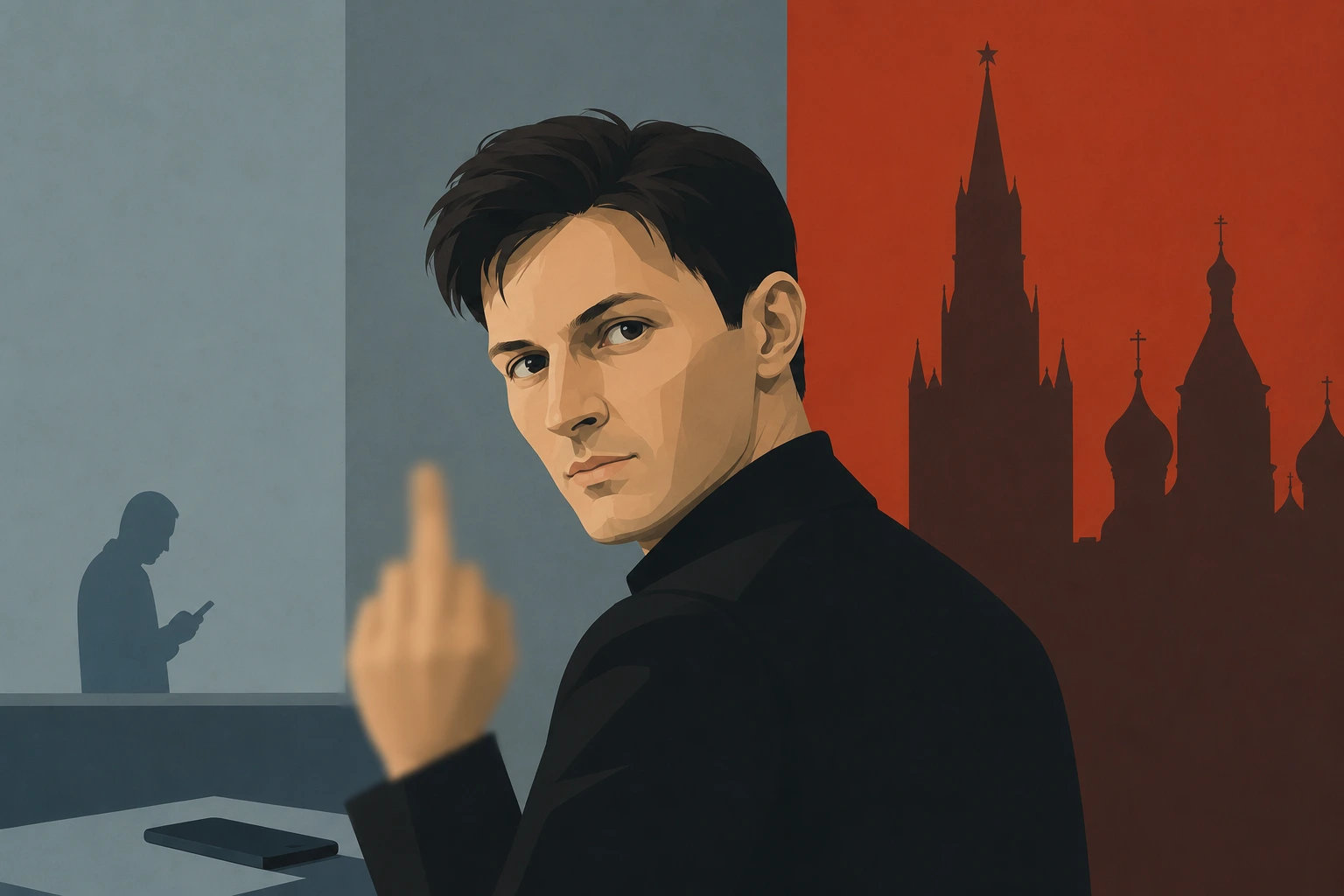
Telegram’s official account on X responded to the charges by posting an image of Durov making a middle-finger gesture, signalling defiance against Russian authorities.
Moscow Accuses Telegram of Becoming a Recruitment Platform for Attacks
According to statements from Russia’s FSB and Investigative Committee, a Telegram chatbot known as “Daivinchik/Leo” was allegedly used by Ukrainian special services to target young Russians.
The authorities claim operatives posed as young women on the dating-focused chatbot to establish contact with potential recruits before pressuring them into committing crimes, including attacks against law enforcement and infrastructure.
Russian investigators said 46 people aged between 12 and 22 had been arrested over the past year after allegedly being recruited through the platform to carry out acts of sabotage involving transport systems, energy facilities, communications networks and financial infrastructure.
Ukraine has not immediately commented on the allegations.
However, the accusations place Telegram at the centre of a wider information war between Russia and Ukraine, with the app increasingly serving as a battlefield for propaganda, military communication and political mobilisation on both sides.
Telegram Remains a Battleground Between Privacy Advocates and Governments
Despite Moscow’s growing hostility toward Telegram, the platform remains widely used by Russian officials, including government institutions, the Kremlin and defence authorities.
Russia has attempted to restrict access to foreign technology platforms as part of efforts to tighten control over digital communication. Telegram access has reportedly become more difficult for some users, with many relying on virtual private networks (VPNs) to bypass restrictions.
The app’s popularity has made it difficult for authorities to completely shut it down. Millions of Russians continue using Telegram for news, business communication and political discussions.
For critics of government surveillance, the case against Durov highlights the broader global debate over whether technology companies should be held responsible for how users exploit their platforms.
Durov’s Long History of Clashes With Russian Authorities
Durov, who now lives in Dubai and holds French and Emirati citizenship, has repeatedly clashed with governments over Telegram’s refusal to provide unrestricted access to user data.
Before founding Telegram, Durov created VKontakte, Russia’s largest social networking platform, often described as the country’s equivalent of Facebook. He left VKontakte in 2014 after disputes with Russian authorities and sold his remaining stake in the company.
The entrepreneur has built Telegram around principles of privacy and minimal interference, arguing that governments should not have unchecked access to private conversations.
In 2024, French authorities arrested Durov over allegations that Telegram had failed to sufficiently cooperate with law enforcement investigations into criminal activity on the platform. He denied wrongdoing and argued that Telegram had exceeded its obligations in fighting abuse while protecting user privacy.
International Arrest Risk Raises Questions Over Durov’s Future
Russia’s FSB said Durov had been placed on an international wanted list, although it did not clarify what mechanism would be used to pursue him.
Any attempt to issue an Interpol Red Notice could face significant hurdles, according to experts familiar with the process.
Durov’s location is currently unclear. He recently said he had been in Georgia, while his main residence remains in Dubai.
The prospect of Russia seeking his extradition could create diplomatic complications for the United Arab Emirates, which has developed close economic and business ties with Moscow while also positioning itself as a global hub for technology entrepreneurs.
A Bigger Battle Over Control of the Internet
The case against Durov is part of a wider global struggle over who controls digital platforms: governments seeking greater oversight or technology companies defending user privacy.

For Russia, Telegram represents a powerful communication channel that operates outside traditional state media control. For Durov and his supporters, the charges reinforce his argument that defending private communication often places technology leaders in conflict with governments.
As Telegram continues to play a central role in the Russia-Ukraine information war, the legal battle surrounding Durov could become another defining moment in the global debate over online freedom, censorship and national security.