The Lagos State Waste Management Authority (LAWMA) has pledged to eliminate the waste management crisis prevalent across Lagos State soon.
LAWMA noted recent upgrades at the Olusosun Disposal Facility will significantly improve waste evacuation while paving the way for a broader overhaul of the state’s waste management system.
The assurance came as LAWMA commissioned a rehabilitated access road and newly constructed disposal platforms at the Olusosun facility in Ojota, infrastructure that LAWMA Managing Director Dr. Muyiwa Gbadegesin described as critical to restoring the movement of compactor trucks after heavy rains damaged internal roads and slowed waste collection across the city.
According to Gbadegesin, the additional disposal space created at the landfill will allow the agency to clear the backlog of refuse that has accumulated on major roads over recent weeks.
“We’ve created more space. Over the next few days there won’t be refuse on our roads,” he said, while urging residents to dispose of waste only through registered Private Sector Participant (PSP) operators and avoid illegal dumping.
Lagos Waste Management Revolution
The latest intervention forms part of a wider transition away from Lagos’ ageing landfill model. Rather than simply expanding dumpsites, the state plans to replace them with Transfer Loading Stations (TLS), Material Recovery Facilities and eventually waste-to-energy infrastructure.
Officials say the Olusosun landfill, one of Africa’s busiest waste disposal sites, will eventually be decommissioned after replacement facilities become operational.
Olusosun alone currently receives about 10,000 metric tonnes of municipal waste each day, while Lagos as a whole generates an estimated 13,000 to 15,000 tonnes of waste daily, volumes that have steadily outgrown the city’s ageing disposal infrastructure.
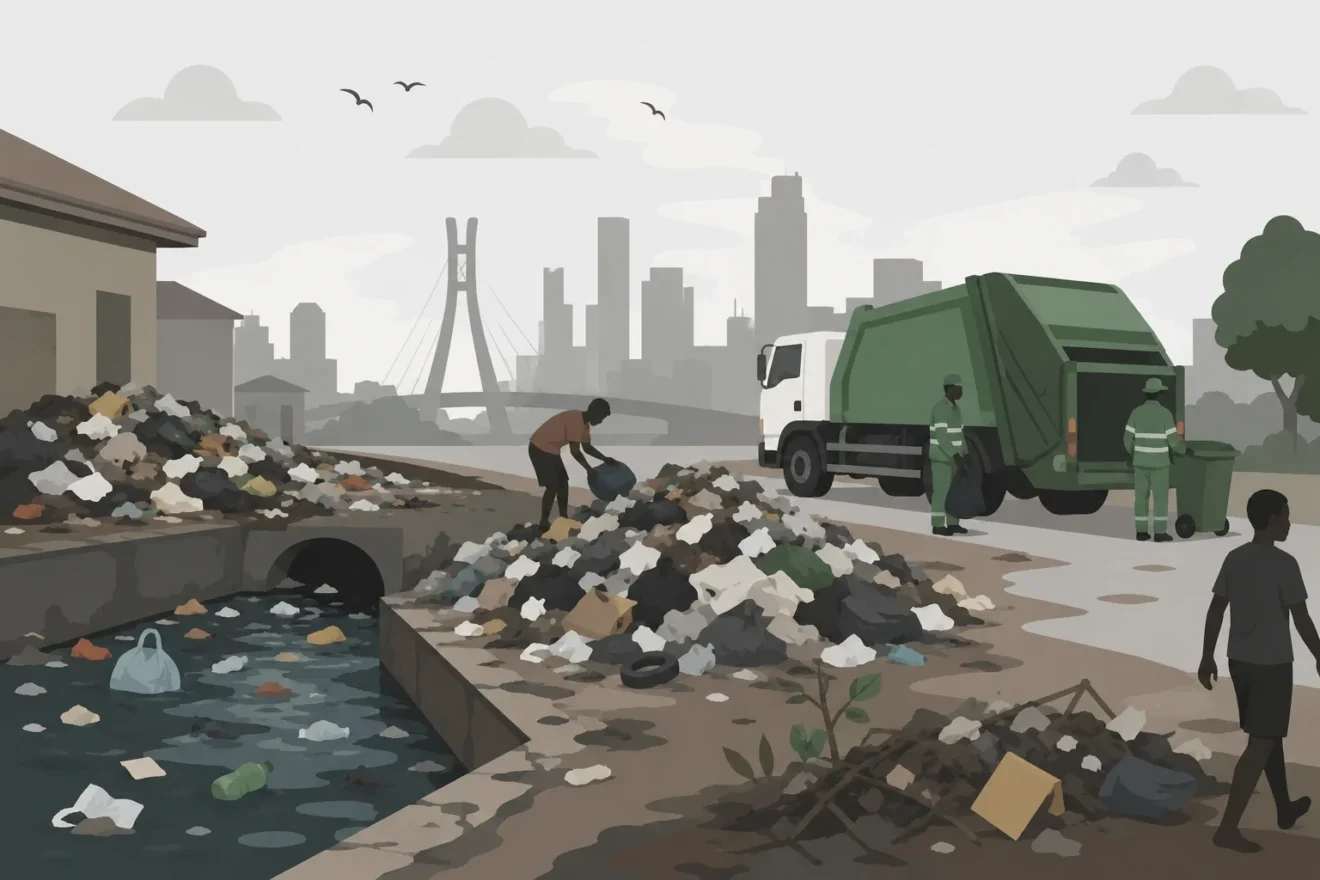
Heavy rainfall this month further worsened the situation by making landfill access roads impassable for refuse trucks, leading to longer turnaround times and visible waste accumulation in several neighbourhoods.

To address these structural constraints, the Lagos State Government is constructing modern Transfer Loading Stations at Olusosun and Solous III, each designed to process about 2,500 metric tonnes of waste per day before transferring it to recycling and recovery facilities.
The government is also expanding its waste collection fleet. LAWMA says Lagos requires roughly 2,000 operational compactor trucks to effectively manage daily waste generation, but plans to acquire 3,000 compactor trucks over the next three years, with about 150 new vehicles, including smaller trucks for narrow streets, expected before year-end.