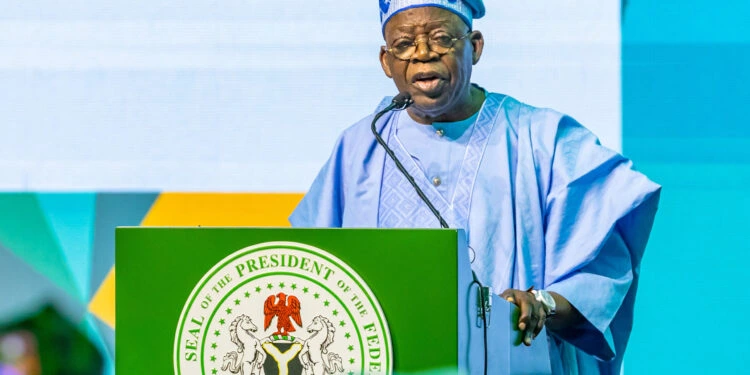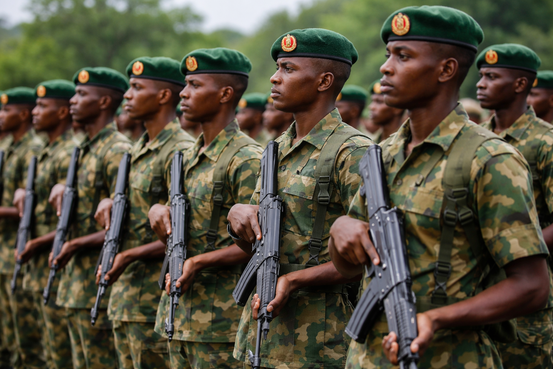
President Bola Ahmed Tinubu has approved the recruitment of an additional 28,000 military personnel to bolster the strength of the country’s Armed Forces.
The president also approved the expansion of the Nigerian Army’s structure from eight to twelve divisions to enhance the country’s security architecture and improve the operational effectiveness of the Nigerian Army.
There are also provisions for the acquisition of critical military platforms and equipment, improvements in troop welfare, and ongoing support for operational readiness and force modernisation.
Under the new structure, the Nigerian Army will operate twelve divisions across the country as follows:
1. 1 Division Headquarters – Kaduna (Kaduna, Kano, Katsina and Jigawa States)
2. 2 Division Headquarters – Ibadan (Oyo, Osun, Ekiti and Ondo States)
3. 3 Division Headquarters – Jos (Plateau, Bauchi and Gombe States)
4. 5 Division Headquarters – Makurdi (Benue, Nasarawa and Kogi States)
5. 6 Division Headquarters – Port Harcourt (Rivers, Akwa Ibom and Cross River States)
6. 7 Division Headquarters – Maiduguri (Borno and Yobe States)
7. 8 Division Headquarters – Sokoto (Sokoto, Kebbi and Zamfara States)
8. 9 Division Headquarters – Ilorin (Kwara and Niger States)
9. 10 Division Headquarters – Jalingo (Taraba and Adamawa States)
10. 81 Division Headquarters – Lagos (Lagos and Ogun States)
11. 82 Division Headquarters – Enugu (Enugu, Anambra, Abia, Ebonyi and Imo States)

12. 83 Division Headquarters – Benin City (Edo, Delta and Bayelsa States).
The newly established divisions located in Makurdi, Ilorin, Jalingo and Benin City are expected to significantly improve command and control, decentralise operational decision-making, strengthen border security, enhance the protection of critical national infrastructure and improve counter-insurgency and internal security operations.