Nigeria has overtaken Morocco to become Africa’s second-largest stock market in 2026, marking a significant milestone for the country’s capital market following a sustained rally that has seen the Nigerian Exchange (NGX) grow nearly fivefold since 2023.
According to data released by Afridigest, as of May 15, 2026, the NGX had a market capitalisation of approximately $117 billion, surpassing Morocco’s Casablanca Stock Exchange, which stood at $111 billion. South Africa’s Johannesburg Stock Exchange (JSE) remains the continent’s largest by a wide margin with a market value of about $1.5 trillion.
The development moves Nigeria up from third place in 2025, when the NGX was valued at $68.8 billion, underscoring the scale of the market’s expansion over the past three years.
Nigeria Climbs to Second Place
The latest rankings place South Africa firmly at the top of Africa’s capital markets landscape, followed by Nigeria and Morocco.
- South Africa (JSE) — $1.5 trillion
- Nigeria (NGX) — $117 billion
- Morocco (Casablanca Stock Exchange) — $111 billion
- Egypt (EGX) — $81 billion
- Botswana Stock Exchange (BSE) — $75 billion
Other notable exchanges include the Bourse Régionale des Valeurs Mobilières (BRVM), which serves eight Francophone West African countries and has a market capitalization of $28 billion, as well as Kenya’s Nairobi Securities Exchange at $25 billion, Ghana Stock Exchange at $22 billion, Tanzania’s Dar es Salaam Stock Exchange at $13 billion, and the Uganda Securities Exchange at $12 billion.
Years of Rapid Growth
Nigeria’s rise to second place follows a dramatic expansion in market value over recent years.
| Year | Estimated NGX Market Capitalization |
|---|---|
| 2023 | About $20–25 billion |
| 2024 | About $40–50 billion |
| 2025 | $68.8 billion |
| 2026 | $117 billion |
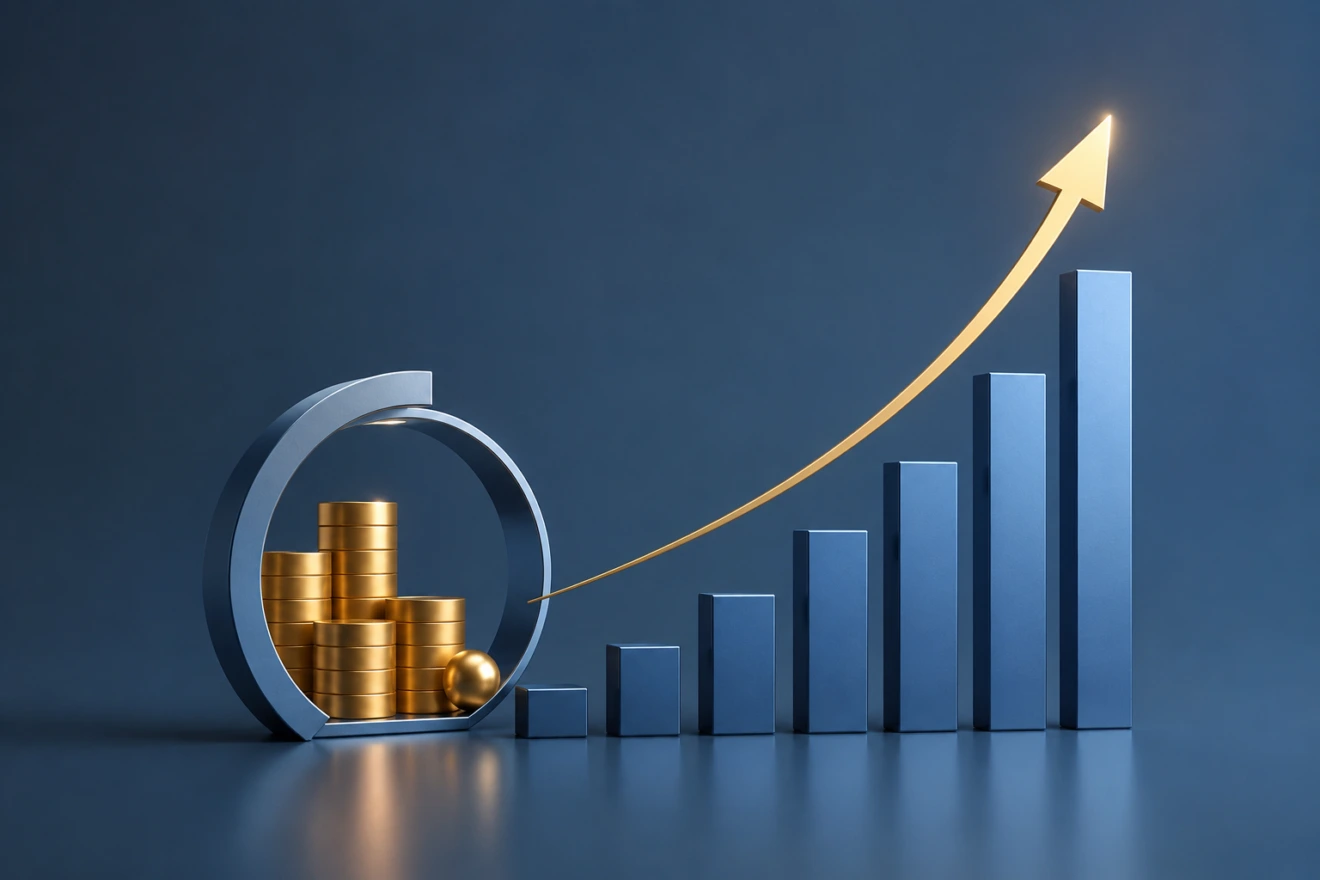
The figures indicate nearly 70% growth between 2025 and 2026 alone, while the market has expanded by roughly five times its 2023 value.
The increase means the Nigerian market added approximately $48 billion in capitalization within a year—more than the entire market value of several African exchanges.
What Drove the Growth?
Analysts attribute the NGX’s strong performance to a combination of economic reforms, improved investor sentiment and stronger corporate fundamentals.
Key drivers include:
- Banking sector recapitalization and stock repricing
- Foreign exchange reforms that improved market confidence
- Strong earnings reported by listed companies
- Increased participation by domestic institutional investors, particularly pension funds
- Renewed interest from foreign investors
- Regulatory reforms, including the introduction of a T+1 settlement cycle, expanded trading hours and higher capital requirements for market operators
The rally has been particularly notable in the banking sector, where recapitalization efforts have attracted investor attention and contributed significantly to market gains.
As of late May 2026, the NGX All-Share Index had gained 69.4% in dollar terms, making it the strongest-performing market among 17 African exchanges tracked during the period.
The gains have been supported by broader improvements in macroeconomic conditions, including currency stabilization, easing inflationary pressures and renewed investor appetite for frontier and emerging markets.
Historical Shift in Rankings
For several years, Morocco maintained its position as Africa’s second-largest stock market behind South Africa.
The ranking evolution highlights the significance of Nigeria’s recent surge:
| Year | 1st | 2nd | 3rd |
|---|---|---|---|
| 2023 | South Africa | Morocco | Nigeria |
| 2024 | South Africa | Morocco | Nigeria |
| 2025 | South Africa | Morocco | Nigeria |
| 2026 | South Africa | Nigeria | Morocco |
While Morocco’s exchange remains one of the continent’s most developed markets relative to the size of its economy, Nigeria’s rapid growth enabled it to move ahead for the first time in years.
Market Still Relatively Shallow
Despite the achievement, analysts note that Nigeria’s capital market remains relatively underdeveloped compared to the size of the economy.
With Nigeria’s gross domestic product estimated at about $377 billion, the NGX’s market capitalization of $117 billion represents roughly 35 per cent of GDP.
By comparison, mature capital markets often record market-capitalization-to-GDP ratios exceeding 80% or even 100%.
This suggests substantial room for future growth if more large corporations list on the exchange, investor participation broadens and capital market reforms continue.