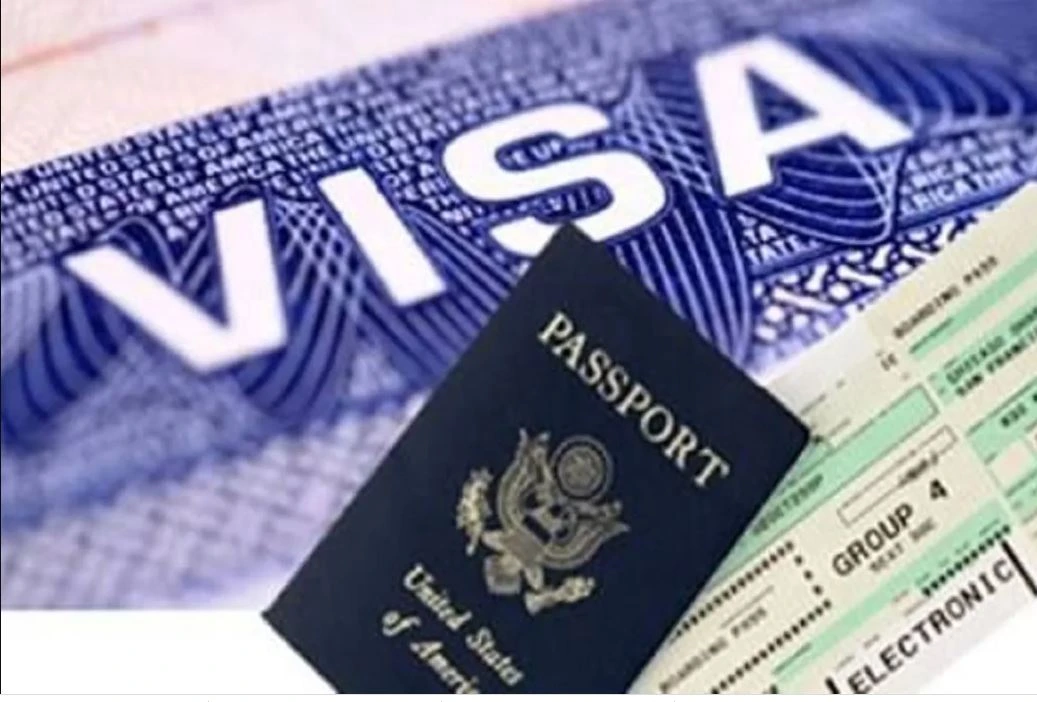
The administration of US President Donald Trump has announced a major tightening of immigration policy that could significantly affect thousands of international students, skilled workers and temporary visa holders already living in the United States — including Nigerians seeking permanent residency.
Under new guidance issued by the US Citizenship and Immigration Services (USCIS), many foreign nationals on temporary visas may now be required to leave the United States and apply for permanent residency — commonly known as a Green Card — from their home countries instead of adjusting their status from within the US.
The move marks another escalation in the Trump administration’s broader immigration crackdown and could reshape long-standing pathways used by international students, H-1B workers and family-based applicants to remain in America legally while transitioning to permanent residency.
“Adjustment of Status” No Longer Seen as an Automatic Right
According to the new USCIS guidance, adjustment of status — the process through which eligible immigrants apply for permanent residency while already inside the United States — will now be treated more strictly as a “discretionary benefit” rather than a routine administrative pathway.
The Department of Homeland Security stated:
“An alien who is in the US temporarily and wants a Green Card must return to their home country to apply.”
The administration argues that the policy is intended to restore what it describes as the “original intent” of immigration law and to prevent abuse of temporary visa categories.
Immigration lawyers quoted by multiple US media outlets warned that the new interpretation could disrupt the lives of thousands of people who had expected to transition from temporary visas to permanent residency without leaving the country.
Why the Policy Matters for Nigerians
The development is especially significant for Nigerians because the United States remains one of the most popular destinations for Nigerian professionals, students and migrants.
Many Nigerians currently in the US are on temporary visa categories such as:
H-1B skilled worker visas
F-1 student visas
J-1 exchange visas
Temporary work permits
Dependent family visas
Traditionally, many of these visa holders hoped to “adjust status” from inside the US once they secured employment sponsorship, marriage-based eligibility or family sponsorship.
The new policy could force applicants to leave America and complete immigrant visa processing through US embassies and consulates abroad — a process known as “consular processing.”
That creates additional uncertainty because applicants who leave the US may face:
long embassy processing delays
visa denials
administrative backlogs
travel disruptions
risks of being unable to re-enter the United States quickly
For Nigerians, this concern is magnified by already lengthy US visa appointment waiting times in cities such as Lagos and Abuja.
Wider Immigration Crackdown
The latest announcement fits into a broader tightening of US immigration policy since Trump returned to office.
Earlier this year, the administration announced an indefinite suspension of immigrant visa processing for nationals of dozens of countries, including Nigeria, under expanded screening and public-charge reviews.
The administration has also increased immigration vetting procedures, strengthened social-media screening and expanded restrictions affecting asylum seekers and temporary migrants.
Critics argue the cumulative effect is making legal immigration to the United States increasingly uncertain even for highly educated professionals and lawful visa holders.
Potential Economic Implications
The policy could also have implications for the American labour market, particularly in sectors heavily dependent on foreign workers, including:
technology
healthcare
engineering
academia
financial services
US companies have long relied on foreign skilled workers, especially through the H-1B visa programme.
Analysts warn that forcing applicants to leave the country during Green Card processing may discourage highly skilled migrants from choosing the United States over alternative destinations such as Canada, Australia and the United Kingdom, all of which continue competing aggressively for global talent.
Uncertainty Over Implementation
Despite the announcement, immigration experts note that many details remain unclear.
It is not yet certain:
which visa categories will be most affected
whether exceptions will apply
how existing applications will be treated
whether courts will challenge the policy

Some universities and legal advisers have already begun informing international students and scholars to avoid unnecessary travel while awaiting further clarification.
The uncertainty is likely to increase anxiety among temporary visa holders already navigating a more restrictive immigration environment in the United States.