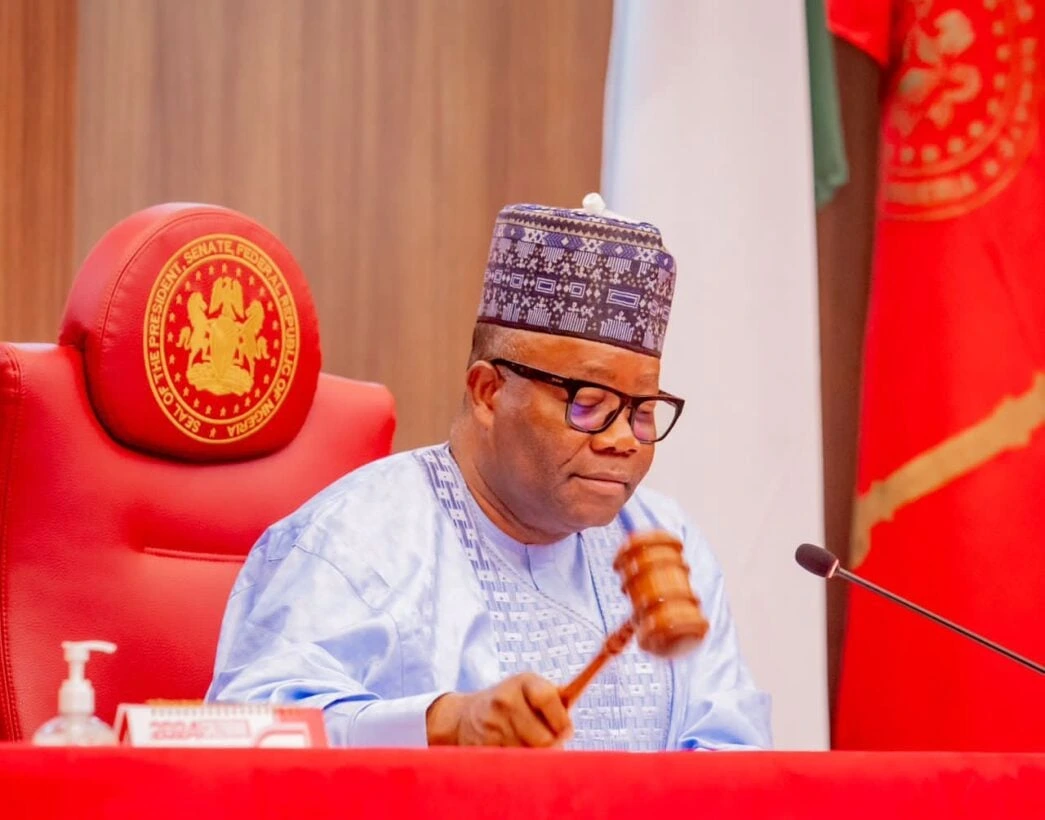
Nigeria’s Senate President, Godswill Akpabio, has issued a strong warning over rising xenophobic violence against Nigerians in South Africa, describing the situation as deeply troubling and demanding coordinated action from both nations.
Speaking during a recent Senate session, Akpabio revealed that he had personally reviewed disturbing video evidence of attacks, noting that the content was so graphic it could leave viewers shaken.
He emphasized that the issue goes beyond mere rhetoric and requires decisive intervention.
Call for Parliamentary Collaboration
The Senate President proposed a joint effort between Nigeria’s National Assembly of Nigeria and the Parliament of South Africa to address the growing crisis.
According to him, it is crucial for South African lawmakers to openly debate the issue and take a clear stance.
He urged South African authorities to reflect on the actions of their citizens and either commend lawful conduct or firmly condemn acts of violence against foreigners.
“This Goes Beyond Words”
Akpabio stressed that Nigerians traveling to South Africa for legitimate purposes—including business and tourism—are increasingly at risk.
He cited a disturbing example of a Nigerian reportedly attacked and killed by a local mechanic who allegedly believed the victim was taking away job opportunities.
“This goes beyond rhetorics,” he stated, underscoring the severity of the situation and the urgent need for stronger measures.
Push for Stronger Measures
While acknowledging ongoing diplomatic efforts and “prayers,” the Senate President indicated that these steps may no longer be sufficient.
He called on lawmakers to strengthen their response and consider concrete actions to protect Nigerian citizens abroad.
He also cautioned against prolonged debates without results, urging the Senate to focus on actionable solutions that will ensure the safety and dignity of Nigerians in foreign countries.
Growing Concern
The remarks add to increasing concern within Nigeria over repeated reports of xenophobic violence in South Africa.

Incidents involving attacks on foreign nationals—particularly Africans from other countries—have sparked diplomatic tensions in the past.
As pressure mounts, observers say the coming weeks could see renewed diplomatic engagement between both countries aimed at addressing the root causes of the violence and preventing further loss of life.