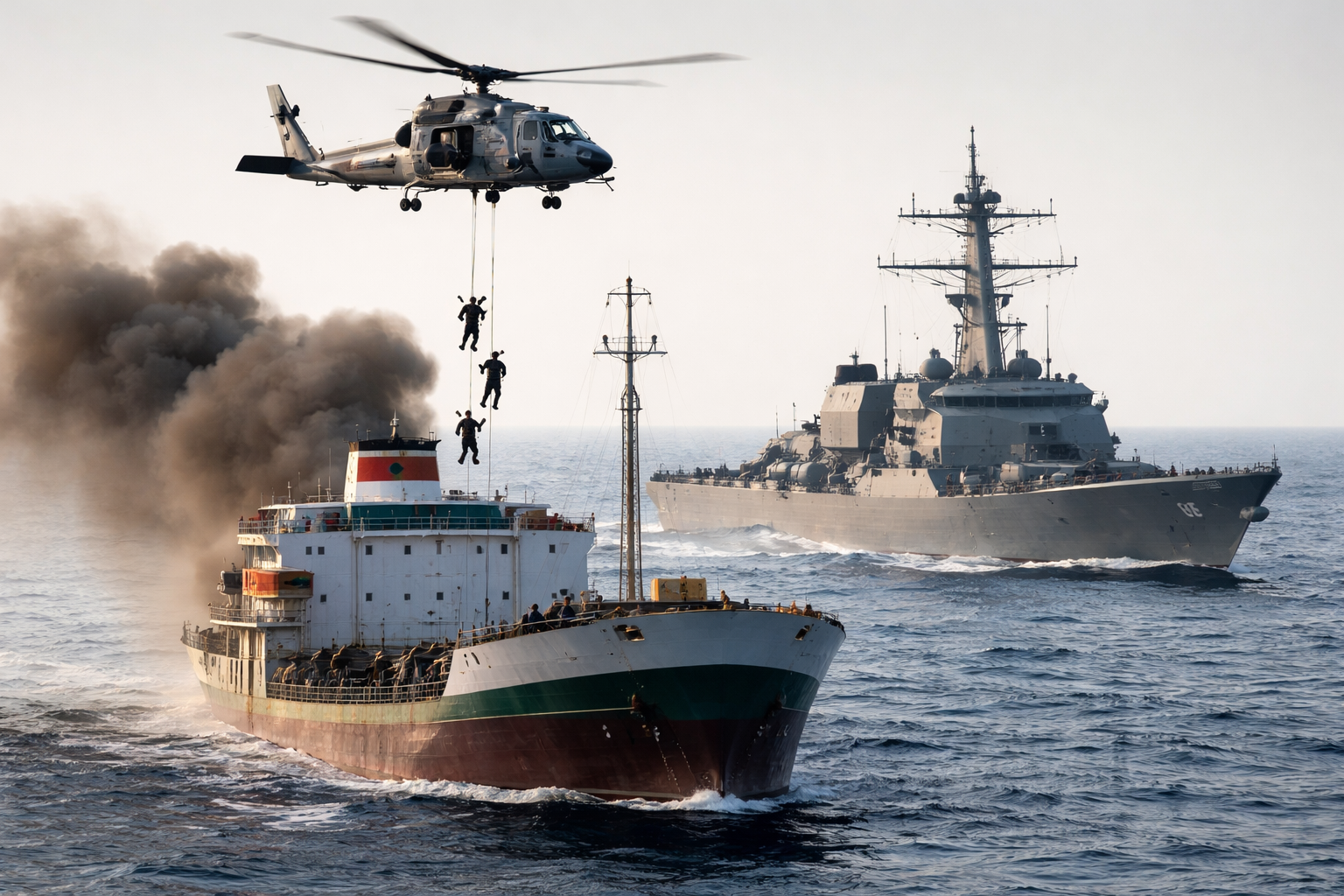
Tensions in the escalating US–Iran conflict surged over April 19–20, 2026, after the United States Navy seized an Iranian-flagged cargo vessel in the Gulf of Oman near the Strait of Hormuz, prompting Tehran to suspend any immediate plans for renewed diplomacy.
The vessel, identified as the M/V Touska, was intercepted by the US Navy destroyer USS Spruance, according to US Central Command. US officials said the ship ignored repeated warnings for over six hours while attempting to breach a naval blockade of Iranian ports. The destroyer reportedly fired on the ship’s engine, disabling it before US Marines boarded via helicopter.
US President Donald Trump defended the operation as a necessary enforcement action, accusing Iran of violating the fragile ceasefire agreement.
Iran, however, condemned the seizure as “armed piracy.” Foreign ministry spokesperson Esmail Baghaei said the incident demonstrates Washington’s lack of commitment to diplomacy, adding that Iran will not engage in talks under continued “aggression.”
Fragile Ceasefire at Risk
The confrontation comes just days before a two-week ceasefire brokered amid the broader US-Israel war on Iran is set to expire around April 22.
At the center of the dispute is the Strait of Hormuz, a strategic chokepoint responsible for roughly one-fifth of global oil shipments.
- Iran previously shut the strait in early March following US and Israeli strikes
- It reopened the route as part of the ceasefire
- It has since imposed intermittent restrictions, citing the ongoing US naval blockade
Washington accuses Tehran of targeting commercial shipping, while Iran argues the blockade itself violates the truce.
The seizure of the Touska marks the most direct US enforcement action since the blockade began—raising the risk of rapid escalation.
Diplomacy Stalls as Positions Harden
A US delegation led by Vice President JD Vance had been expected to engage in mediated talks in Pakistan, but Iranian officials now say negotiations are unlikely.
Key Iranian demands remain unchanged:
- Immediate ceasefire in Lebanon
- End to the US naval blockade
- Release of frozen Iranian assets
The Trump administration has pushed for a broader agreement including:
- Permanent reopening of Hormuz
- Full limits on Iran’s nuclear enrichment
Trump has warned of strikes on Iranian infrastructure if Tehran refuses.
Iranian President Masoud Pezeshkian struck a more cautious tone, reiterating that “war is not in anyone’s interest” while insisting Iran will defend itself.
Regional Spillover
The parallel ceasefire between Israel and Lebanon is also deteriorating:
- Israeli forces continue demolitions in southern Lebanon to enforce a buffer zone
- Displaced civilians are returning to heavily damaged communities
- Israeli officials warn of forceful retaliation if attacked
Inside Iran, pressure is mounting:
- A nationwide internet blackout has stretched beyond 50 days
- Limited international flights are gradually resuming
International concern is growing over the latest escalation especially after oil markets reacted immediately, with Brent crude climbing toward $96 per barrel amid fears of supply disruption through Hormuz.
China’s foreign ministry spokesperson has called for peace talks between Iran and the US to resume following the seizure of the Iranian-flagged Touska ship.
Guo Jiakun has told a news conference that China expresses “concern” over the “forcible interception” of the vessel by US forces, according to the AFP news agency.

Iran has not yet decided whether it will attend a second round of negotiations with the US, a spokesman for Iran’s foreign ministry says.
“As of now… we have no plans for the next round of negotiation, and no decision has been made in this regard,” spokesman Esmail Baghaei says, in a translation from the AFP news agency.