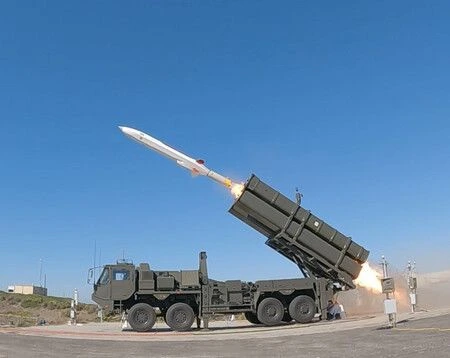
Japan’s Defence Ministry on Tuesday deployed a long-range missile system to Ground Self-Defence Force camps in Kumamoto and Shizuoka prefectures that can be used as a counterstrike capability.
At a time when China and other countries are stepping up their military activities, the SDF, for the first time, began operating practical weapon systems capable of striking enemy bases.
Specifically, the upgraded Type-12 surface-to-ship guided missile system was deployed at the GSDF’s Camp Kengun in Kumamoto, southwestern Japan.
The Hyper Velocity Gliding Projectile surface-to-surface missile system for the defence of remote islands was deployed at the GSDF’s Camp Fuji in Shizuoka, central Japan.
The GSDF said Tuesday that it has named the upgraded Type-12 missile system the Type-25 surface-to-ship guided missile system. The Hyper Velocity Gliding Projectile was named the Type-25 hyper velocity gliding projectile.
Increased Nuclear Weapon Show-Offs
Several nations are currently taking actions that keep the risk of renewed nuclear war alive. North Korea continues to expand its ballistic missile program and has maintained readiness at its known test sites, signaling that a new test could occur if leadership chooses to escalate.

Russia, although not conducting any nuclear detonations, has taken significant strategic steps that raise global concern. It has stepped back from key arms control frameworks such as the New START Treaty and moved to revoke its ratification of the Comprehensive Nuclear-Test-Ban Treaty. Alongside this, Russia has carried out nuclear-capable missile drills and increased its nuclear rhetoric, signaling that while testing is not underway, it remains a viable option in its strategic toolkit.
In contrast, Japan continues to uphold its non-nuclear stance, with no weapons program or testing activity. However, it has strengthened its defense posture in response to regional threats, particularly from North Korea and a rising China. Japan relies on the United States’ nuclear umbrella and has increased investment in missile defense and broader military capabilities, reflecting a more cautious and security-focused policy environment without crossing into nuclear armament.