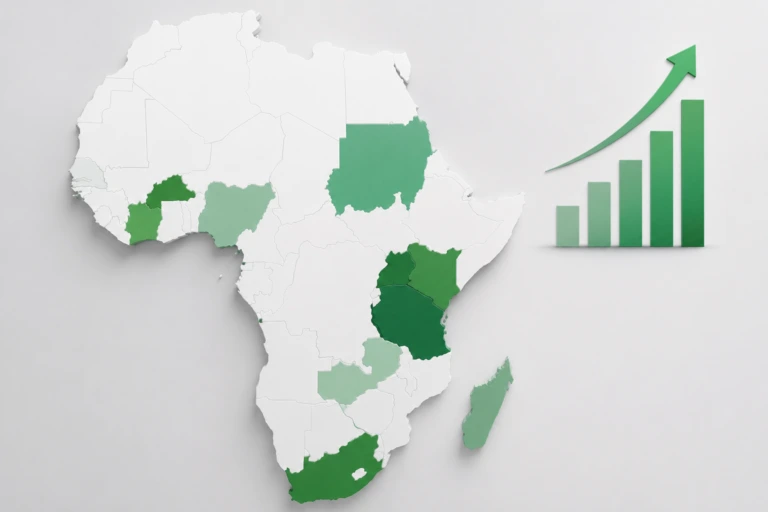
Nigeria recorded total capital importation of $6.44 billion in the fourth quarter of 2025, representing a 26.61% year-on-year increase from $5.09 billion in Q4 2024, according to the latest report released by the National Bureau of Statistics.
The figure also reflects a 7.13% rise from the $6.01 billion posted in Q3 2025, underscoring sustained momentum in foreign capital inflows toward year-end.
The strong performance was largely driven by heightened investor participation in Nigeria’s financial markets, supported by foreign exchange reforms and improved market confidence.
Breakdown of Inflows
Portfolio Investment (FPI) remained the dominant component, accounting for $5.49 billion, or 85.14% of total inflows. This indicates continued foreign investor appetite for Nigerian equities and fixed-income instruments.
Foreign Direct Investment (FDI) stood at $357.8 million, contributing 5.55% of total capital importation, highlighting persistent structural constraints in attracting long-term investments.
Other Investments, which include loans and trade credits, contributed $599.65 million, representing 9.31% of the total.
Country of Origin
The United Kingdom retained its position as Nigeria’s largest source of capital, accounting for $3.73 billion or 57.94% of total inflows. It was followed by the United States with $837.91 million (13.00%) and South Africa with $516.96 million (8.02%). Other notable contributors included Mauritius and Belgium, reflecting a diverse but still concentrated investor base.
Recipient Banks
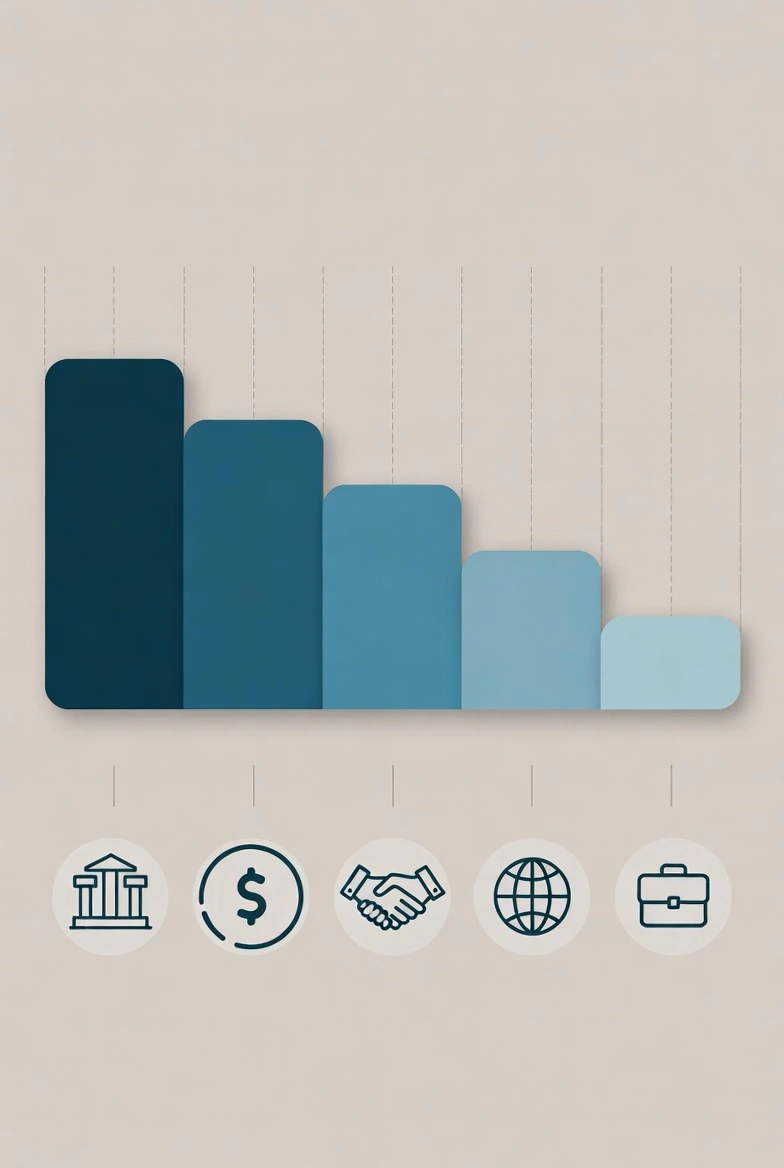
On the receiving end, Stanbic IBTC Bank Plc led with $2.23 billion, representing 34.58% of total inflows. Standard Chartered Bank Nigeria Ltd followed with $1.85 billion (28.75%), while Citibank Nigeria Ltd accounted for $840.72 million (13.05%). These institutions continue to play a pivotal role in intermediating foreign capital into the Nigerian economy.

Full-Year Performance
For the full year 2025, Nigeria’s capital importation surged by 88.5% to $23.21 billion, compared to $12.31 billion recorded in 2024. The sharp increase is largely attributed to foreign exchange market liberalisation measures and a gradual restoration of investor confidence, particularly in portfolio assets.
Overall, the data signals a strong rebound in external capital flows, although the relatively low level of FDI suggests that structural reforms remain necessary to attract more stable, long-term investments into the real sector.