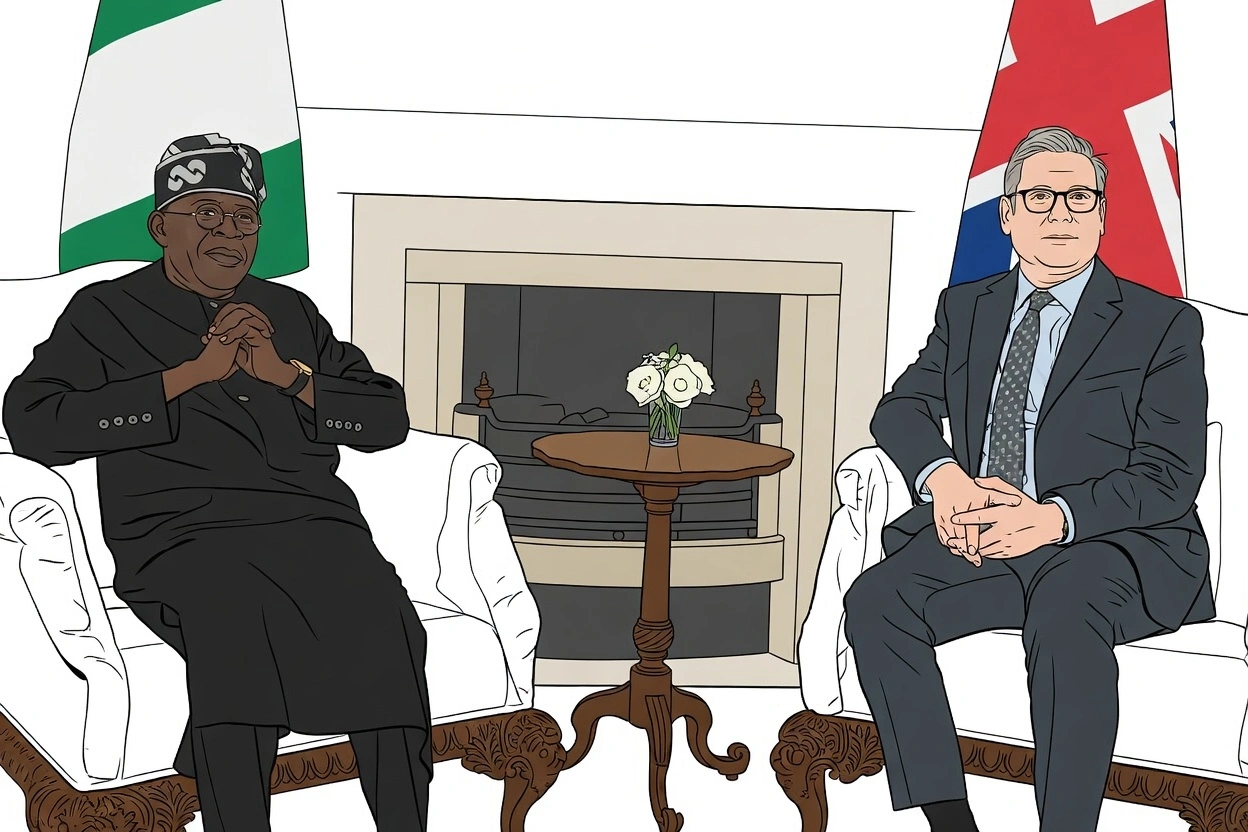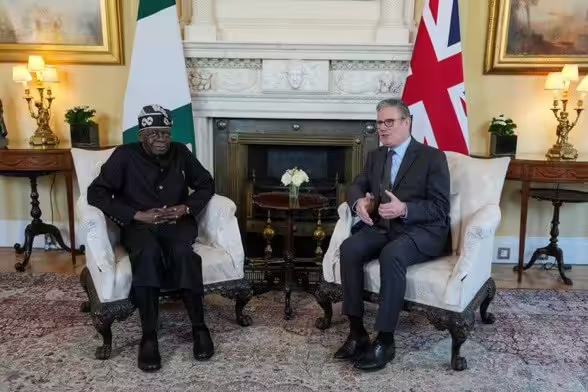
President Bola Ahmed Tinubu’s historic state visit to the United Kingdom this week, the first by a Nigerian president in 37 years, was hosted by King Charles III at Windsor Castle.
The visit included a state banquet and meetings with Prime Minister Keir Starmer at 10 Downing Street. Additionally, it focused on deepening Nigeria-UK bilateral ties in trade, investment, infrastructure, security, defence, counterterrorism, migration, climate change, cultural cooperation, and education.
Key Agreements Reached During Visit
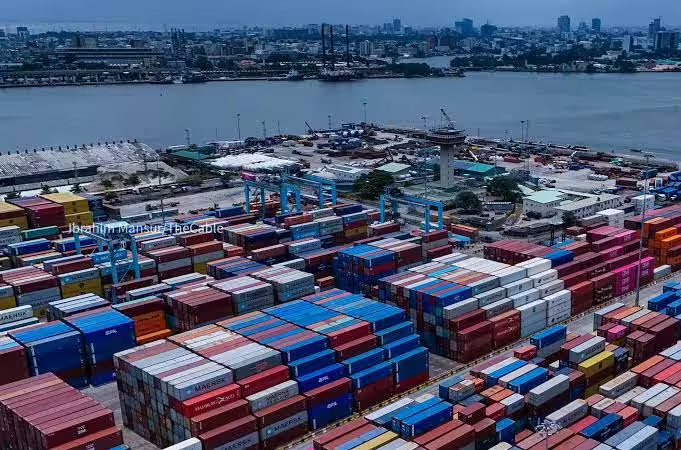
- £746 million port financing agreement (facilitated by UK Export Finance – UKEF): This was signed between UKEF, the Nigerian Ports Authority (NPA), and Nigeria’s Federal Ministry of Finance for the refurbishment and modernisation of two major Lagos ports—the Lagos Port Complex (Apapa) and Tin Can Island Port. It aims to boost trade capacity, infrastructure efficiency, and economic growth.
- Immigration and migration returns cooperation: The two countries advanced arrangements to facilitate the return of Nigerian nationals without right to remain in the UK (including overstayers, foreign offenders, and failed asylum seekers). Nigeria on its part agreed for the first time to accept UK-issued identification letters, streamlining processes by removing the need for emergency travel documents and accelerating removals.
- Establishment of Coventry University campus in Lagos: A significant advancement in transnational education occurred during side engagements tied to the visit. Nigeria’s Minister of Education, Dr. Maruf Olatunji Alausa (Dr. Tunji Alausa), who accompanied the President, announced progress on a partnership with Coventry University (UK) to establish a campus in Nigeria. It is proposed in Alaro City, Lagos State, a growing hub for education and innovation.
Programmes: Bachelor’s and Master’s degrees in STEMM (Science, Technology, Engineering, Mathematics, and Medicine), Business, and Technical and Vocational Education and Training (TVET).
Degree recognition: All qualifications will be fully equivalent to those from Coventry’s UK campuses, with international accreditation.
Benefits: Enables Nigerian students to earn UK degrees locally at lower costs. This also reduces capital flight from overseas study and expands access to quality higher education.
Timeline: Admissions expected to start in Q3-Q4 2026, pending final regulatory approvals from Nigerian and UK authorities.
Other MoUs and commitments
Several Memoranda of Understanding (MoUs) were signed or advanced in areas such as trade, investment, defense, security, cultural exchange, and interfaith dialogue. Furthermore, discussions reinforced cooperation on counterterrorism, maritime security, climate action, and sustainable development.
Reports indicate these build on existing partnerships to attract UK investment in energy, infrastructure, technology, and services. There is potential for job creation and expanded economic ties.
Nigeria-UK Trade Volume
Nigeria–UK trade has recorded steady growth between 2023 and 2025, reflecting strengthening economic ties and expanding commercial exchange.
In 2023, total bilateral trade stood at roughly £7 billion. This established a solid baseline driven largely by UK exports of manufactured goods and Nigeria’s crude oil shipments. By 2024, trade volumes edged slightly higher to around £7.2 billion. This was supported by the implementation of the Enhanced Trade and Investment Partnership, which improved market access and boosted investor confidence.

The upward trend became more pronounced in 2025, when total trade rose to approximately £8.0–£8.1 billion, representing double-digit growth. This expansion was driven by a surge in UK refined petroleum exports to Nigeria. There was also continued Nigerian energy exports and increasing diversification into services and capital flows.
With the newly signed agreements, the volume of trade between both countries is expected to grow exponentially in 2026 resulting in greater FDI and a boost to Nigeria’s foreign reserves.