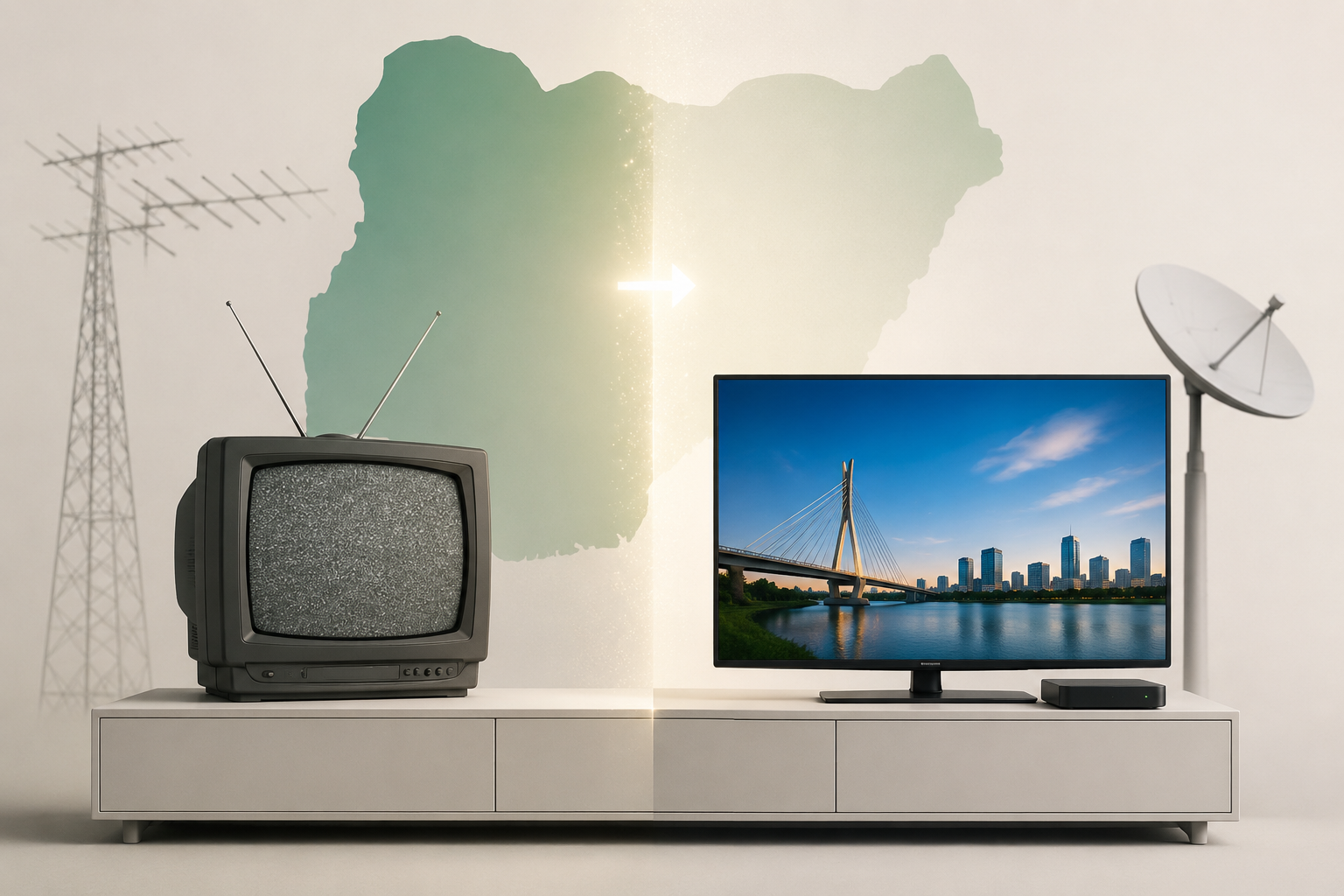
Nigeria is set to launch the nationwide phase of its long-delayed Digital Switch-Over (DSO) programme, marking a major milestone in the country’s transition from analogue television broadcasting to digital transmission.
The DSO project is designed to replace analogue television signals with digital terrestrial television, offering viewers improved picture and sound quality, more channels, electronic programme guides and interactive services while freeing up spectrum for telecommunications and broadband expansion.
Minister of Information and National Orientation, Mohammed Idris, said the project would transform broadcasting and television consumption across Nigeria.
“The most important thing is that we are now moving to HD. After the launch, we will be fully in HD,” the minister said while announcing the rollout date.
Nigeria’s Digital Switch Over Project
Nigeria first launched the DSO pilot programme in Jos, Plateau State, in April 2016 before expanding to Abuja and several other locations. However, financial constraints, infrastructure challenges and implementation bottlenecks slowed progress, causing the country to miss multiple transition deadlines.
Over the years, the programme was rolled out in phases across a limited number of states, including Plateau, Kwara, Kaduna, Enugu, Osun, Lagos, Kano and Rivers, but nationwide coverage remained elusive. By 2023, most states were still operating largely on analogue broadcasting systems.
The National Broadcasting Commission (NBC) has described the current phase as a comprehensive nationwide rollout backed by satellite infrastructure. According to NBC officials, the platform is expected to carry up to 100 television channels at launch while providing greater access for content creators through regional production centres established across the country.
Benefits of Digital Switch Over
The Federal Government has repeatedly argued that the DSO programme could stimulate job creation in broadcasting, content production, software development, equipment manufacturing and advertising. Previous administrations projected that the initiative could generate hundreds of thousands of direct and indirect jobs while boosting Nigeria’s creative industry.

Industry analysts say the success of the latest rollout will depend on infrastructure readiness, public awareness, affordability of reception equipment and sustained government support. Previous efforts were hampered by funding issues and disputes among stakeholders, factors that contributed to repeated postponements of the national switchover.
With the latest launch date now reached, stakeholders say the coming months will determine whether Nigeria can finally complete a broadcasting transition that began more than a decade ago and fully align with global digital broadcasting standards.