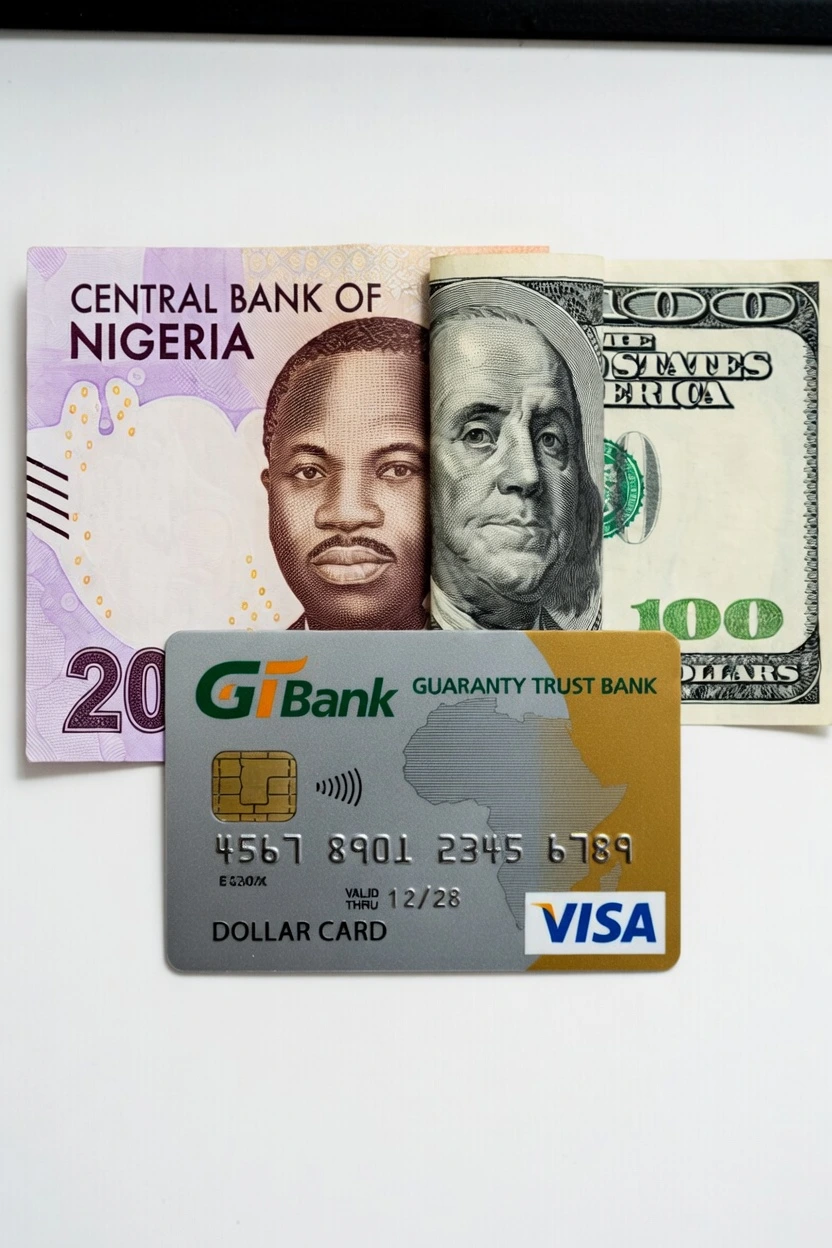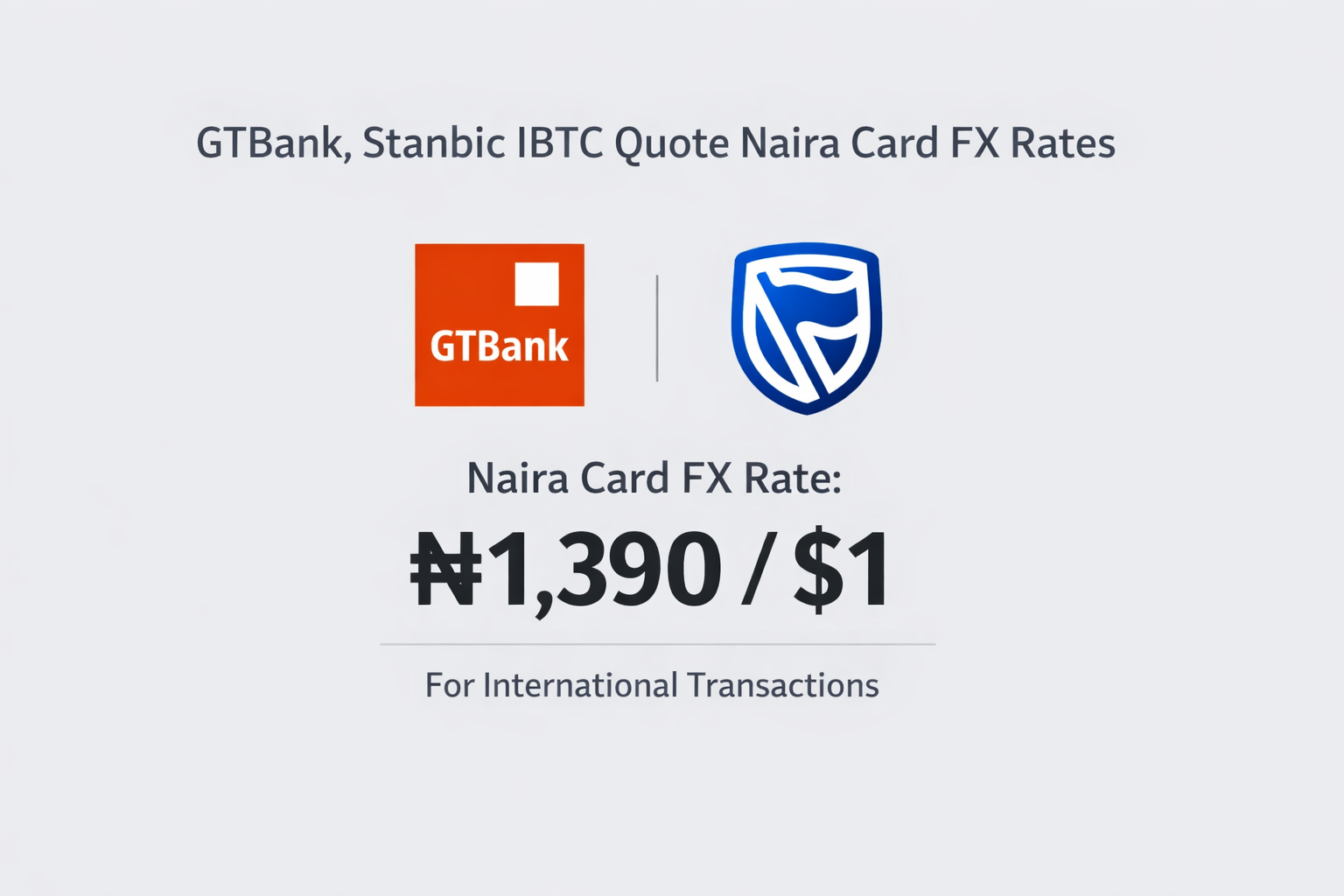
Nigerian banks continue to adjust foreign exchange rates for international card payments, with Stanbic IBTC now quoting ₦1,405/$ — the latest sign of upward pressure in the FX market.
Stanbic IBTC Bank has increased its foreign exchange rate for international transactions on naira debit cards to ₦1,405 per dollar, up from ₦1,395/$ recorded a day earlier. Meanwhile, Guaranty Trust Bank (GTBank) has held its rate steady at ₦1,401 per dollar, indicating a pause after its recent upward adjustment.
The new pricing applies to international payments made via naira cards for services such as online subscriptions, foreign e-commerce, software payments, and travel bookings.
A Clear Upward Trend in Card-Based FX Pricing
The move by Stanbic IBTC reinforces a pattern that has emerged over recent days: gradual upward adjustments in bank-set FX rates for international card usage.
Within a short window:
- GTBank moved from ₦1,385 → ₦1,401/$
- Stanbic IBTC moved from ₦1,395 → ₦1,405/$
This suggests that banks are continuously repricing FX exposure in response to:
- Market liquidity conditions
- Dollar funding costs
- Short-term volatility in Nigeria’s FX market
Divergence Reflects Bank-Level FX Strategy
The ₦4 spread between Stanbic IBTC and GTBank — now in Stanbic’s favour as the higher-priced provider — underscores a key feature of the current system: FX pricing is no longer centrally fixed but institution-specific.
Banks are effectively making independent judgements about:
- Cost of sourcing dollars
- Risk buffers required for settlement
- Customer demand patterns
This creates a quasi-market within the banking system, where rates vary slightly across institutions.
Spending Limits Continue to Shape Demand
Both banks have retained quarterly limits on international card usage:
- GTBank: $6,000 per quarter
- Stanbic IBTC: $4,000 per quarter
These caps remain a central mechanism for controlling aggregate FX demand, even as access to international payments improves.
FX Reform Driving Market-Based Pricing
The evolution of card FX rates is closely tied to the Central Bank of Nigeria’s shift toward a more market-determined exchange rate system.
Since reforms began:
- Banks now source FX more independently
- Rates are adjusted more frequently
- Pricing reflects real-time supply-demand dynamics
As a result, international card payments — once suspended — have returned, but under a more flexible and market-driven pricing regime.

Implications: Access Restored, Costs Rising
For Nigerian consumers, the system presents a trade-off:
- Improved access: International payments are now functional again
- Higher cost: FX rates reflect market scarcity and volatility
For the broader financial system, however, the trend signals increased maturity and transparency, with pricing mechanisms that align more closely with global standards.