Nigeria’s electricity sector has spent more than a decade expanding generation capacity, yet a significant share of that generation capacity has remained unused. Between 2015 and 2025, electricity generation companies lost an estimated ₦2.28 trillion in capacity payments as power plants sat idle—not because they were broken, but because the system could not take the electricity they were built to produce.
The figure, compiled from industry data released by the Association of Power Generation Companies, offers a clearer explanation for a long-standing paradox in Nigeria’s power market: why most GenCos struggle to make money even as installed capacity grows, and why only a small number of operators consistently report profits.
At its core, stranded power is not a technical failure. It is an economic one.
When Capacity Exists but Revenue Does Not
Stranded capacity refers to electricity generation capacity that is available but cannot be dispatched or monetised. Over the past decade, this has been a persistent feature of Nigeria’s power system. At its worst point in 2016, more than half of available generation capacity—about 54 per cent—could not be utilised. Even in recent years, after modest improvements in grid management, roughly one-third of available power has remained stranded.
This means power plants continued to incur costs—fuel readiness, staffing, maintenance, depreciation, and debt service—while earning little or nothing in return. Capacity payments ballooned, but electricity supply to consumers did not rise in proportion.
The result is a sector where capital is deployed, but value is systematically destroyed.
The Grid as the First Bottleneck
One of the most visible drivers of stranded power is transmission constraint. Nigeria’s grid has historically lacked the capacity and stability required to evacuate all available generation. Even when plants are operational and fuel is available, they are frequently asked to ramp down or shut in.
The effect is straightforward: power that cannot move across the grid cannot earn revenue. Fixed costs, however, do not stop accruing.
This dynamic has made dispatch predictability—not installed capacity—the critical determinant of profitability.
Tariffs, MYTO, and Suppressed Demand
Even when grid capacity improves, demand absorption remains limited. Electricity tariffs are governed by the Multi Year Tariff Order (MYTO), which is designed to be cost-reflective, adjusting for inflation, exchange rates, fuel costs, and investment needs.
In practice, MYTO-based tariff adjustments are often delayed or suspended due to political and social pressure. The resulting tariffs frequently fall below the true cost of electricity.
This creates a cascading effect. Consumers underpay, distribution companies collect less, bulk purchasers cannot fully settle invoices, and generation companies are left with stranded output that cannot be dispatched or paid for.
DisCos, Collections, and the Illiquidity Loop
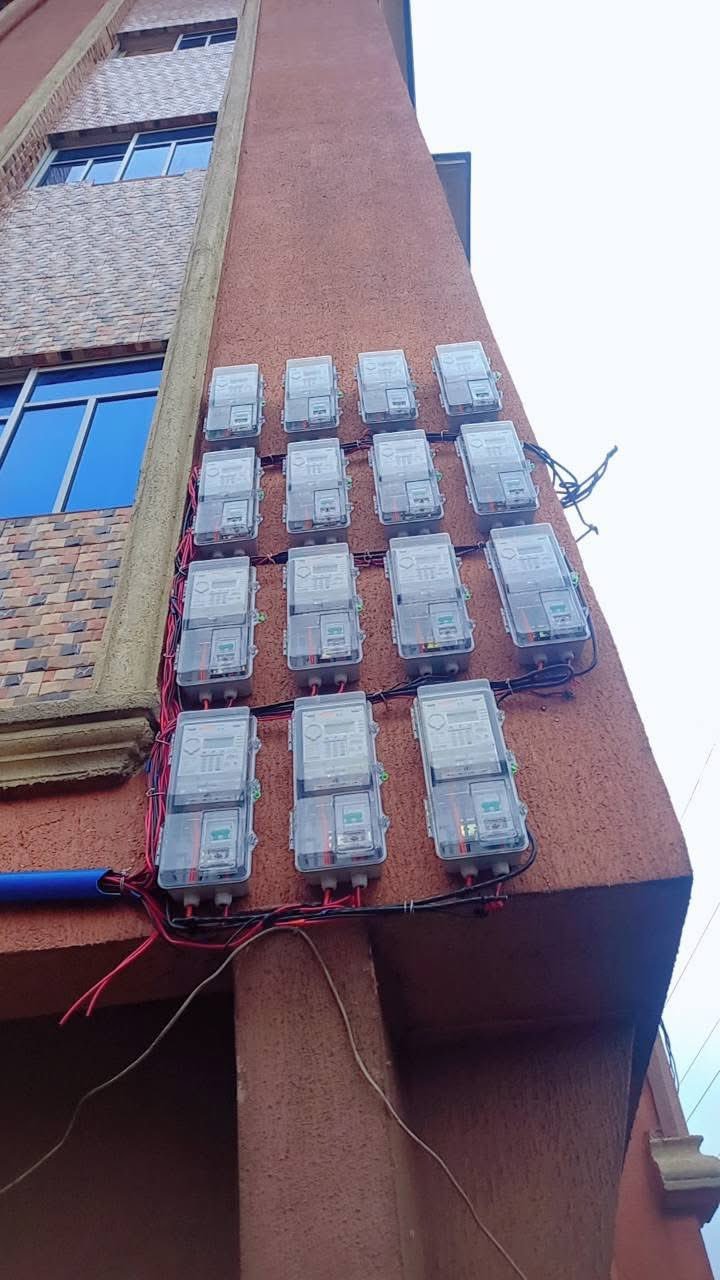
Distribution companies sit at the weakest point of the value chain. High technical losses, energy theft, metering gaps, and tariff shortfalls limit their ability to collect from end users.
These weaknesses flow upstream. When DisCos under-remit, Nigerian Bulk Electricity Trading Plc settles GenCo invoices only partially and often with long delays. Generation companies may technically be able to produce more electricity, but doing so can deepen losses rather than improve earnings.
In such a system, producing more power does not necessarily mean making more money.
FX Exposure and the Cost of Being Ready
Most grid-connected plants in Nigeria are thermal. While revenues are earned in naira, many costs—gas supply arrangements, spare parts, and specialist maintenance—are linked to foreign exchange.
Currency depreciation raises operating costs immediately, even when plants are under-dispatched. For many GenCos, FX exposure turns stranded capacity into a compounding financial burden.
Why a Few GenCos Still Make Money
The ₦2.28tn stranded power bill does not affect all operators equally. Over time, a narrow subgroup of GenCos has demonstrated the ability to remain profitable despite systemic inefficiencies.
These plants typically share several characteristics:
- relatively stable dispatch profiles,
- sufficient scale to absorb fixed costs,
- more efficient operations,
- and manageable exposure to FX-linked expenses.
Geregu Power Plc’s ₦41.9bn pre-tax profit in 2025 illustrates this dynamic. Its performance does not contradict the broader data on stranded capacity; it exists within it. The same system that leaves two out of every five megawatts unused also rewards a small number of operators whose assets align with grid realities and dispatch economics.
What the ₦2.28tn Figure Really Tells Us
The decade-long accumulation of stranded capacity payments points to a structural mismatch. Nigeria does not lack generation assets. It lacks a power market capable of fully utilising them.
As long as tariffs remain partially cost-reflective, grid constraints persist, collections remain weak, and FX risks are unhedged, stranded power will continue to define the sector. Profitability will remain the exception rather than the rule.
The ₦2.28tn figure, then, is not just a measure of wasted electricity. It is the price Nigeria’s power sector has paid for building capacity faster than it built the institutions, pricing mechanisms, and infrastructure needed to use it.
A Policy Question the Data is Now Clearly Forcing
Nigeria’s ₦2.28tn stranded-power bill ultimately turns the profitability question into a transmission-and-market-design question: generation can be privately financed, but without a grid that can reliably evacuate power—and a tariff/settlement framework that sustains collections—capacity remains idle and revenues remain fragile.
The investment gap is visible in hard system constraints: even as TCN says wheeling capability has risen to 8,700MW and peak transmitted power reached 5,801.84MW in 2025, the government’s own 30,000MW ambition implies a grid that must expand far beyond today’s evacuation limits; one industry estimate puts TCN’s near-term funding need at about $2.2bn for 149 priority projects alone.
The international contrast is instructive. India’s transmission backbone remains largely in state hands, yet it operates at scale and high availability because the state utility has built deep balance-sheet capacity and sustained capex pipelines (PGCIL still owns the overwhelming share of inter-regional capacity and runs a very large asset base).
The UK model is the opposite: privately owned transmission operators invest under multi-year, regulator-set revenue frameworks—illustrated by Ofgem’s fast-tracked £4bn grid investment and subsequent multi-year approvals for much larger network spending.
Morocco shows a third path: a state-owned transmission monopoly (ONEE) that has still mobilised sizeable long-term funding—for example €300m in loans for grid upgrades tied to renewable integration—demonstrating that the decisive variable is not ideology, but credible, bankable investment and planning mechanisms.
For Nigeria, the policy choice is therefore best framed as a spectrum—ranging from a strengthened state-owned TCN with enforceable capex governance, to concessioning specific corridors, to partial privatisation with independent system operation—so that transmission stops being the binding constraint that turns available megawatts into stranded value.