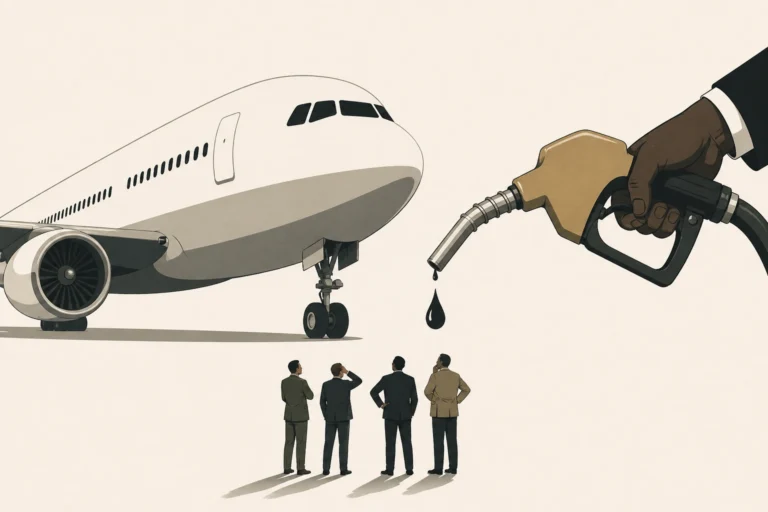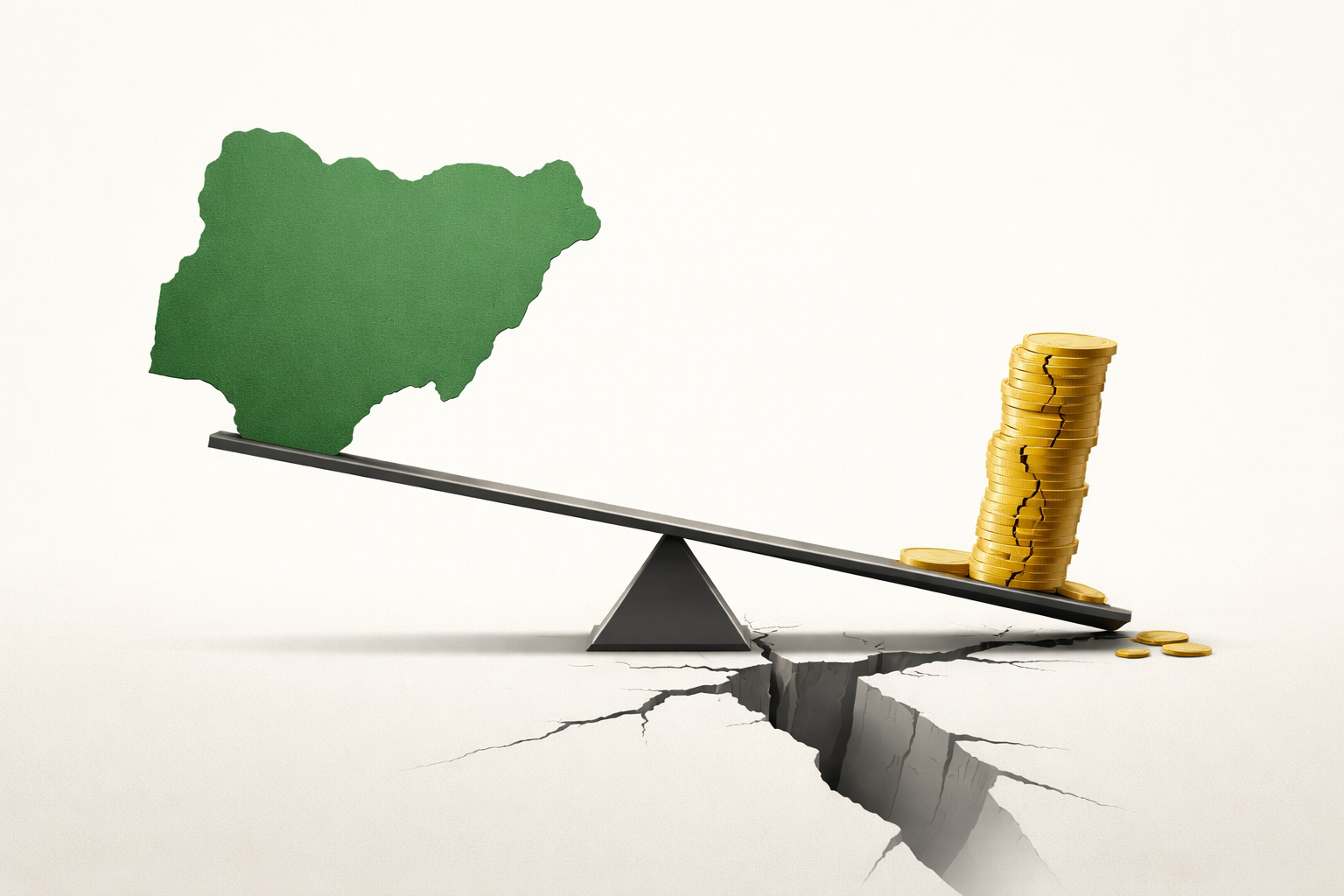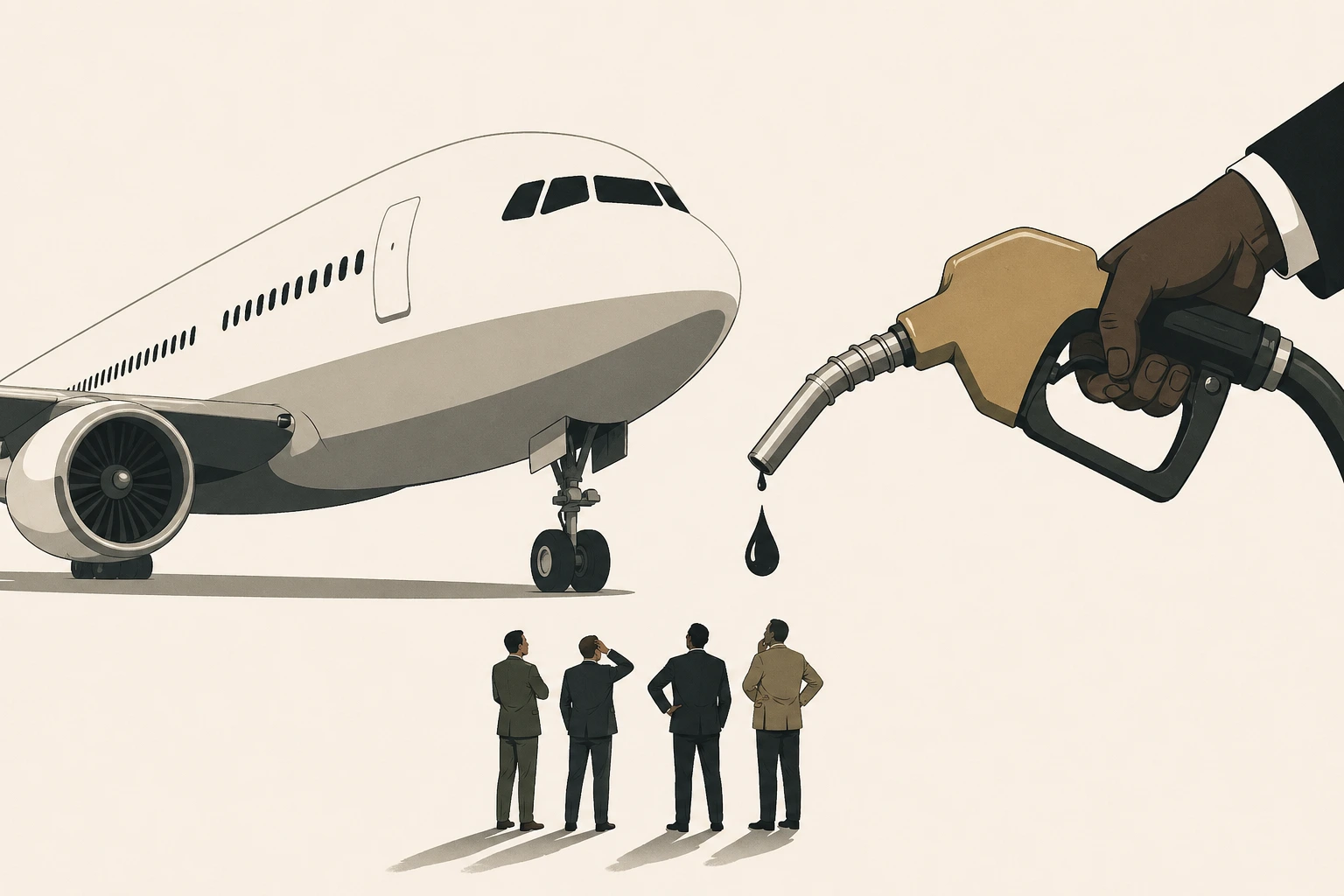
The Federal Government’s decision to offer domestic airlines a 30% debt relief has been presented as an urgent intervention to prevent a shutdown of Nigeria’s aviation sector.
It may achieve that limited objective. But it does not yet amount to a solution to the crisis that brought the industry to the brink.
President Bola Tinubu approved the relief after domestic operators warned that they could no longer absorb the rise in aviation fuel prices.
Aviation Minister Festus Keyamo also announced talks involving airlines, fuel marketers and regulators, with the aim of arriving at a fairer Jet A1 price.
The intervention followed threats by the Airline Operators of Nigeria to suspend flights after Jet A1 prices reportedly surged from below ₦1,000 per litre to about ₦3,300 per litre within weeks.
Reuters reported that Tinubu approved a 30% debt relief for local airlines and ordered urgent fuel-price negotiations.
But the central question is: whether the government is solving the problem or only postponing it.
The answer matters because Nigeria’s aviation crisis is not simply about what airlines owe FAAN, NAMA, NCAA and other aviation agencies.
It is about whether airlines can continue flying when their largest operating cost has moved violently against them.
The real issue is Jet A1, not just airline debt
The debt waiver gives airlines some immediate balance-sheet relief. It may reduce pressure from aviation agencies and allow operators to conserve some cash.
But airlines do not stop flying because of old debts alone. They stop flying when each new flight becomes commercially unsustainable.
That is the core of the current crisis. Aviation fuel is not a marginal cost in airline operations. It is one of the most important cost lines.
When Jet A1 rises sharply, airlines face three bad options: raise fares aggressively, reduce flights, or continue operating at a loss while deferring other critical costs.
Air Peace Chairman Allen Onyema made that point bluntly during the Abuja meeting with Keyamo.
Airlines, he said, were not threatening a shutdown for political theatre; they were warning that fuel costs had become so high that operators were borrowing to buy fuel while struggling to meet other operational obligations, including maintenance.
This is why the debt waiver, although useful, is inadequate. It eases yesterday’s pressure but does not change today’s fuel bill.
The analyst’s warning: government is treating symptoms
Aviation analyst Jide Pratt captured the industry’s deeper concern in a sharp criticism of the government’s response. His argument is that the “root cause” of the crisis is still not being addressed.
He pointed to a dramatic increase in aviation turbine kerosene cargo costs, persistent airside taxes, refinery-related variation charges, regulatory charges on cargo or ticket sales, and the absence of any effective stabilisation mechanism.
His strongest point is that the aviation fuel crisis is not only a liquidity problem. It is a pricing and cost-structure problem.
According to the analyst, a 5,000-tonne ATK cargo that cost about $4 million in January had risen to about $14 million for 7,000 tonnes by April.
On those figures, the implied cargo cost moved from roughly $800 per tonne to about $2,000 per tonne.
That is a dramatic movement, especially when compared with the scale of crude oil price changes over the same broad period.
Some of the analyst’s specific figures require further documentary verification.
For instance, his claim that the refinery charges “25% of cargo variation cost” is not yet supported by publicly available official documentation.
But his wider point is credible: if the pricing chain between refinery, marketers, logistics providers and airlines is opaque, then debt relief will not prevent another crisis.
Reuters has reported that Dangote Refinery has become a major jet fuel supplier and exporter, with local Nigerian airlines facing Jet A1 prices of about ₦3,300 per litre including logistics, even as the refinery benefits from strong global margins and export demand.
Local refining has not translated into local price relief
One reason the current crisis is politically sensitive is that Nigeria now has a major domestic refining asset in Dangote Refinery.
In theory, local refining should reduce import dependence, lower supply-chain risk and improve product availability. In practice, domestic airlines are still facing extreme Jet A1 prices.
This does not necessarily mean Dangote is acting illegally or irrationally.
A private refinery operating in a global market will naturally compare domestic prices with export opportunities.
Reuters reported that Dangote has been exporting significant volumes of jet fuel to Europe, where buyers are paying premium prices.
But that creates a policy dilemma for Nigeria.
If local production does not automatically deliver domestic price stability, then the country needs a clearer framework for aviation fuel supply.
Otherwise, Nigeria may have refining capacity without aviation fuel security.
The problem is not merely availability. It is affordability, transparency and predictability.
Multiple charges worsen the pressure
The analyst is also right to draw attention to statutory aviation charges.
Nigerian airlines operate in a high-cost environment, with levies and charges layered across tickets, cargo, airport services, navigation services and regulatory obligations.
One of the clearest examples is the statutory 5% airfare, contract, charter and cargo sales charge under Nigeria’s Civil Aviation Act 2022.
The Act provides that the charge applies to international and domestic air transportation originating in Nigeria. Importantly, it is a charge on sales, not on profit.
That distinction is crucial. A charge on profit rises or falls with profitability.
A charge on sales applies even when an airline is under severe margin pressure.
In normal conditions, airlines may pass part of the cost to passengers.
In crisis conditions, especially when passengers are already resisting higher fares, statutory sales-based charges add to the cash-flow strain.
This is why the government’s promise to review taxes, fees and levies is important. But Nigeria has had many committees before.
The test is not whether another committee is created.
The test is whether government removes, consolidates or suspends specific charges quickly enough to reduce the cost of flying.
The budget benchmark argument
The analyst also argued that the difference between the budget oil benchmark and current oil prices could have been used to cushion the rise in Jet A1 prices.
This is politically persuasive but fiscally more complicated.
Nigeria’s 2026 fiscal assumptions benchmarked crude oil at $64.85 per barrel, with production projected at 1.84 million barrels per day.
If crude prices move above the benchmark, government may appear to have additional oil revenue.
But the actual fiscal space depends on production performance, debt service, NNPC obligations, crude theft, subsidy-related pressures, exchange-rate movements and the timing of revenue inflows.
So the analyst’s point is directionally valid: windfall oil gains can be used to stabilise strategic sectors.
But it would be too simplistic to assume that every dollar above the benchmark is immediately available to subsidise Jet A1.
A more disciplined approach would be a transparent aviation fuel stabilisation mechanism.
Such a mechanism could define when government intervenes, how the support is funded, who receives it, and how abuse is prevented.
Why deferred payments are not enough
Deferred payments and debt waivers help airlines survive a cash-flow shock. They do not reduce fuel prices. They do not lower interest rates.
They do not improve fleet financing. They do not remove statutory charges. They do not make the fuel supply chain transparent.
This is the weakness of the current intervention.
Nigeria’s aviation sector has been here before.
When fuel prices rise, forex becomes scarce, or airlines accumulate debt, government intervenes with relief, appeals and committees.
The immediate crisis is managed. But the structural weaknesses remain.
Those weaknesses include high fuel costs, naira depreciation, expensive credit, multiple taxes, poor access to long-term aircraft financing, weak economies of scale, and limited domestic competition in some parts of the aviation supply chain.
Onyema’s complaint about finance costs is especially important. He argued that airlines in Nigeria borrow at
30% to 35%, while competitors in more developed aviation markets may access aircraft or working-capital finance at far lower rates.
Whether the exact comparison is perfect or not, the broader point is sound: Nigerian airlines are trying to run a capital-intensive industry in one of the world’s most expensive credit environments.
What would actually fix the crisis?
The first requirement is fuel-price transparency.
Government should require a clear breakdown of Jet A1 pricing from refinery gate to airport delivery: crude or product price, refining margin, logistics, depot charges, marketer margin, taxes, levies and airport-related costs.
Without this, neither government nor airlines can know where the abnormal increase is occurring.
The second requirement is temporary and targeted tax relief.
If government accepts that aviation is facing an exceptional shock, it should identify the specific statutory charges that can be suspended or reduced for a defined period.
Broad promises to review levies are not enough.
The third requirement is a proper aviation fuel stabilisation framework.
This does not have to mean open-ended subsidy. It could be a rules-based mechanism triggered by extreme price movements, funded transparently, and limited to domestic passenger operations for a defined period.
The fourth requirement is cheaper working capital.
If government believes domestic aviation is economically strategic, then institutions such as the Bank of Industry could be capitalised to provide targeted single-digit or low-double-digit credit to viable operators, tied to strict reporting and safety compliance.
The fifth requirement is stronger competition and accountability in the fuel supply chain. If marketers are adding excessive margins, regulators should say so and act.
If logistics is the problem, government should identify the bottleneck. If refinery pricing is the issue, government should be honest about the trade-off between private export incentives and domestic supply stability.
Debt relief buys time, but reform will decide the outcome
Tinubu’s 30% debt relief may prevent an immediate shutdown.
It may also help airlines keep aircraft in the sky while government negotiates with fuel suppliers. But it should not be mistaken for aviation reform.
The crisis is not simply that airlines owe government agencies.
The crisis is that airlines are operating in a cost environment where fuel, finance, taxes and exchange-rate pressure can wipe out operating revenue within weeks.
Nigeria’s aviation crisis, therefore, is not what it first appears to be. It is not just a debt problem. It is a fuel-pricing, cost-structure and policy-coordination problem.
Unless those issues are addressed, the current relief will do what past interventions have often done: postpone the next crisis.

Jet A1 price Nigeria, Tinubu airline debt relief, aviation fuel price Nigeria, domestic airlines Nigeria, Festus Keyamo aviation, Air Peace Jet A1, Nigerian aviation crisis, airline debt waiver Nigeria, NCAA 5% ticket sales charge, Dangote jet fuel Nigeria
Tinubu’s 30% debt relief may keep Nigerian airlines flying for now, but the deeper crisis lies in Jet A1 pricing, multiple aviation charges, costly finance and weak fuel-market transparency.