Nigeria is facing one of its darkest security moments in recent years as multiple terror incidents across the North-West and North-Central regions have reignited national outrage, political tension, and renewed scrutiny of the government’s response to violent extremism.
The country woke up this week to a cascade of grim developments: the abduction of 26 schoolgirls in Kebbi State (with 24 still missing), the killing of a senior military officer in Borno State, Sunday’s mass kidnapping of worshippers in Kwara, and reports that soldiers on a rescue mission in Kebbi may have been ambushed.
Amid growing panic, public figures — from opposition leaders to the President himself — have issued sharply contrasting statements on the nation’s trajectory and the government’s handling of security.
Peter Obi: “Nigeria Has Become the Disgraced Nation Trump Spoke About”
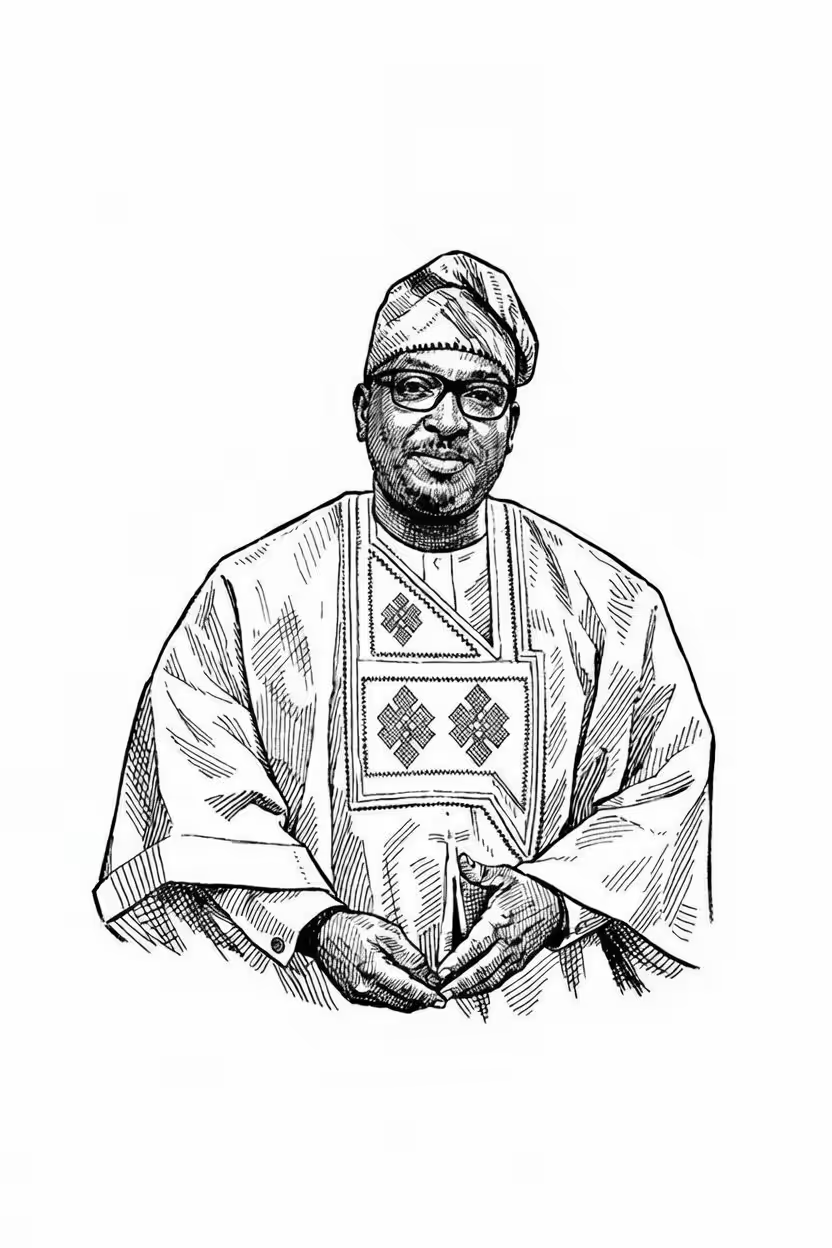
Former Anambra State Governor and Labour Party presidential candidate, Mr. Peter Obi, delivered a scathing rebuke of the country’s worsening insecurity, aligning his comments with the controversial remarks made weeks earlier by U.S. President Donald Trump.
In a viral post on X, Obi lamented:
“A few weeks ago, when President Trump described our country as ‘now disgraced,’ many were outraged. Yet, how can we dispute it when, within a single week, 25 people were kidnapped, and one of our generals along with other officers was killed? Today, we witness another troubling terror attack in Kwara State.”
Obi accused the current administration of being distracted by political manoeuvring rather than confronting terrorists:
“The current government seems more intent on weakening parties than strengthening our democracy — seeking to fragment the PDP, Labour Party, SDP, and others.”
He contrasted this with what he described as more principled leadership in past administrations, recalling an incident where then-President Umaru Musa Yar’Adua insisted that the internal stability of all political parties was essential to democratic governance.
His message resonated strongly, recording over 19,000 likes and hundreds of thousands of views within hours.
Kebbi School Abductions Deepen National Anguish
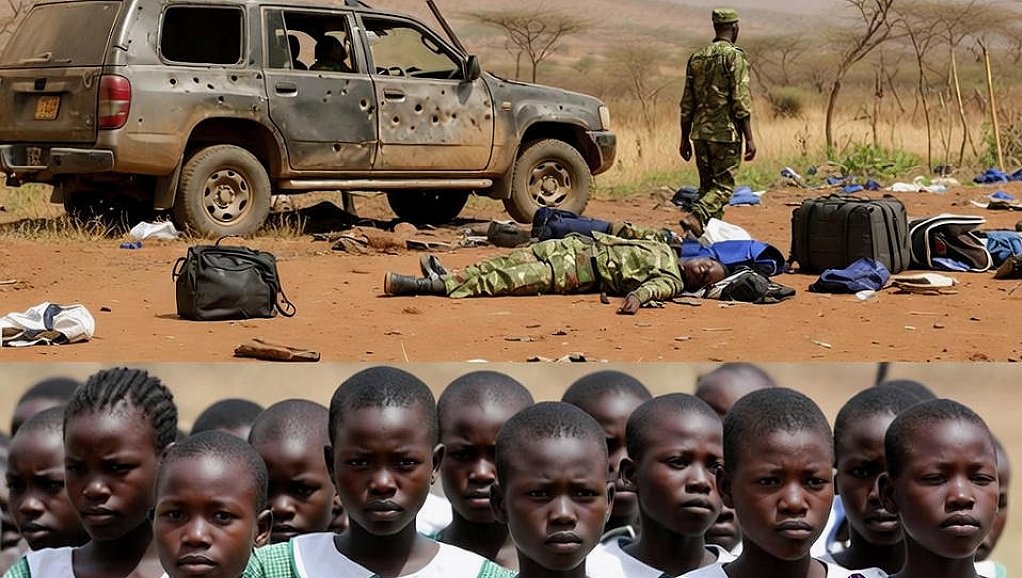
The abduction of 26 schoolgirls in Kebbi State early Monday has become a flashpoint in the broader debate over Nigeria’s security failures.
According to the state’s Commissioner for Basic and Secondary Education, Halima Bande, two of the girls managed to escape, while 24 remain missing.
The attackers — believed to be an armed gang linked to splinter factions of Boko Haram — stormed a public secondary school at dawn, killing the vice principal, injuring security personnel, and forcing the girls into a nearby forest.
Unverified reports circulating on social media claim that a military team deployed for rescue operations was itself ambushed by terrorists.
Viral footage shared by Sahara Reporters appears to show smoke rising from a forested area. The Nigerian Army has yet to comment officially.
The tragedy follows a string of similar alleged attacks:
Dozens of worshippers kidnapped in Kwara on Sunday.
A Brigadier General and multiple soldiers killed in Borno last Friday.
Continuing raids across the North-West and North-Central regions.
Public Pressure Mounts Over Absence of State of Emergency
Nigeria’s security structure is once again under fierce public scrutiny as many question why President Bola Tinubu has not declared a State of Emergency in the most affected regions.
Critics point to inconsistent federal responses. Tinubu declared a State of Emergency in Rivers State earlier this year due to political tensions — yet regions grappling with mass abductions, terror ambushes, and widespread killings have seen no similar action.
Analysts recall that in 2013, President Goodluck Jonathan declared a security-focused State of Emergency in Adamawa, Yobe, and Borno without suspending democratic institutions — a precedent some now argue should be replicated.
Tinubu Breaks Silence: “I Am Heartbroken and Depressed”
Facing mounting public discontent, President Bola Ahmed Tinubu issued an emotional statement via his official X account on Wednesday afternoon.
He wrote:
“I am heartbroken by the abduction of our daughters in Kebbi and the painful loss of Brigadier General Musa Uba and the brave soldiers who fell in Borno… I am depressed that heartless terrorists have disrupted the education of innocent schoolgirls.”
Tinubu said he had instructed security agencies to act with “urgency, clarity, and decisive action” and urged communities to share actionable intelligence:
“Those who threaten the safety of our citizens will face the full weight of the Nigerian state.”
However, his response has done little to quell rising frustration, with many arguing the President has not yet articulated a comprehensive security blueprint.
A Nation on Edge
As of Wednesday evening, no official confirmation has been provided regarding the alleged ambush on rescue troops, nor the condition or location of the 24 missing schoolgirls.

Nigeria remains tense.
Between political accusations, mourning families, and communities living under the shadow of gunmen, the country stands at a critical juncture.
For many citizens, the question is no longer whether insecurity exists — but how long the nation can endure this cycle of devastation without decisive structural change.