By Sodiq Alabi
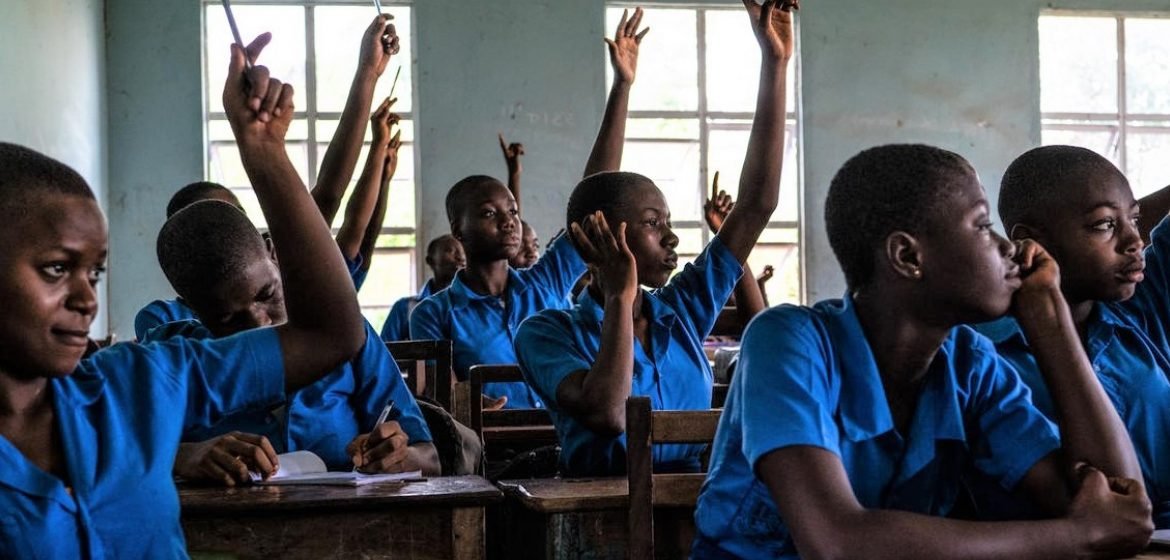
I spent the past few days immersed in the 2025 Transforming Learning and Skills Development in Africa report, jointly produced by the African Union Commission, UNICEF, and UNESCO. At 190 pages, the report is one of the most insightful documents I have ever read on Africa’s education system.
The report does not mince words. It diagnoses the structural failings holding African education back and offers clear, evidence-based recommendations. For Nigeria, the continent’s most populous country and home to its largest cohort of out-of-school children, the report reads like a mirror we can no longer look away from.
Our chronic underfunding is indefensible
The report highlights the financial gap in education in Africa now averages 77 billion US dollars per year, with “millions of learners risk being left behind without adequate investment, leaving the continent’s human potential largely untapped.”
One of the report’s starkest findings concerns education funding in Nigeria. While global and regional benchmarks recommend allocating at least 15% and ideally 20% of national expenditure to education, Nigeria spends just 5%. The report identifies Nigeria as having an “alarmingly low level of expenditure on education”.
Countries such as Sierra Leone (29%), Namibia (25%), and Senegal (23%) demonstrate what commitment to education looks like. Nigeria’s 5% has a devastating impact as it undermines every effort to address our learning crisis.
Although states oversee basic education in Nigeria, there is clearly a need for stronger national involvement when outcomes have become abysmal across the board. If we are serious about reversing decades of poor results, the federal government must do more than set policy. It must invest meaningfully in public education at primary and secondary school levels.
The federal government can also help usher in an era of transparency, better coordination, and innovative mechanisms like an academic performance-based financing, and nongovernment involvement in public school management and monitoring.
Nigeria is falling behind on access, and dragging the continent with it
A worrying headline in the report is that “25% of African youths are not in education, employment, or training.” While school enrolment in Africa rose by more than 75 million between 2015 and 2024, yet the number of out-of-school children increased by 13.2 million. Population growth has simply overwhelmed expansion efforts, especially in Western and Eastern Africa.
Nigeria sits at the centre of this crisis. More than one in four out-of-school children in Africa lives in Nigeria. This is a national disgrace and one of the continent’s greatest development risks.
With the North-West and North-East accounting for the bulk of Nigeria’s out-of-school population, the federal government can no longer pretend that a purely state-led response is enough. A review of the Basic Education Act which restricts federal intervention in basic education is now overdue to enable the federal government to intervene assertively where regional disparities threaten overall progress.
Nigeria urgently needs to expand schools especially in areas with abysmal enrollment rates. We also need to do more with flexible, context-sensitive models to educate hard-to-reach children. This could be through mobile schools, nomadic schools, community learning centres, and well-designed digital platforms. Nigeria has experimented with some of these, but always at insufficient scale or without long-term investment.
The federal government currently runs Inspire, a promising digital learning project, but there is the issue of widespread digital divide that stands in the way of scaling or success. Children from poor background or in rural area often lack devices or internet access and therefore are at risk of being left behind.
The teaching profession needs a fundamental reset
On the question of teaching, the report shows that teaching quality is not improving, and a shrinking pool of qualified teachers is making matters worse. Inequitable deployment leaves rural and marginalised communities severely disadvantaged.
One-off qualification training via NCE or PGDE is not enough, there is a need to mainstream high-quality continuous skills development for teachers. There is also a need for a systemic renewal of the profession which should include improving working conditions, clarifying career pathways, and recognising teachers as skilled professionals. For Nigeria, where teaching remains poorly rewarded and often demoralising, this is a message we desperately need to hear.
When we do decide to give more to teachers, we will be entitled to expect more from them also. We can consider rewarding teachers and/or headteachers based on their students’ academic performance especially in literacy and numeracy in primary school, with teachers who take on roles in underperforming or hard-to-reach schools given special allowances to reward their sacrifice.
A true transformation in learning begins with a transformation in teaching.
Governance and data remain our weakest links
Perhaps the report’s most insightful contribution is its blunt assessment of governance. No amount of investment or innovation will succeed without strong leadership, transparent management, and evidence-driven decision-making. Weak governance, the report argues, magnifies inequality and wastes scarce resources.
This is a familiar story in Nigeria. We have had countless policies, committees, and strategic plans, but too little follow-through. The report calls for stronger capacity across all levels of the system to plan, implement, and monitor reforms.
On data, the findings are just as sobering. Despite investments, Africa (including Nigeria) still suffers from major data gaps, and even where data exists it is poorly used. The report urges countries to embed learning assessments into everyday decision-making and classroom practice. The report praises South Africa’s Data-Driven Districts for using data as a practical management tool, not a ceremonial one.
The South African project enables educators and officials to provide early support for learners and track the results of their interventions. Nigeria, through Nigeria Education Management Information System has started to embrace the collection and use of data but more needs to be done especially at the state level.

All in all, the 2025 Transforming Learning and Skills Development in Africa report is a wake-up call to Nigeria’s education managers. Nigeria’s challenges are not unique, but our scale makes inaction unforgivable and dangerous. The insecurity challenges Nigeria currently faces can be traced to our lack of progress in education. This report offers a clear roadmap. Whether we follow it will determine not only our national future but the trajectory of an entire continent’s children.
Sodiq is a contributing columnist with Arbiterz and programme director at EduIntel.