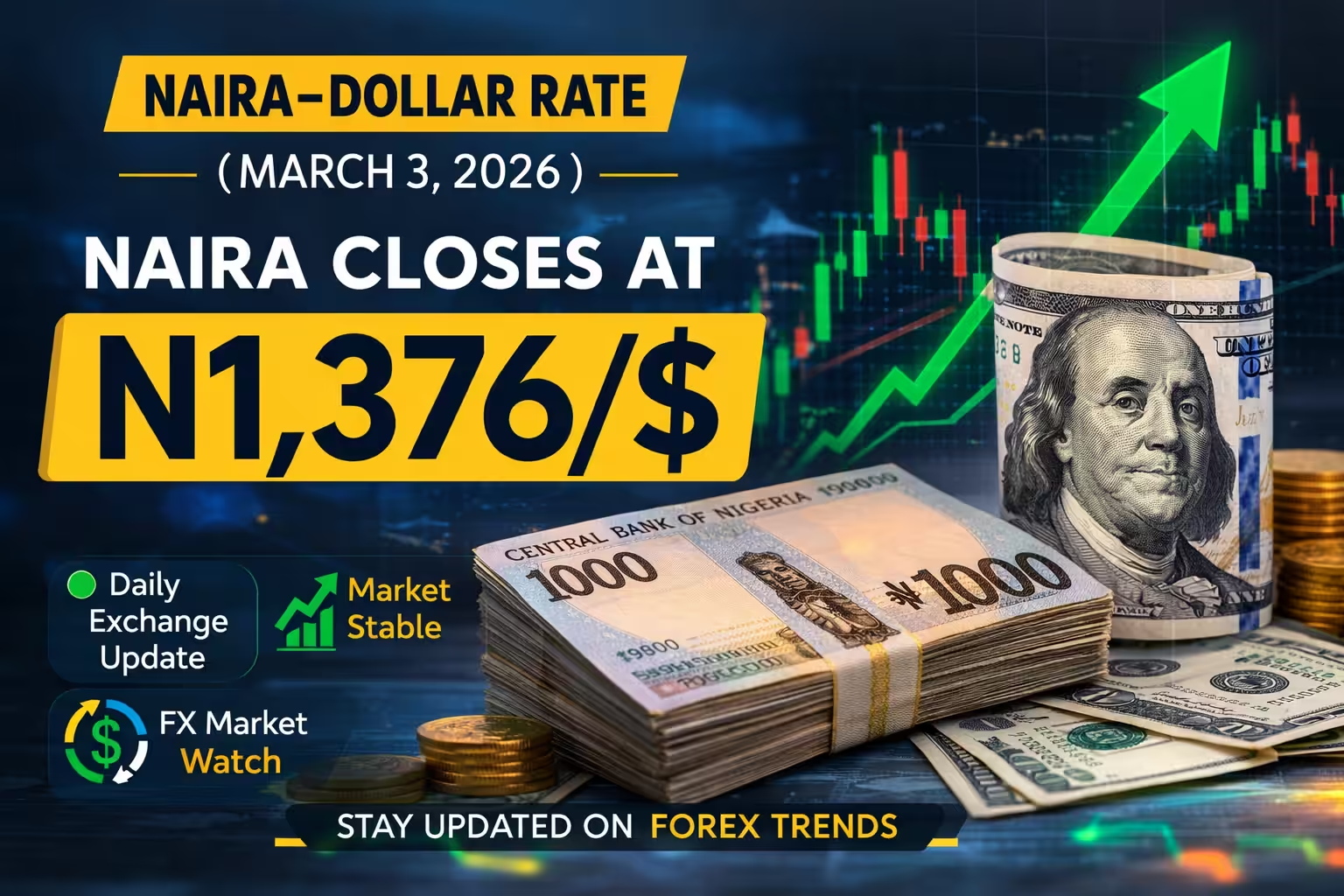
Guaranty Trust Bank (GTCO) has set the exchange rate for international payments on its naira-denominated cards at ₦1,410 per dollar, according to a customer notice issued on March 6, 2026.
The bank also confirmed that international spending on naira cards remains capped at $6,000 per quarter, with the applied exchange rate subject to adjustment in line with market conditions.
The updated rate marks a noticeable increase from levels recorded in February, suggesting that the naira’s recent appreciation has begun to reverse amid renewed pressure in Nigeria’s foreign-exchange market.
GTCO Card FX Rate Shows Recent Naira Volatility
GTCO’s card FX pricing over the past three months reveals how closely Nigerian banks track movements in the broader currency market.
| Date | Rate (₦/$) |
|---|---|
| 10 Dec 2025 | 1,460 |
| 9 Jan 2026 | 1,417 |
| 30 Jan 2026 | 1,419 |
| 12 Feb 2026 | 1,359 |
| 20 Feb 2026 | 1,356 |
| 26 Feb 2026 | 1,367 |
| 27 Feb 2026 | 1,385 |
| 6 Mar 2026 | 1,410 |
The trend shows three clear phases:
1. Naira appreciation (December–February)
The card rate declined steadily from ₦1,460 in December to about ₦1,356 by mid-February, mirroring strengthening in the official foreign-exchange market.
2. Short-term stabilisation
For several days in late February the bank maintained rates near ₦1,360–₦1,370, suggesting the naira had entered a temporary equilibrium.
3. Renewed depreciation
From late February onward the rate rose again, reaching ₦1,410, indicating renewed demand for dollars.
How the Rate Compares With NAFEM and the Parallel Market
The card pricing aligns broadly with trends in Nigeria’s Nigerian Autonomous Foreign Exchange Market (NAFEM), the official FX window introduced by the Central Bank of Nigeria after exchange-rate reforms in 2023.
Recent market data shows:
-
NAFEM: roughly ₦1,380–₦1,420 per dollar in early March
-
Parallel market: about ₦1,500–₦1,600 per dollar
The GTCO card rate therefore sits between the official and parallel markets, reflecting banks’ need to build a margin for settlement risk and currency volatility.
International card payments typically settle several days after the transaction is made through global payment networks such as Visa or Mastercard, exposing banks to exchange-rate movements.
Why Nigerian Banks Still Limit International Card Payments
Although several Nigerian banks have gradually restored international transactions on naira cards, limits remain tight due to despite much-improve dollar availability. GTCO’s $6,000 quarterly cap reflects a cautious approach across the banking sector.
For several years many banks completely suspended international card transactions because they could not guarantee access to dollars at settlement.
Recent reforms by the Central Bank — including the introduction of NAFEM and measures aimed at improving FX liquidity — have allowed banks to gradually reopen international payments, though within controlled limits.
A Retail Indicator of Naira Expectations
The movement in GTCO’s card FX rate offers a useful retail indicator of expectations within Nigeria’s banking system.
Three signals emerge from the data:

-
Banks expect the naira to trade within a broad ₦1,350–₦1,450 range in the near term.
-
Currency stability remains fragile despite earlier appreciation.
-
Retail demand for dollars continues to influence bank pricing.
For Nigerian consumers, the rate determines how much they pay for international services such as online subscriptions, travel bookings, software purchases and foreign e-commerce transactions.
At the current rate:
-
$100 transaction: about ₦141,000
-
$500 transaction: about ₦705,000