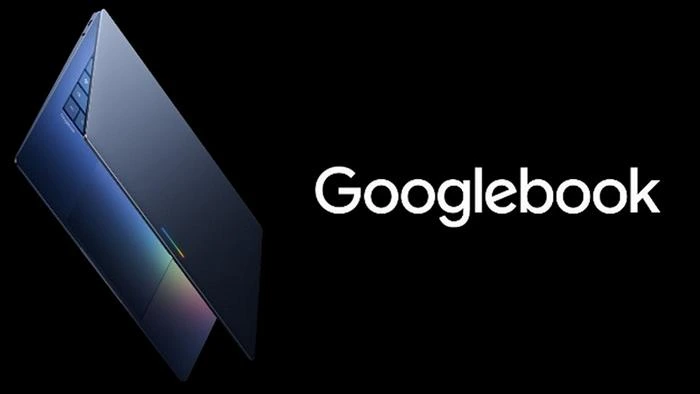
Google has launched Googlebook, a new category of premium laptops designed to bring Android apps, Gemini artificial intelligence and deeper smartphone-to-PC connectivity to the laptop experience.
Pre-orders opened on September 21, with the first Googlebook devices starting at $899 in the US. The laptops are being developed with Acer, ASUS, Dell, HP and Lenovo, while Qualcomm and Intel processors will power different models. Google says the devices are built on the Android technology stack and incorporate desktop foundations from ChromeOS.
The new platform is aimed particularly at Android users who regularly move between their smartphones and laptops. Googlebook is designed to make that transition more seamless by allowing users to access phone files, continue tasks and interact with Android applications from the laptop.
Qualcomm is supplying Snapdragon X Elite for the first Googlebook models from Dell and HP. The chip combines CPU and GPU processing with Qualcomm’s Hexagon NPU for on-device artificial intelligence workloads. Qualcomm says Snapdragon-powered Googlebooks are designed to provide all-day battery life, responsive performance and native Android application support.
Native Android Apps and Phone Integration
A major feature of Googlebook is its ability to run Android applications natively rather than relying on emulation. Users can access apps and games from the Google Play ecosystem while using a conventional laptop interface with a keyboard, trackpad and large display.
Google has also built several features around continuity between Android phones and Googlebooks.
Continue On allows users to pick up activities started on an Android phone on their laptop. The Files experience provides access to files and photos stored on a connected phone, while Cast My Apps allows users to stream and interact with applications from their phone in a desktop window.
Googlebook also carries over Android phone settings, saved passwords, Wi-Fi networks and messages during setup, with Google saying the information is protected with end-to-end encryption.
Gemini Intelligence Built into Googlebook
Google is positioning Gemini as a central part of the Googlebook experience rather than simply another application running on the laptop.
One of the main features is Magic Pointer. Moving the cursor in a particular way brings Gemini into the user’s current context, allowing it to work with information displayed on the screen. Google says users can use the feature for tasks such as organising information or translating text without moving between multiple applications.
Another feature, Rambler, converts spoken thoughts into organised text. Google says it can structure notes, action items and other dictated material using headings, checklists and formatted takeaways, including speech in multiple languages.
Googlebook also includes Create My Widget, which allows users to describe the information or functionality they want and have the system generate a desktop widget.
Snapdragon X Elite Powers Dell and HP Models
Qualcomm says Snapdragon X Elite provides the processing, power efficiency and NPU capabilities required for the first Snapdragon-powered Googlebooks.
The company says Dell and HP are the first manufacturers bringing Snapdragon X Elite Googlebooks to market. Qualcomm’s platform supports the laptops’ Gemini features as well as native Android applications and games. Snapdragon Elite Gaming technologies are also available on supported Googlebook devices for enhanced gaming performance.
Google’s wider Googlebook lineup uses both Qualcomm and Intel processors, with dedicated NPUs capable of more than 45 trillion operations per second (TOPS) across the portfolio. Google says battery life can reach up to 14 hours of video playback, depending on the device and usage conditions.
Dell XPS Googlebook and HP Googlebook 14
Dell has introduced the XPS Googlebook, a premium 13-inch model powered by Snapdragon X Elite. It combines the XPS design with Google’s Gemini features and Android integration.
HP’s Googlebook 14 is another Snapdragon X Elite-powered model, giving users access to Google’s Android-based laptop environment alongside premium hardware.
Qualcomm said both the Dell and HP Snapdragon X Elite models are available for pre-order.
The wider Googlebook range includes five initial flagship devices from Acer, ASUS, Dell, HP and Lenovo. Google says the lineup includes touchscreen displays of up to 2.8K resolution, premium materials such as aluminium, magnesium alloy and carbon fibre, haptic glass trackpads and backlit keyboards.
Pricing and Availability
Googlebook devices start at $899 in the US, with pre-orders available through the Google Store, Best Buy and selected retailers.
Google says the first devices will arrive in US stores on October 4, followed by launches on October 5 in Canada, the UK, Ireland, France, Germany and Australia. Each Googlebook includes 12 months of Google AI Pro, 5TB of cloud storage and Gemini Advanced tools, as well as three months of YouTube Premium and Adobe Photoshop. Googlebook OS is also scheduled to receive feature updates for up to 10 years.
The launch represents Google’s latest effort to bring Android beyond smartphones and tablets and into a more integrated personal-computing environment. Rather than extending the Chromebook model, Googlebook uses Android as its underlying platform while incorporating desktop capabilities and native laptop hardware.

Kedar Kondap, Qualcomm’s Senior Vice President and General Manager for Compute and Gaming, said Snapdragon X Elite would bring its performance and AI capabilities to Googlebook alongside native Android applications and cross-device features.
John Solomon, Google’s Vice President and General Manager for Laptops, Tablets and Android Enterprise, said Googlebook was designed to work with the Android devices users already rely on, combining native Android apps, cross-device connectivity and Gemini intelligence.