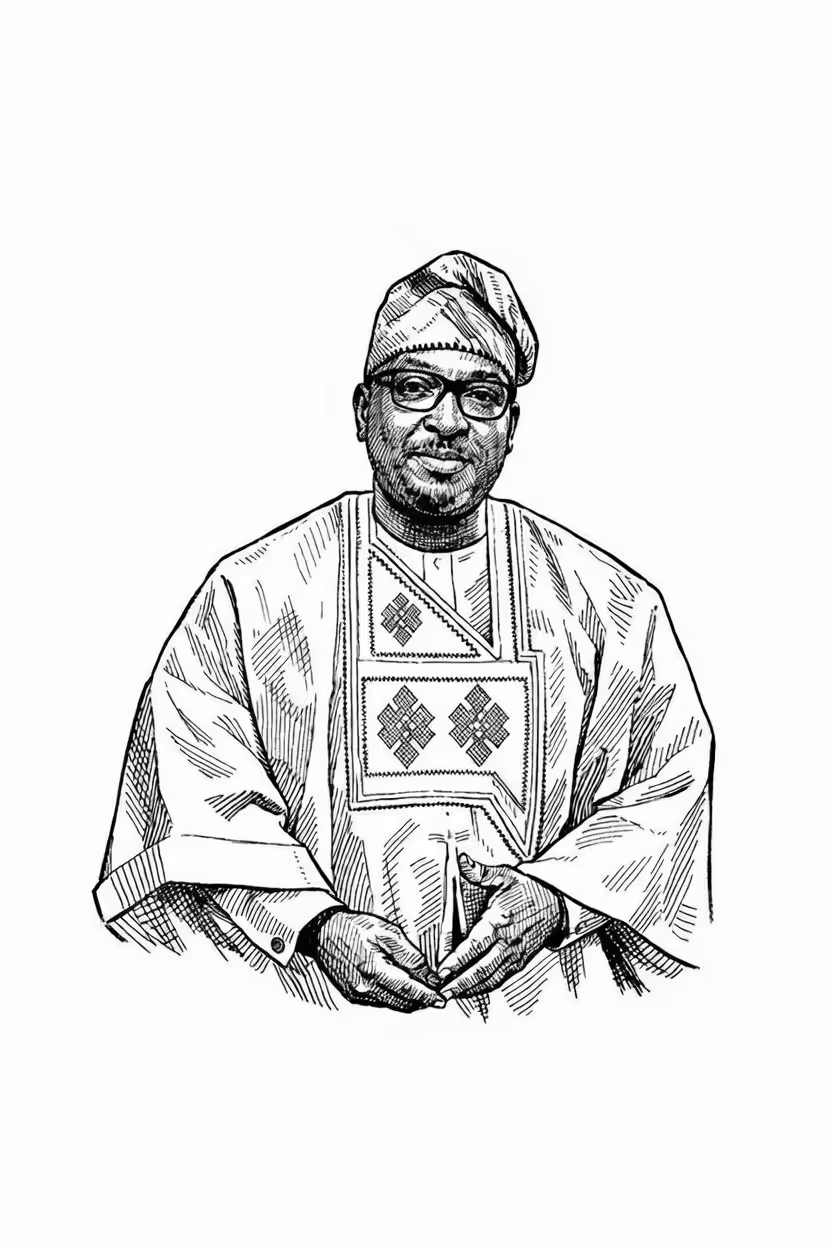
The prolonged delay experienced by investigative journalist Fisayo Soyombo in renewing his Nigerian passport has raised fresh questions about the pace and depth of administrative reform under Interior Minister Olubunmi Tunji-Ojo, beyond official assurances of improved service delivery at the Nigeria Immigration Service (NIS).
Soyombo disclosed that his passport renewal application remained pending for six months, with no resolution, before his passport status was suddenly updated to “issued/collected” just hours after he publicly criticised the Interior Ministry and the NIS over persistent processing failures.
The timing, he argued, suggested that administrative capacity exists within the system—but that it is inconsistently applied and often activated only under public pressure.
“The implication of this sudden about-face is clear: the system can actually work if the minister and the civil servants are committed to making it work—and if citizens demand accountability regardless of coordinated backlash,” Soyombo wrote.
Beyond ‘Contactless’: A Broader Systems Problem
While recent public debate has focused on the government’s push for contactless passport renewal, Soyombo’s account points to a deeper institutional issue: delays and bottlenecks persist across both digital and paper-based application processes.
Applicants using traditional in-person routes continue to report prolonged waits, repeated rescheduling, and unclear communication—suggesting that the challenge lies less in the mode of application than in operational discipline, internal accountability, and workflow enforcement within the immigration system.
In that context, Soyombo’s experience has resonated with many Nigerians who say passport processing often advances only after escalation, connections, or sustained pressure.
Reform Promises and Lived Reality
Since assuming office, Tunji-Ojo has made passport reform a flagship priority, repeatedly committing to faster turnaround times, reduced human discretion, and the elimination of rent-seeking behaviour.
However, cases such as Soyombo’s risk undermining public confidence in those claims, particularly when improvements appear reactive rather than systemic.
Soyombo stated that he still does not intend to physically visit any NIS office, stressing that he paid for end-to-end service delivery and expects the agency to fulfil its obligations without additional interventions.
Why Soyombo’s Case Matters
The significance of the episode extends beyond one applicant. Passport access affects mobility, employment, education, and business for millions of Nigerians at home and abroad.
For reform to be credible, analysts note, improvements must be predictable, rule-based, and universally accessible—not contingent on visibility or influence.

Soyombo’s case has therefore become a litmus test for whether progress under the current Interior Ministry reflects durable institutional change or isolated responsiveness triggered by public scrutiny.
As of the time of publication, the Nigeria Immigration Service has not issued a formal response to the claims.