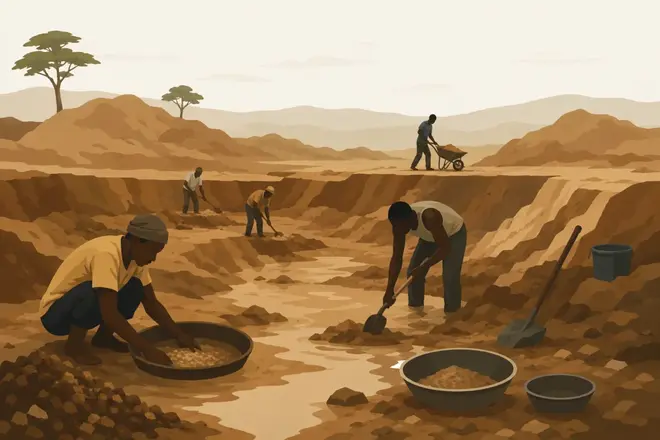
The Democratic Republic of Congo (DR Congo), the world’s largest cobalt producer, has announced an indefinite suspension of cobalt exports from November 30, 2026, in a move aimed at supporting international prices and tightening its control over the strategic battery metal market.
The decision, announced by the country’s strategic minerals regulator, the Authority for the Regulation and Control of Strategic Mineral Substances’ Markets (ARECOMS), will cover cobalt produced by both large-scale industrial mining companies and small-scale artisanal miners.
Exports will remain suspended until the regulator issues a formal decision authorising shipments to resume.
DR Congo accounts for approximately 75% of global mined cobalt production, making the country a critical supplier to manufacturers of electric vehicle batteries, smartphones and other electronic devices.
By restricting exports, the Congolese government hopes to reduce the volume of cobalt entering the international market and reverse the prolonged price weakness.
DR Congo’s Second Attempt to Control Cobalt Supply
The November suspension represents DR Congo’s second major intervention in the cobalt market within two years.
In April 2025, the government introduced an initial export ban after cobalt prices fell to historic lows. The restriction was subsequently replaced with an export quota system intended to regulate shipments and prevent excess supply from reaching international markets.
However, the return of exports under the quota arrangement brought additional volumes into a market already weighed down by accumulated inventories and subdued demand.
The suspension could create fresh uncertainty for international mining companies with substantial exposure to DR Congo’s cobalt industry, particularly Swiss mining giant Glencore.
The company has already reduced its cobalt production following the earlier export restrictions.
However, a potential recovery in international cobalt prices could provide some relief through its operations in Australia, where it also produces the battery metal.
The latest decision could also force mining companies and international buyers to reassess their supply arrangements as they seek to manage exposure to disruptions in the Congolese market.
What the Cobalt Export Suspension Means
Cobalt is an important raw material in rechargeable batteries used in electric vehicles, smartphones and other electronic devices.
DR Congo’s dominant position in global mined production means prolonged export restrictions could reshape supply arrangements across the battery and electric vehicle industries.