Nigeria’s economic narrative has, in recent months, acquired the outward appearance of a turnaround. The numbers suggest a country clawing its way back from the edge: external reserves have rebounded sharply, investor sentiment has improved, and the fiscal position of the government—long strained by years of subsidy spending and monetary financing—has begun to stabilise. In perhaps the most striking illustration of this shift, the Central Bank of Nigeria’s net reserves rose to $34.8 billion in 2025 from less than $4 billion in 2023, a recovery that would have seemed improbable at the peak of the foreign exchange crisis.
But as a new policy memo by Adedayo Bakare for Agora Policy argues, this apparent recovery conceals a deeper and more troubling reality: the stabilisation of the Nigerian state has not translated into the recovery of Nigerian households. What has emerged instead is a lopsided adjustment in which macroeconomic balance has been restored, but at the cost of widespread erosion in purchasing power, declining real incomes, and a growth outlook that remains unconvincing.
Since President Bola Tinubu assumed office in May 2023, the policy direction has been unmistakable. Fuel subsidies were removed in one decisive move, eliminating a major fiscal drain, while the exchange rate regime was liberalised, allowing the naira to depreciate sharply in a bid to unify the foreign exchange market and attract capital inflows. These measures were not merely technocratic adjustments; they represented a fundamental break from a model in which the state absorbed economic shocks through unsustainable borrowing and quasi-fiscal interventions. For years, the federal government had spent beyond its means, supported by over ₦23 trillion in central bank financing, while the broader economy depended on artificially cheap imports sustained by borrowed dollars. By 2021, that model had reached its limits, with debt servicing absorbing virtually all federal revenues and the central bank struggling to meet foreign exchange obligations to businesses and even international airlines.
Also Read:
- Nigerian Economic Reforms: Baba Gana Kingibe's "Reforms Are Dead" Vs Tinubu's No Going Back…
- Tinubu Economic Reforms: Beyond convictions, the politics of the free market
- President Tinubu Thanks Emir Sanusi for Fostering Social Consensus on Economic Reforms
- Nigerian Manufacturers Groan As Unsold Inventory Rises Amid Forex Shortage
In that sense, Bakare’s argument that the reforms have “worked” is difficult to dispute. Fiscal deficits have narrowed, external imbalances have eased, and foreign investors—once wary of Nigeria’s policy inconsistencies—have returned in significant numbers. The current account has swung into surplus, and reserves have been rebuilt at a pace that has restored a measure of confidence in the country’s external position. Yet the mechanism through which this adjustment has occurred is central to the critique. Rather than being driven by a surge in productive activity or export competitiveness, the improvement has been achieved largely through compression—imports have fallen sharply, domestic demand has weakened, and the burden of adjustment has been borne by households and businesses.
Stability for the State, Strain for the Economy
This is the paradox at the heart of Nigeria’s reform story. The state is, by several metrics, in a stronger position than it was two years ago, but the average Nigerian is significantly worse off. Per capita income, a rough measure of economic wellbeing, has declined steeply from its 2014 peak, and even after the recent rebasing of GDP, remains far below previous levels. Inflation, driven by currency depreciation and higher energy costs following subsidy removal, has eroded real wages and savings, leaving many households struggling to maintain basic consumption levels.
Economists have increasingly converged around this duality. Bismarck Rewane has described the reforms as “necessary but front-loaded,” noting that while they correct structural distortions, they impose immediate hardship with benefits that are slower to materialise. In a similar vein, Muda Yusuf has argued that macroeconomic gains mean little if they are not accompanied by relief at the microeconomic level, where businesses face rising costs and consumers contend with declining purchasing power. Even policymakers acknowledge this tension. Taiwo Oyedele, now Minister of State for Finance, has consistently argued that the reforms were necessary corrections, while warning that they are insufficient on their own and must be followed by policies that expand fiscal space and support growth.
Nowhere is the fragility of the recovery more evident than in the composition of capital inflows underpinning it. While Nigeria has attracted tens of billions of dollars since 2023, the bulk of this has been portfolio investment—capital drawn by high interest rates and exchange rate adjustments into financial instruments such as central bank securities. These flows have played a crucial role in stabilising the naira and rebuilding reserves, but they do little to expand productive capacity or create jobs. They are also inherently volatile, capable of reversing quickly in response to shifts in global financial conditions. Razia Khan, Chief Economist for Africa and the Middle East at Standard Chartered, has emphasised that sustained investment depends on confidence in broad-based structural economic reforms, underlining the limits of short-term capital inflows in driving long-term growth.
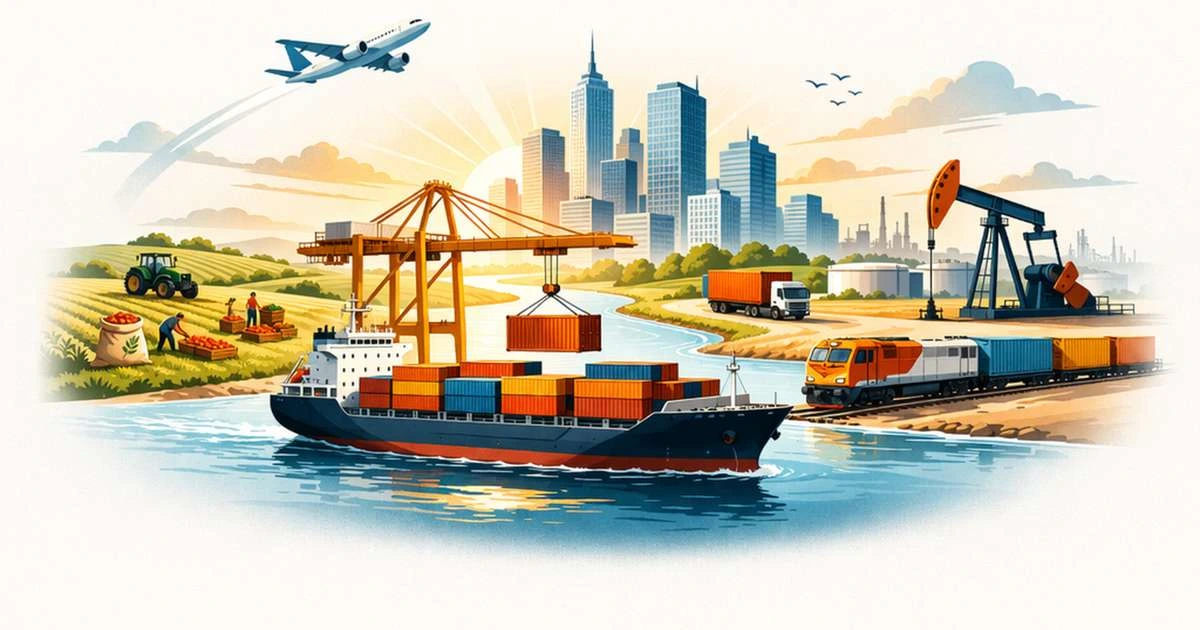
The weakness of Nigeria’s growth engine is further underscored by the performance of its external sector. Although the current account has improved, this has been driven more by a collapse in imports than by a sustained expansion in exports. Outside petroleum products—where recent gains owe much to long-gestation investments such as the Dangote Refinery—export performance remains subdued. Manufacturing exports, which should have benefited from a weaker currency, have instead stagnated, reflecting structural constraints that go far beyond exchange rate policy. High logistics costs, inefficient ports, burdensome customs processes, and unreliable infrastructure continue to undermine competitiveness. Exchange rate adjustment can restore balance, but it does not, on its own, create the productivity, infrastructure, or cost competitiveness required to sustain export-led growth.
It is in this context that Bakare’s comparison with Vietnam takes on particular significance. At the start of the century, Nigeria enjoyed advantages over Vietnam in income levels, export volumes, and foreign investment. Today, the divergence is stark. Vietnam’s rise has been built on a deliberate sequence of reforms that moved beyond macroeconomic stabilisation to focus on industrialisation, export expansion, and integration into global value chains. Agriculture was modernised, manufacturing was incentivised, and foreign investment was actively directed into productive sectors. Nigeria, by contrast, risks stopping at the first stage of reform, having corrected its macroeconomic imbalances without yet constructing a credible framework for sustained growth.
This reading is broadly consistent with assessments by international institutions. The World Bank has noted that while Nigeria’s reforms have improved fiscal sustainability and external balances, they have also contributed to rising poverty levels due to inflationary pressures. The International Monetary Fund has similarly endorsed the reforms as necessary but emphasised the need for complementary policies that promote inclusive growth. Even in global financial commentary, including analysis in the Financial Times, Nigeria is increasingly seen as a case of stabilisation without sufficient transformation.
Where Bakare’s memo sharpens the debate is in its assessment of what would be required to reverse the decline in living standards. The scale of growth needed to restore per capita income to previous levels is extraordinarily high, implying sustained double-digit expansion in dollar terms over several years. While such growth is not unprecedented, economists caution that it demands a combination of policy consistency, institutional capacity, and investment conditions that Nigeria has historically struggled to sustain. As the economist Charlie Robertson argued in a discussion at the Centre for Global Development, sustained growth depends less on short-term stabilisation and more on investment, export capacity, and the structural conditions that allow economies to compete globally.
What emerges, then, is a picture of an economy at an inflection point. In the past two and a half years, reforms have begun to unwind some of the most visible distortions in Nigeria’s economic framework—many of them exacerbated under the Buhari administration—restoring a degree of stability and credibility. But they have also exposed the deeper structural weaknesses that have long constrained growth. The next phase of reform—arguably the more difficult one—will require moving beyond stabilisation to the harder task of building an economy that produces, exports, and creates jobs at scale.

For Bakare, the direction is clear. Investment must be channelled into tradeable sectors such as oil and gas, agriculture, and manufacturing, while the structural bottlenecks that raise production costs and undermine competitiveness must be systematically dismantled. Without such a shift, the gains reflected in rising reserves may prove fleeting, sustained not by growth but by financial inflows that can reverse as quickly as they arrived.
For millions of Nigerians, however, the question is less abstract. The reforms have already been felt—in higher prices, reduced purchasing power, and a more uncertain economic environment. The promise of stability is visible in the data. Whether it will translate into prosperity is a question that remains, for now, unanswered.