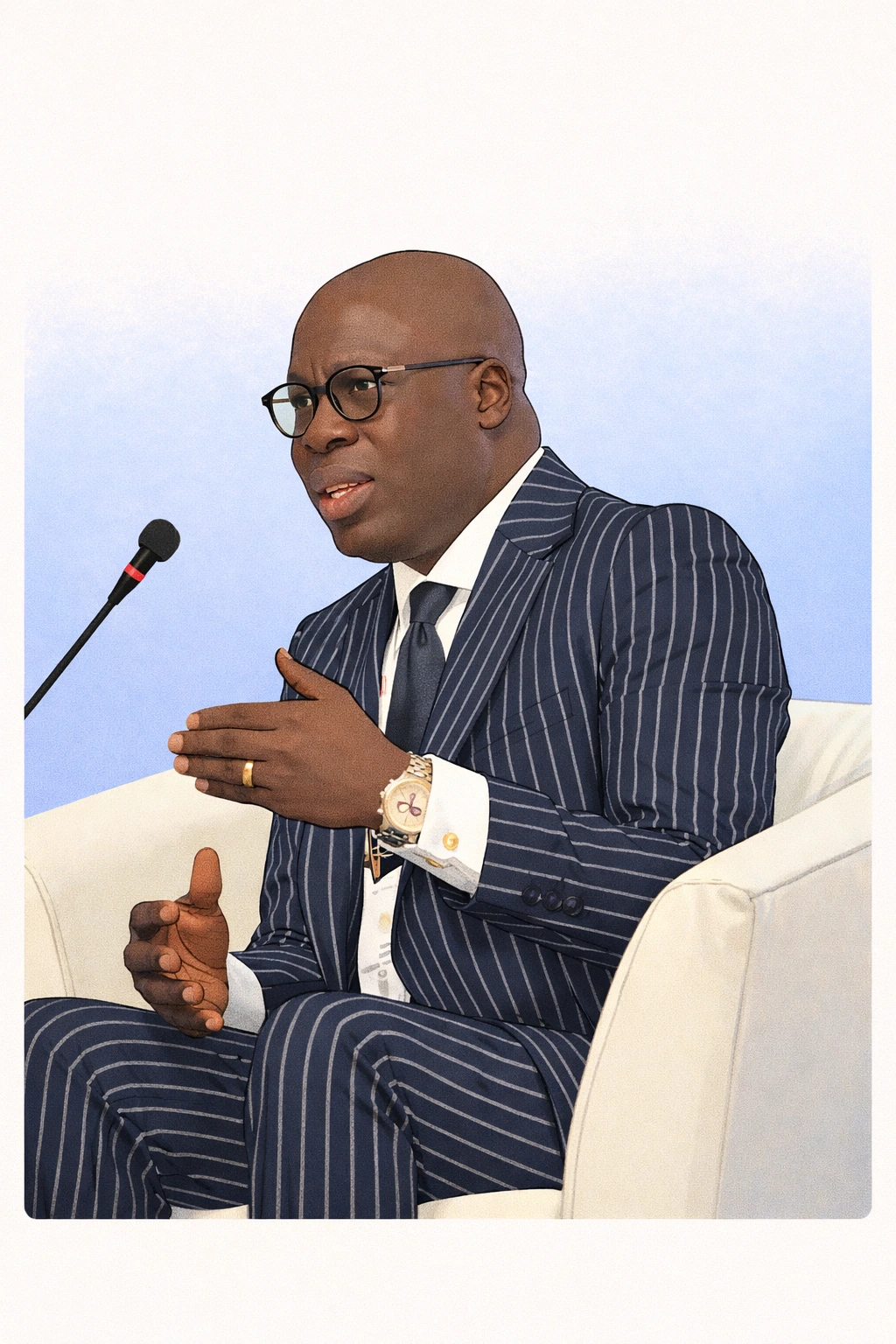
Ardova Plc Appoints Abiola Babatunde-Ojo as Managing Director, Succeeding Moshood Olajide

With over 20 years across banking and downstream oil and gas, Babatunde-Ojo brings financial discipline and commercial leadership to Ardova at a pivotal time

Abiola Babatunde-Ojo Ardova PLC

Ardova Plc has announced the appointment of Abiola Oluwaseyi Babatunde-Ojo as its new Managing Director, succeeding Moshood Olajide and marking a leadership transition at a consequential moment for Nigeria’s downstream oil and gas industry. The company, formerly known as Forte Oil Plc, is operating in a sector reshaped by deregulation, shifting pricing dynamics, and intensifying competition—conditions that place a premium on disciplined management and strategic execution.

Babatunde-Ojo steps into the role with more than two decades of experience spanning banking and oil and gas, a combination that has become increasingly relevant as energy companies confront tighter margins, higher financing costs, and more complex operating environments. Her career reflects a steady evolution from financial services into operational and commercial leadership within the downstream energy value chain.

She began her professional journey in the banking sector, including roles at United Bank for Africa, where she worked across business development and financial services functions. That early grounding in finance provided the analytical and risk management foundation that would later underpin her work in the energy industry.

Her transition into oil and gas came with Prudent Energy and Services Limited, where she spent over a decade building deep expertise across finance, trading, and corporate management. Over the course of her tenure, she moved through a sequence of increasingly senior roles, beginning in trade finance, where she oversaw accounting structures and cost management, before advancing to General Manager for Trade and Finance, with responsibility for financial strategy and board-level reporting. She subsequently served as Chief Commercial Officer, leading trading strategy and revenue optimisation, and later as Executive Director, contributing to enterprise-wide leadership decisions. Her time at Prudent Energy culminated in her appointment as Managing Director, during which she led the company through a period of growth in both operational scale and profitability.

This progression—from finance into commercial leadership and ultimately executive management—positions her as a well-rounded operator with a granular understanding of how capital, operations, and markets intersect in the downstream sector.

Her academic and professional background reinforces this blend of technical and governance expertise. She holds a Doctorate in Business Administration from the University of Business and Innovation Studies in Washington, DC, a Master’s degree in Corporate Governance from Leeds Beckett University, and a Bachelor’s degree in Statistics from University of Ibadan. She is also a Fellow of the Institute of Chartered Accountants of Nigeria, the National Institute of Credit Administration, and the Chartered Institute of Taxation of Nigeria, and is a Member of the Chartered Institute of Directors. Taken together, these credentials signal a strong orientation toward financial discipline, regulatory compliance, and boardroom governance.

Her appointment comes as Ardova navigates a new phase defined by the full deregulation of petrol pricing, the entry of large-scale refining capacity, and heightened investor scrutiny. In this context, her experience in managing cost structures, driving trading performance, and aligning operational execution with strategic and board-level priorities is likely to be central to the company’s positioning. The downstream sector is no longer insulated by subsidy regimes; it is increasingly shaped by market signals, capital efficiency, and competitive agility.

More broadly, Babatunde-Ojo’s emergence reflects a gradual shift in Nigeria’s energy sector toward leadership profiles that combine technical competence with governance depth. As firms transition from subsidy-era business models to market-driven competition, the ability to execute with discipline—rather than merely articulate strategy—has become decisive.

For Ardova, the appointment is therefore less symbolic than strategic. It signals an intent to compete in a more demanding operating environment where performance will be measured not by positioning alone, but by the consistent delivery of operational efficiency, financial resilience, and market relevance.

Previous Managing Director: Moshood Olajide

Moshood Olajide served as Managing Director of Ardova Plc from 2023, following his appointment in the wake of the exit of former CEO Olu Adeosun. His elevation was part of a planned succession process designed to sustain the company’s post-delisting transformation and reposition it as a leading integrated energy business in Africa.

A lawyer and finance professional by training, Olajide brought an unusual dual background in legal and financial disciplines to the role. He holds degrees from Columbia Law School and Obafemi Awolowo University, and is affiliated with professional bodies including the Nigerian Bar Association and the Association of Chartered Certified Accountants. His earlier role as Chief Financial Officer and Executive Director at Ardova placed him at the centre of the company’s financial strategy, capital structuring, and governance framework prior to his appointment as Managing Director.

Leadership Context and Strategic Role

Olajide assumed leadership at a structurally important moment for Ardova. The company had just been taken private following its delisting from the Nigerian Exchange in 2023, a move that signalled a shift toward longer-term strategic repositioning under its majority owner, Prudent Group. His mandate, as articulated by the board, was to drive Ardova’s transition into a more diversified and integrated energy platform, building on its legacy retail fuel network while expanding into gas, renewables, and logistics.

Key Milestones Under His Leadership

During his tenure, Olajide’s leadership can be understood less as a period of dramatic reinvention and more as one of consolidation and execution within a changing market structure.

One of the defining features of Ardova’s strategy under his leadership was the continued expansion and optimisation of its downstream infrastructure. The company sustained its extensive national footprint of hundreds of retail stations and strengthened its logistics and distribution capabilities, reinforcing its position as a major player in fuel marketing across Nigeria.

In parallel, Ardova advanced its push into gas and cleaner energy solutions, particularly through investments in LPG infrastructure. This included the development of large-scale storage capacity and the deployment of LPG distribution systems aimed at increasing domestic consumption of cleaner fuels—an area aligned with Nigeria’s broader energy transition objectives.

Another notable milestone within the broader Ardova group during this period was the commissioning of a high-capacity lubricant blending plant in Lagos, designed to scale domestic production and reduce reliance on imports. The facility, with capacity to meet a significant share of Nigeria’s lubricant demand, underscored the company’s strategy of deepening value across the downstream chain.

Operationally, the company also continued to strengthen its aviation fuel business and retail partnerships, maintaining relevance across multiple segments of the downstream market. Its integrated model—spanning retail, aviation fuel, lubricants, and emerging renewables—remained intact and was further embedded during this phase.

Ad Banner

Olajide’s tenure sits within a transitional chapter for Ardova: post-delisting, pre-full deregulation maturity, and at the early stages of a more competitive refining landscape shaped by new domestic capacity. His contribution was therefore largely institutional—stabilising operations, reinforcing financial discipline, and advancing incremental strategic priorities rather than executing a wholesale strategic pivot.

His exit and replacement by Abiola Oluwaseyi Babatunde-Ojo can be interpreted as the next phase in that evolution—moving from consolidation toward more aggressive commercial execution in a fully deregulated and increasingly competitive downstream market.


Share this article

Leave a Reply

Your email address will not be published. Required fields are marked *

Receive the latest news

Subscribe To Our Newsletter

Get notified about new articles