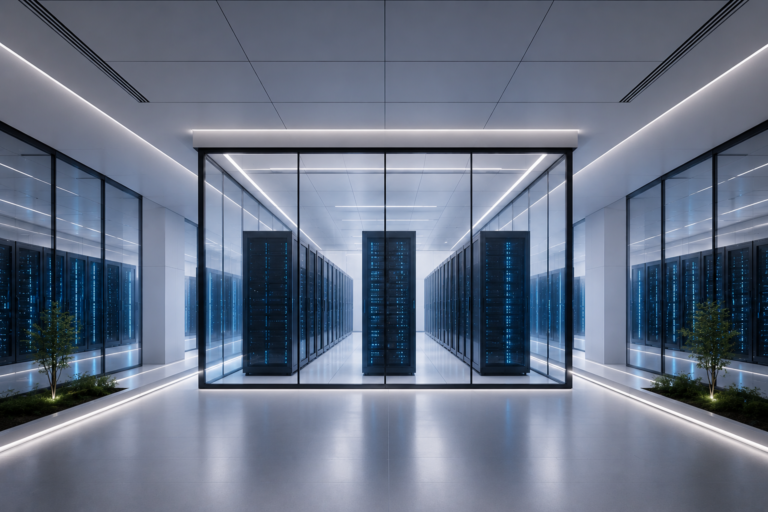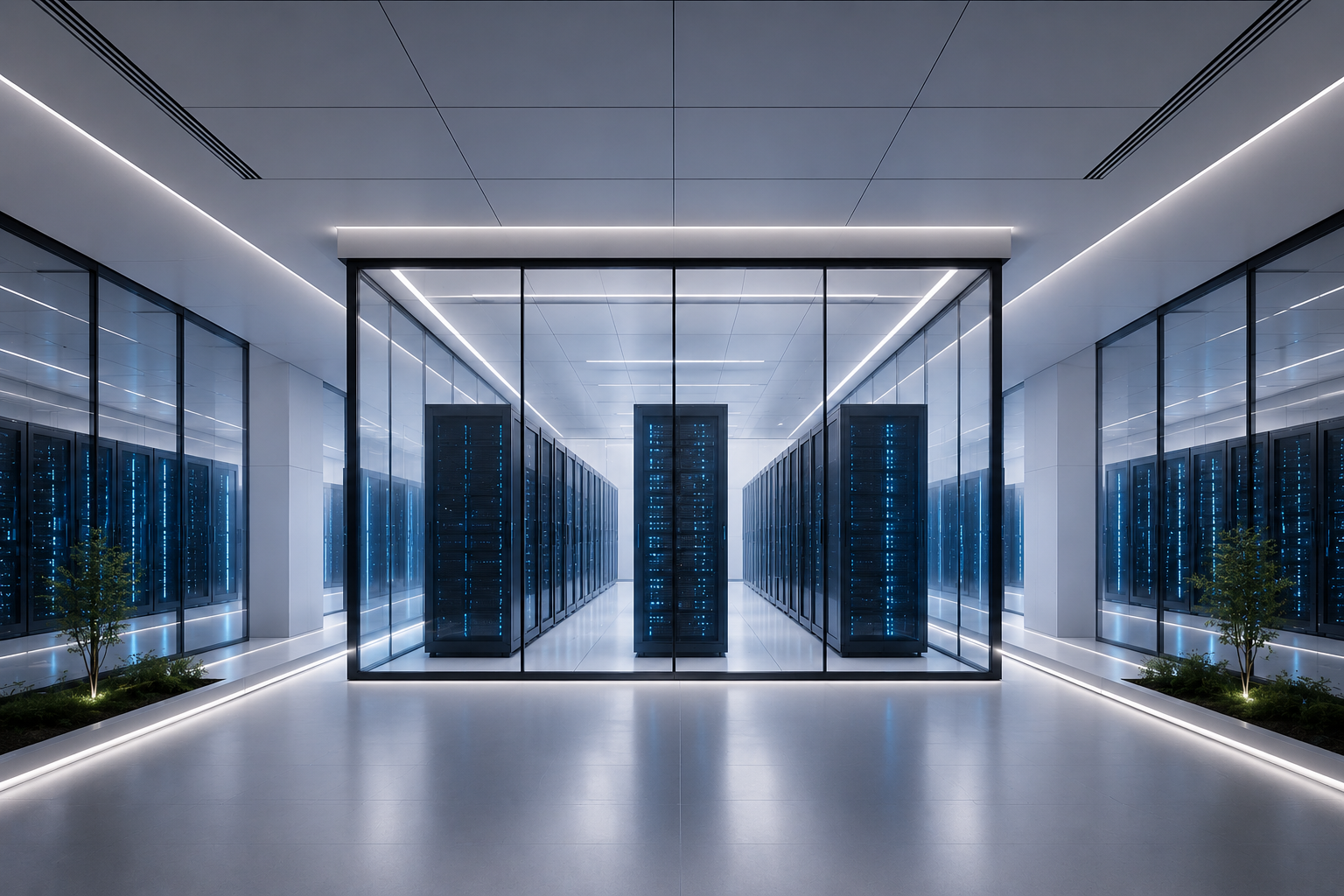
The U.S. Trade and Development Agency (USTDA) has signed an agreement with INFRAGORA to conduct a feasibility study for two data centers in Nigeria in a bid to improve the country’s data computing capacity.
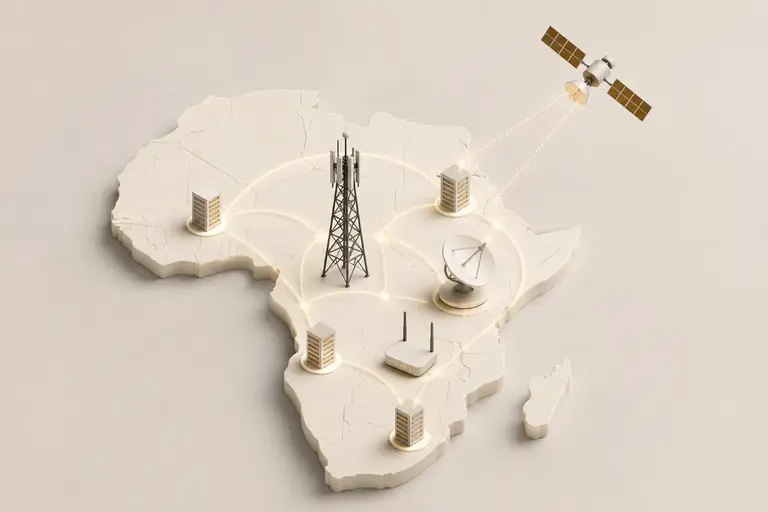
The agreement was announced by the US Missions in Nigeria in an X post on Thursday where it stated “Africa has less than 2% of the world’s data center capacity. That needs to change, and Nigeria is the place to start. U.S. Mission Nigeria is proud to celebrate USTDA‘s agreement with INFRAGORA to conduct a feasibility study for two data centers in Nigeria.”
Nigeria’s Current Data Centers
Nigeria’s data centre market is expanding as banks, fintech companies, telecommunications operators and cloud service providers increase demand for secure, reliable computing infrastructure. Lagos remains the country’s principal hub, supported by its concentration of businesses, fibre networks, submarine cable connections and internet exchange infrastructure.
Among the major operators is Rack Centre, which commissioned its 12-megawatt LGS2 data centre in Lagos in April 2025. The Tier III facility provides colocation services, allowing businesses to host their servers in professionally managed premises with dedicated power, cooling and network connectivity. Its carrier-neutral model also enables customers to connect to multiple telecommunications providers.
Equinix is another major player following its $320 million acquisition of MainOne in 2022. Founded by Funke Opeke, MainOne developed submarine cable and connectivity infrastructure linking West Africa to international markets. Equinix has since pursued further investment in Lagos, including a $22 million facility announced in November 2025, aimed at expanding connectivity between Nigerian businesses, cloud providers and international digital infrastructure networks.
Open Access Data Centres (OADC), part of the WIOCC Group, operates a facility in Lekki near the Equiano submarine cable landing infrastructure. Its published specifications include a site load of up to 24 MW, while its services include colocation, network interconnection and technical support. The facility’s open-access model allows telecommunications operators, cloud providers and businesses to connect through multiple networks.
Africa Data Centres, part of Cassava Technologies, is also an important participant, providing colocation infrastructure that can serve businesses operating across several African markets. Its regional footprint offers customers opportunities to connect facilities in different countries, support disaster recovery and expand their digital operations without independently building data centres in every market.
The market is also attracting investment in hyperscale infrastructure. Kasi Cloud commissioned the first phase of its planned 100 MW Lekki campus in 2026, according to reports by Punch. The approximately $250 million project is intended to support cloud computing, enterprise applications and artificial intelligence workloads. However, its planned 100 MW capacity represents the campus’s intended scale, not necessarily the amount of computing infrastructure already operational.
Beyond facility ownership, telecommunications providers such as ipNX play an important role by connecting data centres through fibre networks. Its data centre interconnection services offer speeds ranging from 1 Gbps to 100 Gbps, helping businesses move data between facilities, cloud platforms and recovery sites. This connectivity is essential for financial institutions and other organisations that require resilient digital services.
The expansion is being driven partly by growing interest in domestic data hosting and digital sovereignty. A July 2026 report by TechCabal said a Central Bank of Nigeria directive required banks, fintechs and payment companies to move transactional data hosted overseas to facilities within Nigeria by January 1, 2027. If implemented as reported, the requirement could increase demand for local capacity, although businesses must also address security, backup, connectivity and operational resilience.