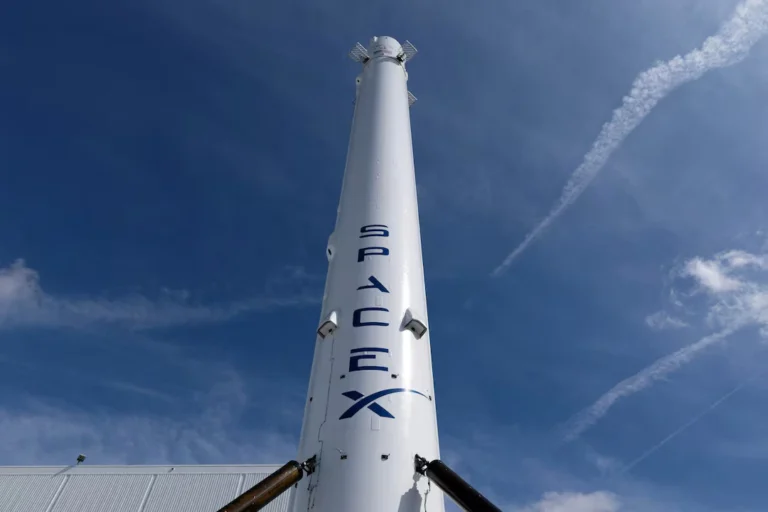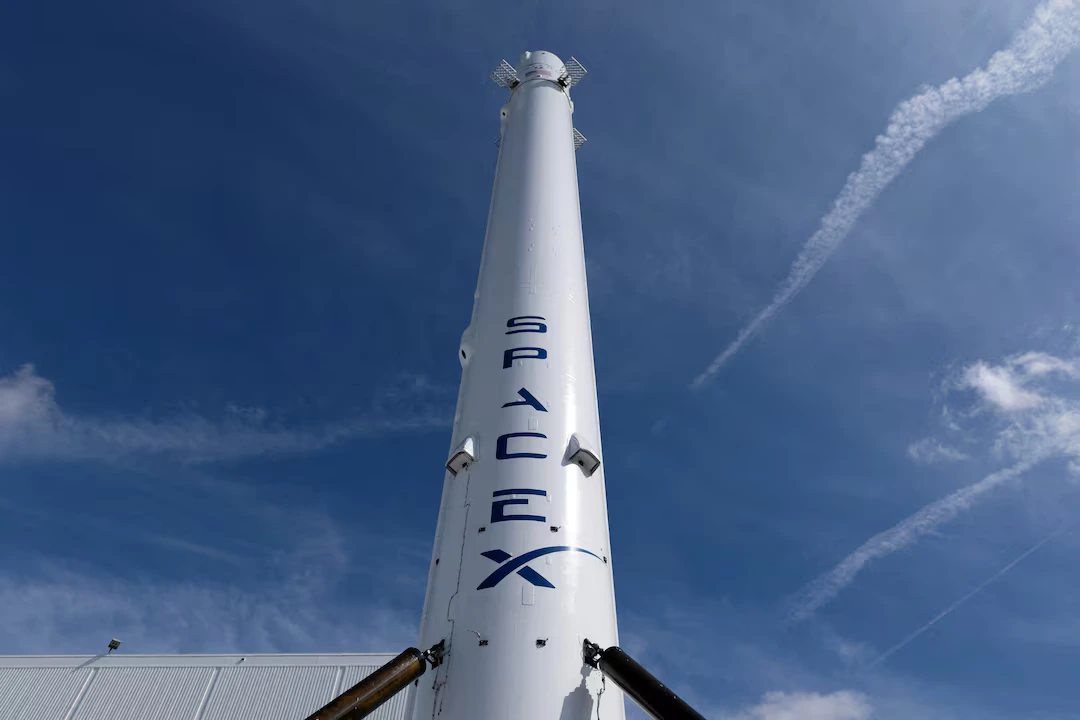
SpaceX has successfully launched a Falcon 9 rocket carrying 32 payloads into orbit from Cape Canaveral Space Force Station in Florida, creating a rare “space jellyfish” effect visible across Central Florida.
The Bandwagon-5 mission lifted off from Space Launch Complex 40 at 7:04 a.m. local time on Tuesday, October 20, 2026, according to WESH-TV.
The launch produced the unusual visual phenomenon as the rocket climbed through the atmosphere, leaving a glowing, jellyfish-shaped formation in the sky.
The effect, often associated with rocket launches around dawn or dusk, occurs when sunlight illuminates expanding rocket exhaust at high altitudes while observers on the ground remain in relative darkness.
The Falcon 9 mission carried 32 payloads, including CubeSats, microsatellites and reentry vehicles, highlighting the rocket’s role in deploying a range of spacecraft and technology into orbit.
Following payload separation, the rocket’s first-stage booster attempted to land on A Shortfall of Gravitas, a SpaceX autonomous droneship stationed in the Atlantic Ocean.
SpaceX routinely recovers Falcon 9 first-stage boosters to support the reuse of rocket hardware, a central feature of its launch operations. Booster recovery helps reduce launch costs and enables the company to increase the frequency of its missions.

The Bandwagon-5 launch adds to SpaceX’s growing portfolio of rideshare missions, which allow multiple customers to deploy spacecraft on a single rocket.
The resulting “space jellyfish” display also attracted attention across Central Florida, where residents were able to observe the unusual formation following the early-morning launch.