Nigeria’s Federal Government has ruled out an immediate increase in electricity tariffs, while reporting a recent improvement in power generation and transmission and the release of more than 300 containers of equipment previously held at the nation’s ports.
Minister of Power Joseph Tegbe said generation peaked at 5,330MW in August and September, compared with the roughly 3,700MW to 4,700MW range recorded before June.
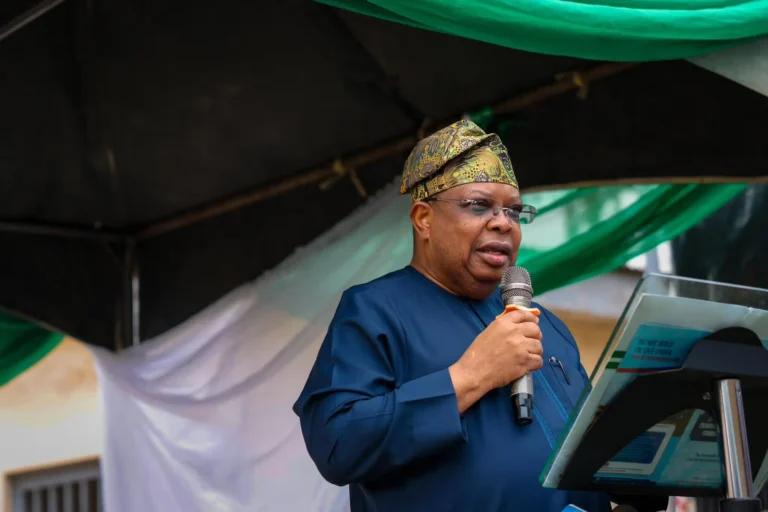
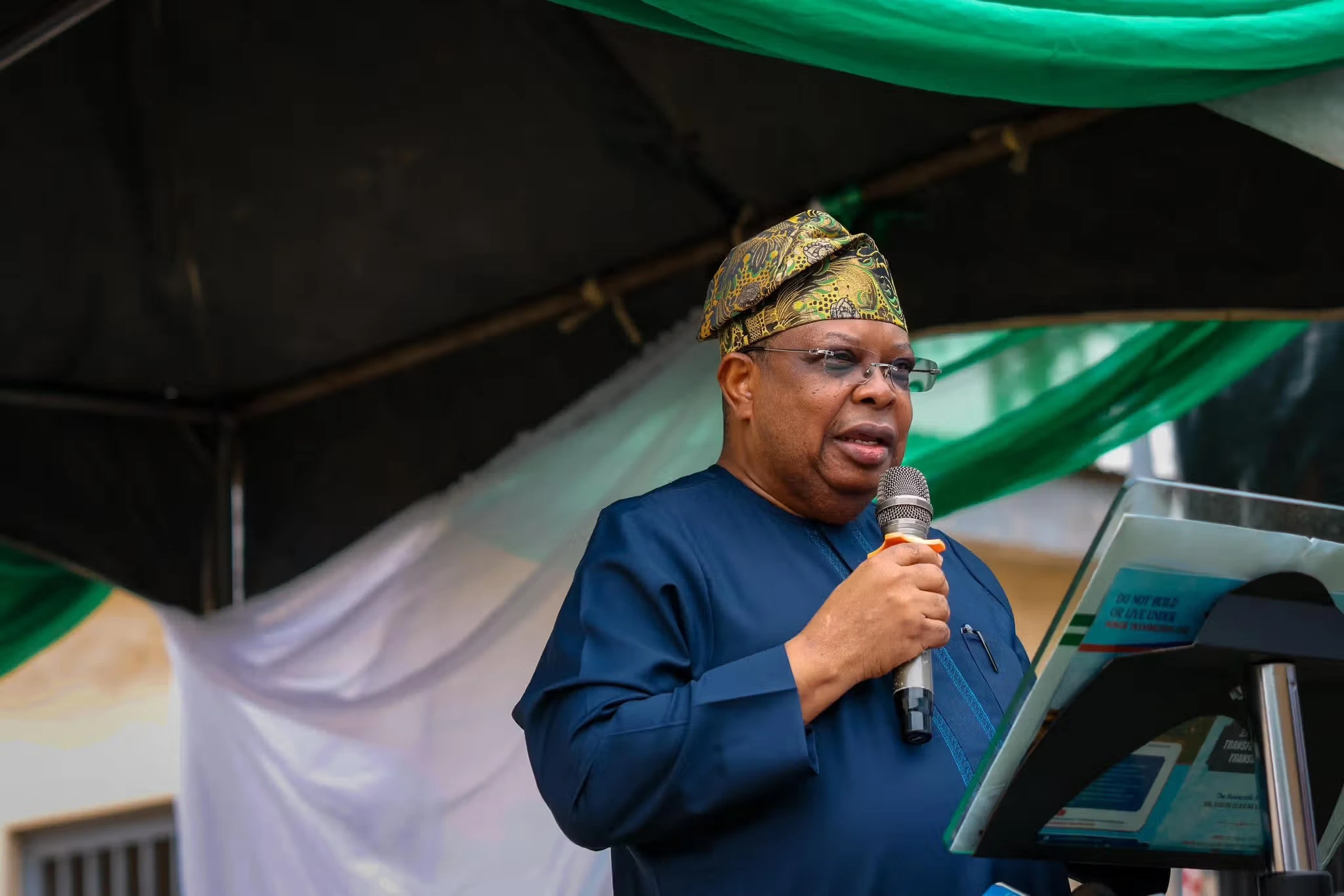
Tegbe disclosed the figures on Monday in Abuja during a media briefing marking his first 100 days in office. He said the ministry’s immediate priority was to improve the reliability of electricity supplied to consumers rather than impose additional costs on households and businesses.
“We have no plan to increase electricity tariffs,” Tegbe said, adding that reports or edited videos suggesting otherwise were untrue.
Government releases 300 containers of power equipment
The minister said the government had worked with relevant agencies to release more than 300 containers of power-sector equipment that had been delayed at the ports.
The intervention, he said, would allow equipment to be deployed to projects where it is needed, addressing a longstanding problem in which infrastructure projects remain incomplete while equipment intended for them sits in storage.
Tegbe also cited the restoration of the 375MW Alaoji open-cycle power plant, which had been offline for about three years, as part of efforts to recover existing generation capacity.
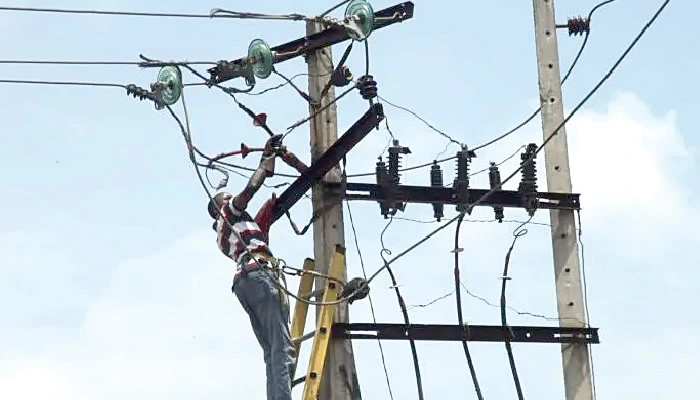
Interventions at transmission substations have also increased available capacity, he said.
New transformers commissioned at Apapa, Ijora, Alausa and Lekki in Lagos have unlocked 672MW of transmission capacity, while a new 300MVA transformer at Katampe in Abuja has added another 240MW.
The minister said the challenge now was to ensure that higher generation translated into more dependable electricity for consumers.
“Our next task is to sustain these gains and translate them into more dependable supply at customer level,” he said.
Meter installations cross one million
Metering has also become a major part of the government’s power-sector intervention.
Tegbe said about 350,000 meters were installed during his first 100 days, taking cumulative installations to 1,004,260 as of August 2026.
He said the resolution of litigation involving AMMON had also cleared the way for the procurement of about 1.4 million smart meters under affected programmes.
Another 90,000 meters, according to the minister, have been installed in military formations.
The government is also developing the workforce needed to support the metering expansion. Tegbe said 5,000 young Nigerians were currently being trained under the Power Force programme to work as smart-meter installers.
The push is intended to reduce reliance on estimated billing while improving measurement of electricity consumption and revenue collection.
62 solar and mini-grid projects completed
The government is also expanding electricity access outside the conventional national grid.
Tegbe said 62 solar and mini-grid installations had been completed across 30 states, adding approximately 43.6MW of solar capacity and creating 41,735 new connections.
The projects are estimated to reach more than 208,000 people, according to the minister.
He also announced the launch of the Renewable Asset Management Company (RAMCO), which will manage publicly financed renewable-energy assets and oversee their long-term sustainability.
RAMCO is expected to work with operators responsible for metering, billing, collections and maintenance of the assets.
Government targets major transmission corridors
The Power Ministry plans to concentrate further grid-stabilisation efforts on the Lagos, Enugu-Port Harcourt and Abuja-Kaduna-Kano transmission corridors.
Tegbe said development of a transmission super grid would also begin, while technical audits were already underway along the Lagos and Abuja corridors.
The audits are intended to identify weaknesses in the network and direct investment towards infrastructure upgrades capable of producing measurable improvements in system performance.
The minister said the next six months would be focused on converting repairs and reforms into more visible improvements in electricity reliability, billing accuracy and the resolution of customer complaints.
Chinese companies commit to major power projects
Nigeria’s recent engagements with Chinese companies have also generated commitments around several major electricity projects, Tegbe said.
Among them are the 1.9GW Presidential Power Initiative (PPI), the $116 million Zungeru evacuation project and a proposed $500 million industrial park for manufacturing power equipment.
The first transmission lines under the Presidential Power Initiative are expected to be delivered in the first quarter of 2027, according to the minister.
On the long-delayed Mambilla Hydropower Project, Tegbe said the government welcomed Nigeria’s victory in the arbitration case and had instructed the contractor to examine practical options for moving the project forward.
He said a phased development could be considered if that proved the most workable approach.
N1.23tn raised to tackle power-sector debt
Beyond physical infrastructure, the government is attempting to address the financial problems weighing on Nigeria’s electricity market.
Tegbe said the government had raised an estimated ₦1.23 trillion towards clearing the power-sector debt backlog as part of a broader programme addressing approximately ₦3.3 trillion in sector liabilities.
The minister linked the sector’s financial problems to its operational difficulties.
Unpaid electricity bills can constrain gas suppliers and power-plant maintenance, while poor electricity supply reduces collections from consumers. Lower collections, in turn, increase the accumulation of debt across the electricity market.
Tegbe said fixing the sector therefore required simultaneous intervention in both its physical infrastructure and commercial relationships.
“A new power station cannot, by itself, resolve that cycle,” he said.
Higher generation has yet to solve reliability problem
Despite the reported increase in generation, the government acknowledged that the improvement has not been uniform across Nigeria.
Many households and businesses continue to experience unreliable supply and depend on generators and other forms of self-generation, which add significantly to their operating costs.
Tegbe said the government recognised that the national generation peak did not necessarily reflect the electricity experience of individual communities.
The ministry’s stated objective over the coming months is therefore to move beyond higher system-wide generation and improve the consistency of electricity delivered to customers.

For Nigeria’s electricity market, the distinction is significant: additional generation capacity can only improve supply when the transmission network, distribution infrastructure, metering systems and commercial structure are capable of carrying and paying for the power.
The government’s decision to rule out a tariff increase while pursuing infrastructure and financial interventions puts the immediate emphasis on improving those underlying systems before asking consumers to absorb higher electricity costs.