The Trump administration’s plan to revoke as many as 200,000 US business and tourist visas is bigger than a crackdown on asylum seekers.
It marks a significant escalation in how the United States is using its visa system: moving beyond individual cancellations over criminal conduct or immigration violations and towards the mass identification of people whose original reason for entering the country is now viewed by the administration as inconsistent with their subsequent immigration claims.
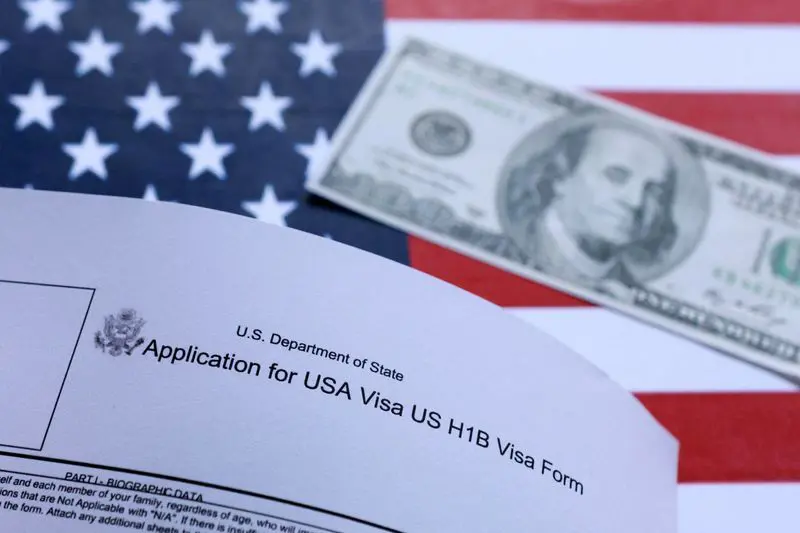
The visas at the centre of the plan are B1 business visas and B2 tourist visas issued between 2016 and 2026 to foreign nationals who subsequently applied for, or are currently seeking, asylum in the United States.
The State Department has not confirmed that 200,000 visas will actually be revoked. Officials say the number is still being determined and that cancellations will be carried out on a rolling basis.
But the scale matters.
If the administration reaches anything close to the reported figure, it would be the largest single mass visa revocation in US history.
And it comes after the State Department said earlier this month that the Trump administration had already revoked more than 175,000 visas since returning to office.
That makes the latest action less of an isolated immigration decision and more of another step in an expanding enforcement programme.
Why is Trump targeting B1 and B2 visa holders?
The administration’s argument is relatively straightforward.
B1 and B2 visas are designed for temporary visits. A person entering on a tourist or business visa is expected to come for the stated temporary purpose and eventually leave.
The Trump administration says some foreign nationals have instead entered the United States as visitors and subsequently filed asylum claims that allow them to remain in the country while their cases are considered.
State Department spokesman Tommy Pigott described the government’s position as identifying people who entered claiming to be short-term visitors but later sought to stay permanently through asylum.
Deputy Secretary of State Christopher Landau has separately criticised what he called frivolous asylum claims that place pressure on the immigration system.
The administration therefore sees the B1/B2-to-asylum pathway as a potential misuse of the visitor visa system.
There is, however, an important distinction that is easy to lose in the political argument.
Applying for asylum after entering the United States is not, by itself, proof that someone committed visa fraud.
US immigration law provides a separate asylum process, and people can have asylum applications pending while their immigration circumstances are being assessed. USCIS continues to process affirmative asylum applications, including cases filed by people already in the United States.
The government’s case will therefore turn not simply on whether somebody applied for asylum, but on the legal basis for revoking the person’s visa and what immigration consequences follow from that revocation.
That distinction could become central in court.
This is not the first time Trump has revoked large numbers of visas
The extraordinary part of the current proposal is its scale and category-wide nature, not the fact that the US has the power to revoke visas.
Visa revocation has long been part of the US immigration system.
The difference under Trump’s second administration is the speed and breadth with which that authority is being deployed.
In November 2025, the State Department said approximately 80,000 non-immigrant visas had already been revoked since Trump returned to office. At the time, the largest groups involved cases connected to driving under the influence, assault and theft. More than 6,000 student visas had also been revoked for reasons including overstays and violations of law.
By August 2026, the administration said the cumulative number had passed 175,000.
According to the State Department, many of those cancellations followed encounters with law enforcement involving offences ranging from assault and child abuse to drunken driving, drug violations and embezzlement. The administration has also used visa revocation in cases involving national-security concerns and, controversially, certain political activity or speech.
That history is important because it shows that the 200,000 figure did not emerge in isolation.
The government has already built the machinery for large-scale visa review.
The asylum cases could simply represent its largest test yet.
What is different about the proposed 200,000?
Previous mass immigration restrictions have often operated by preventing people from obtaining visas or entering the United States in the first place.
The proposed B1/B2 operation is different.
Many of the people affected may have already been admitted legally.
Their visas were issued years earlier. Some may have entered the United States lawfully. Some may have spent years pursuing asylum claims through the immigration system.
The administration is now attempting to revisit the visitor-visa relationship after those people have already entered the country.
That makes the measure considerably more consequential.
It also explains why lawyers are likely to challenge it.
The State Department has authority under US immigration law to revoke visas in circumstances where the holder is no longer eligible. Federal regulations also provide mechanisms for provisional visa revocation when the government receives information relevant to a person’s eligibility.
But the difficult question is what happens when the government applies that power across a population potentially numbering in the hundreds of thousands, particularly where individuals have separate, pending asylum claims.
The visa and asylum systems overlap, but they are not the same legal process.
A visa cancellation is not the same as immediate deportation
Another point likely to be misunderstood is what actually happens after a B1 or B2 visa is revoked.
A cancelled visa does not automatically mean that 200,000 people will be put on planes and sent home the next day.
The visa is the document that allows a foreign national to seek admission to the United States. Immigration status and removal proceedings involve additional legal questions.
The AP reported that some people whose visas are revoked could be recategorised while their asylum cases remain pending rather than being immediately deported.
That does not make the cancellation insignificant.
It can still radically alter a person’s immigration position and make the path to remaining in the United States more difficult.
For asylum applicants, the bigger question may therefore be what happens after the visa disappears.
The bigger strategy: make legal entry harder to convert into permanent residence
The B1/B2 proposal makes more sense when placed alongside the administration’s other immigration policies.
The Trump administration has increased scrutiny of visa applicants, expanded social-media screening, imposed visa bonds on nationals of certain countries, tightened immigration processing and pursued restrictions affecting students, workers and other foreign nationals.
On August 26, Reuters reported that the State Department had also paused immigrant visa appointments worldwide while consular officers undergo additional training designed to strengthen screening, including scrutiny of applicants who could become dependent on US public benefits.
The pattern is therefore broader than asylum.
The administration appears to be attempting to tighten the entire chain:
who gets a visa → who gets admitted → what happens after admission → whether the person can remain → and whether a previously granted immigration privilege should continue.
That is a much bigger story than 200,000 B1 and B2 visas.
Could other visa categories be next?
There is no official announcement saying that every visa category will now be subjected to the same mass-revocation process.
But the administration’s record suggests that foreign nationals in other categories should expect more scrutiny, even if they are not necessarily facing a 200,000-person cancellation exercise.
The strongest evidence is what has already happened.
Student visa holders have been targeted for revocation. The State Department has cancelled visas following criminal or law-enforcement encounters. Officials have also pursued cases involving alleged national-security concerns and political activity.
The administration has simultaneously pursued much broader restrictions on legal immigration.
That means the likely future is not necessarily another single announcement saying “200,000 more visas will be cancelled.”
It may be something more bureaucratic and harder to see: continuous reviews of existing visa holders based on new information, immigration history, criminal records, social-media activity, political activity or perceived violations of the conditions under which their visas were issued.
That is already happening at scale.
The Trump administration has already shown it will revisit old visas
This may be the most important lesson for foreign nationals holding US visas.
A visa is not a permanent guarantee that the holder will be allowed to travel to or remain in the United States indefinitely.
The State Department has already demonstrated its willingness to revisit visas after they were issued when officials believe circumstances have changed or new information has emerged.
That is why the 2016-2026 window in the latest B1/B2 review is significant.
The administration is not merely examining people applying for visas today.
It is looking backwards.
That creates a new question for people who believe that because they obtained a US visa lawfully several years ago, their immigration position is effectively settled.
Under the current administration, that assumption is increasingly difficult to make.
What happens if the government pushes ahead?
The first major test will probably be legal rather than administrative.
The government will need to defend the authority and process used to identify and revoke such a large group of visas.
Immigration advocates are likely to challenge the programme, particularly where visa cancellation affects people with pending asylum claims.
There is already evidence that the courts are willing to scrutinise the administration’s immigration measures.
Just days before the latest B1/B2 reports, a federal judge vacated a Trump administration policy that had suspended immigrant visa processing for nationals of 75 countries, finding that the policy exceeded the authority granted under the Immigration and Nationality Act.
That does not mean courts will necessarily block the B1/B2 revocations.
It does mean the administration should expect another fight over the limits of executive immigration power.
For Nigerians, this is not an abstract Washington policy debate.
Nigeria is already caught up in the administration’s wider visa restrictions, including the US visa-bond system introduced in 2026.
The latest B1/B2 action could therefore become particularly important for Nigerians who travel to the US on visitor visas and later seek a different immigration status.
The lesson is not that every Nigerian tourist visa holder is suddenly at risk of cancellation.
It is that the US visa system is becoming substantially more enforcement-oriented.
A visa is increasingly being treated not simply as permission to travel but as an immigration privilege whose continued validity depends on the holder’s conduct, circumstances and relationship with US immigration rules.
The real question is not whether 200,000 visas will disappear
The final number could be significantly below 200,000.
The State Department has stressed that the figure is dynamic and that revocations will occur on a rolling basis.
So the headline number should not obscure the more consequential development.
The United States has already revoked more than 175,000 visas under Trump’s second administration.
Now it is preparing to apply that enforcement model to a large, identifiable category of people who entered legally but later sought asylum.
If the policy survives the expected legal challenges, it could establish a precedent for using existing visa records to conduct increasingly broad retrospective reviews.

And that is why the biggest question surrounding the B1 and B2 crackdown may not be who is in the first 200,000.
It is who will be considered eligible for the next review.