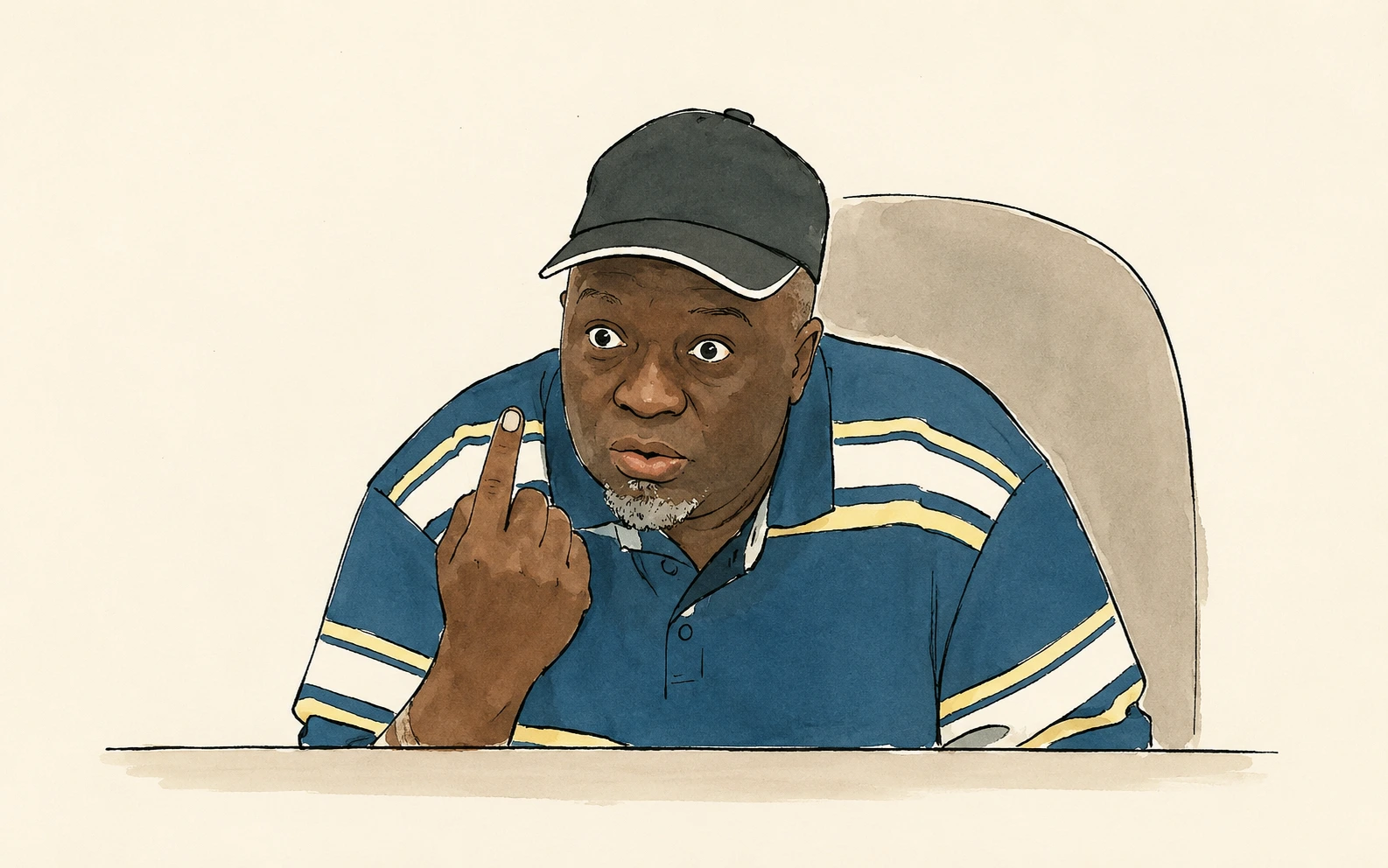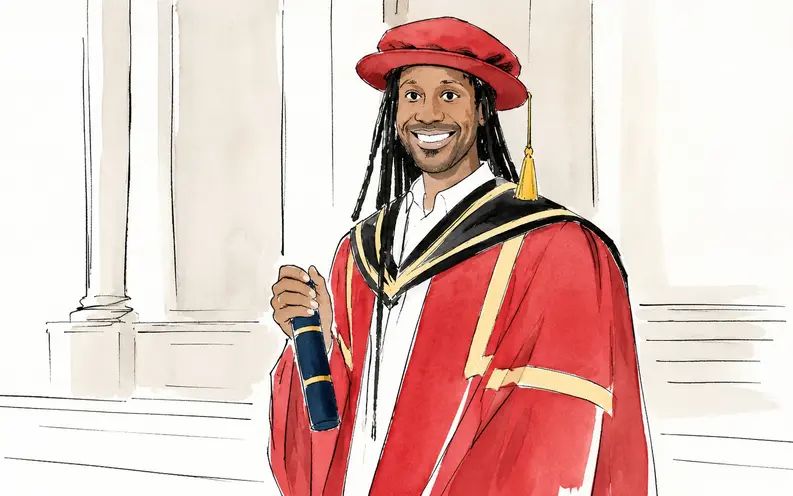
Professor Jason Arday has resigned from the University of Cambridge and Jesus College with immediate effect, bringing an abrupt end to a celebrated appointment that had made him one of the most prominent Black academics in Britain.
The sociologist announced his departure on Wednesday, only hours after Cambridge said it had opened an investigation following “new information” about his academic qualifications and honorary appointments. The university also confirmed that several complaints concerning alleged academic misconduct were being considered separately under its research-misconduct procedures.
Jesus College, where Arday was a fellow, said it was beginning its own process in parallel with the university’s investigation.
Arday, who became Cambridge’s youngest-ever Black professor when he joined the university in 2023 at the age of 37, said his resignation should not be treated as an admission that the allegations against him were true.
In a statement published by the Good Law Project, he described his appointment as the greatest professional privilege of his life but said years of public scrutiny and personal attacks had taken a severe toll on him and his family.
“For my own wellbeing, for my family, and for those who have stood by me throughout this difficult period, I have concluded that the only way to bring this chapter to an end is to step away,” he said.
Arday added that his departure should not be “mistaken for an acceptance of the narratives” surrounding him. He said he needed time to recover but intended eventually to return to public life.
Allegations against Arday’s academic work
The resignation follows weeks of renewed scrutiny of Arday’s academic publications, employment history and accounts of his personal achievements.
The most serious allegations concern his 2015 doctoral thesis at Liverpool John Moores University. Nathan Cofnas, a self-described “race realist” formerly affiliated with Cambridge’s Emmanuel College, claimed that plagiarism-detection software identified numerous passages in Arday’s thesis that closely resembled material in a doctoral dissertation submitted six years earlier by another academic.
Cofnas alleged that some passages were reproduced with only limited changes and occasionally retained errors from the earlier work. Subsequent press reports said more than 100 passages had been identified as similar.
The source of the allegations has complicated the dispute. Cofnas lost his position at Emmanuel College in 2024 after attracting condemnation for arguing that, under what he considered a genuine meritocracy, Black people would almost disappear from prominent occupations outside sport and entertainment.
Arday has argued that the campaign against him is partly racially motivated and connected to wider opposition to diversity, equity and inclusion policies. He said he became a convenient target because his appointment had been presented as evidence of Cambridge’s efforts to become more inclusive.
But some established academics, including scholars working on race and education, have said Cofnas’s political views do not by themselves invalidate the evidence raised about Arday’s publications.
Earlier investigation did not uphold plagiarism allegation
Liverpool John Moores University, which awarded Arday his doctorate, previously reviewed the thesis and did not uphold the allegation that he had committed plagiarism or academic misconduct. Cambridge had cited that finding when it initially defended him against what it described as a “vile smear campaign”.
Arday has repeatedly pointed to that review and other institutional processes as evidence that the accusations have already been examined. He has nevertheless acknowledged that his work contained errors.
In an interview with The Times before his resignation, he said he accepted responsibility for mistakes but rejected claims that he was a liar. He attributed some problems in his early work to his autism and his reliance on mimicry while learning how to process and reproduce information.
Questions have also been raised about published descriptions of his academic affiliations. Reports said Ohio State University could find no record of an appointment attributed to Arday, while Glasgow and Durham universities reportedly provided accounts of his associations with them that differed from descriptions previously used in public biographies.
The new Cambridge inquiry appeared to distinguish these questions about qualifications and honorary appointments from the existing academic-misconduct complaints.
From celebrated appointment to institutional crisis
Arday’s rise had been presented as one of British academia’s most remarkable success stories. Born and raised in south London, he was diagnosed with autism and global developmental delay as a child. According to Cambridge’s account of his life, he did not speak until he was 11 and could not read or write until he was 18.
He subsequently studied physical education and education, trained as a teacher and completed a PhD. He became a senior lecturer at the University of Roehampton in 2018, moved to Durham University and was appointed professor of sociology of education at the University of Glasgow in 2021.
Cambridge recruited him in 2023 to its professorial chair in the sociology of education. At the time, the university described him as an exceptional scholar whose research on race, inequality and education would strengthen its work on widening access and representation.
His appointment attracted international attention not only because of his age and background but also because Cambridge had only a small number of Black professors. Arday became an influential public advocate for greater inclusion in British universities.
That prominence also raised the stakes of the allegations. The controversy has expanded beyond the conduct of one academic into questions about how universities verify appointments, investigate work produced at other institutions and respond when misconduct allegations become entangled with ideological and racial disputes.

Arday’s resignation does not, by itself, determine whether any allegation is true. Cambridge and Jesus College had not immediately clarified whether their investigations would continue after his departure.
It does, however, represent a dramatic reversal for an academic whose appointment was celebrated as a landmark in Cambridge’s history—and leaves the university facing difficult questions about both its original recruitment process and its handling of the complaints that followed.