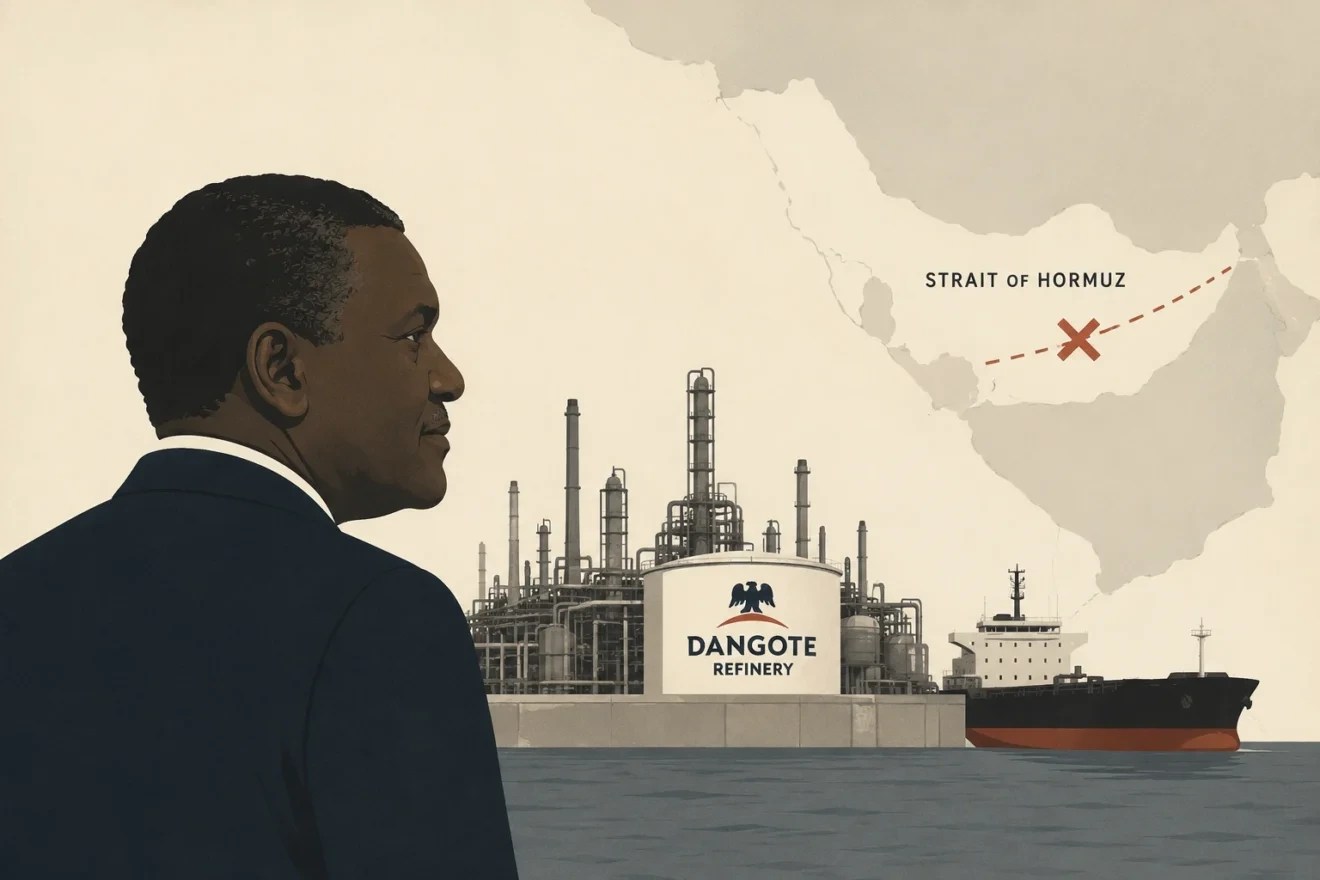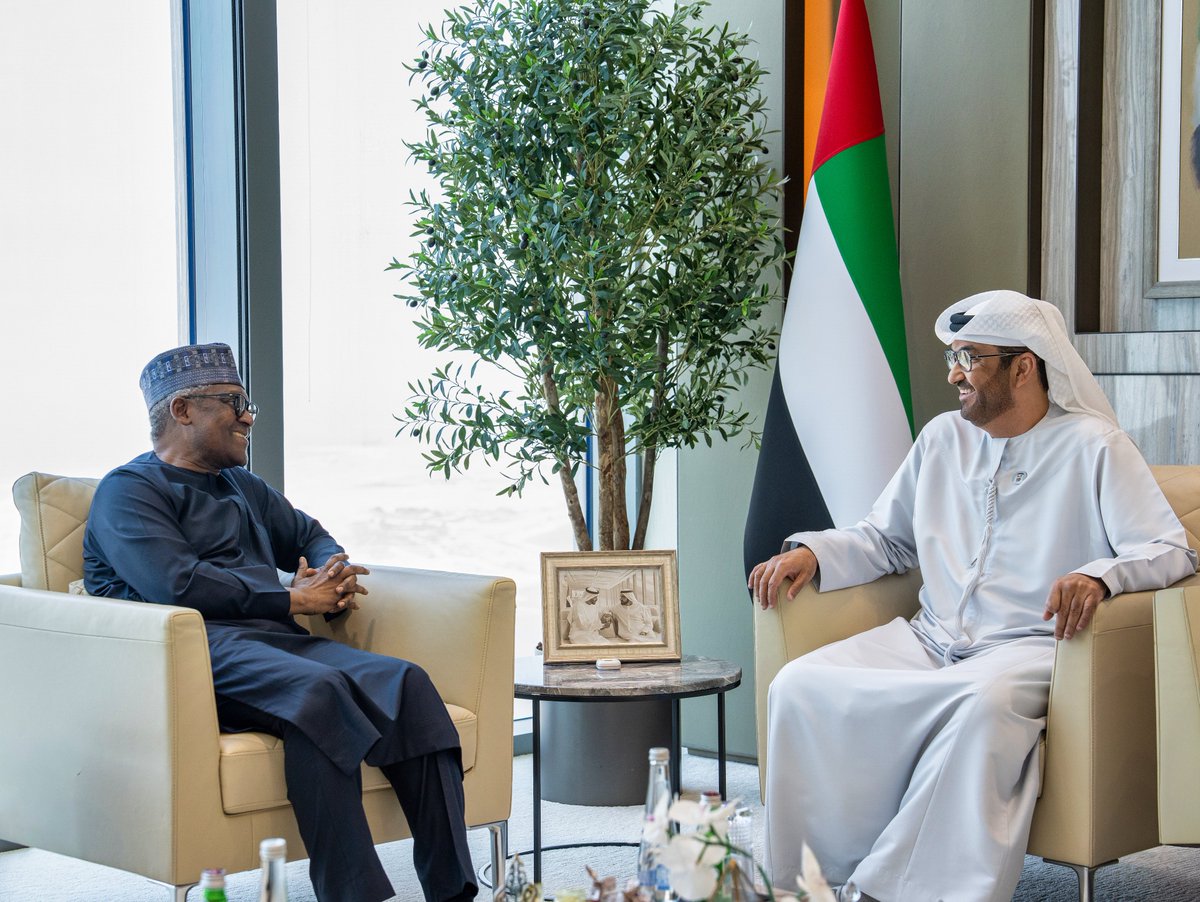
Nigeria’s 650,000-barrel-per-day Dangote Refinery has purchased its first-ever cargoes of crude oil from the United Arab Emirates, marking a significant evolution in its crude sourcing strategy and raising fresh questions about the future of Nigeria’s support for domestic refining.
The purchases come just days after tensions around the Strait of Hormuz eased following a ceasefire between Iran and Israel, triggering a sharp fall in Middle Eastern crude prices and reopening one of the world’s most important oil shipping routes.
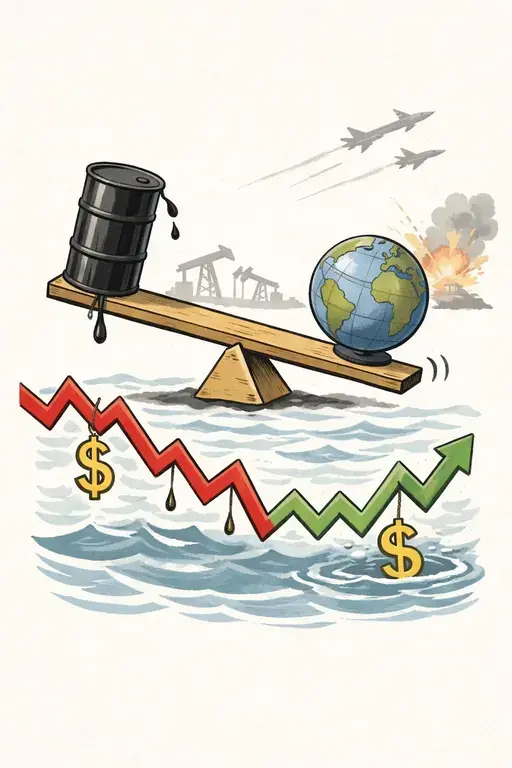
According to market data, the benchmark UAE Murban crude grade fell to around $66.40 per barrel, almost $6 below pre-conflict levels, making Gulf supplies significantly more attractive for refiners able to process a wider range of crude grades.
For Dangote Refinery, the transaction is about more than securing two cargoes. It reflects an increasingly sophisticated commercial strategy—and could reshape the debate over government support for Nigeria’s largest industrial investment.
From a Nigerian Refinery to a Global Merchant Refiner
Since commencing operations, Dangote Refinery has relied predominantly on Nigerian crude, supplemented by imports from the United States, Angola, Ghana, Libya and Guyana.
According to S&P Global Commodities at Sea data, around 70% of the refinery’s crude requirements in 2025 came from Nigeria, while approximately 24% originated from the United States.
The UAE cargoes represent the refinery’s first purchases from the Middle East and reinforce comments by CEO David Bird that Dangote intends to transform the facility into a fully fledged merchant refinery capable of processing a much broader range of crude grades.
Rather than depending primarily on Nigerian crude, the refinery increasingly appears set to source whichever grades offer the best combination of price, quality and refining margins.
That is the business model employed by leading refiners in India, Singapore and South Korea, where crude is treated as a globally traded input rather than a domestically sourced commodity.
Why Cheaper UAE Crude Matters
Middle Eastern producers generally offer heavier and more sulphurous crude grades than Nigeria’s light sweet crudes.
While these crudes require more complex refining equipment, sophisticated refineries like Dangote’s can process them efficiently and often purchase them at a discount.
Lower feedstock costs directly improve refining margins.
For a refinery increasingly targeting export markets across West Africa and beyond, cheaper crude can translate into more competitively priced petrol, diesel, aviation fuel and other refined products.
In other words, access to lower-cost Gulf crude could strengthen Dangote’s ability to compete internationally while supporting Nigeria’s ambition of becoming a major exporter of refined petroleum products rather than crude oil.
A New Dimension to the Naira-for-Crude Debate
The UAE purchases also intersect with one of Nigeria’s most contentious energy policy debates.
Under the Federal Government’s naira-for-crude arrangement with the Nigerian National Petroleum Company Limited, Dangote purchases a substantial portion of its crude from Nigeria in naira rather than US dollars.
The policy was introduced to support domestic refining, reduce pressure on foreign exchange demand, improve fuel security and lower the country’s dependence on imported petroleum products.
At the same time, Dangote has consistently argued that locally refined products should not be disadvantaged by imported fuels sold below economic value or through practices it regards as unfair competition.
Supporters of these policies argue they are entirely consistent with how countries build strategic industries. Nearly every major refining hub has, at different stages of development, benefited from government policies that encourage domestic value addition, strengthen energy security and create industrial scale.
But Success Changes the Policy Conversation
The UAE crude purchases nevertheless introduce a more complex question.
If Dangote Refinery can increasingly source whichever crude is cheapest anywhere in the world, while simultaneously seeking preferential access to Nigerian crude priced in naira and advocating protection from imported fuels, policymakers may eventually need to reassess how those various forms of support fit together.
The issue is not whether domestic refining deserves policy support. Few dispute its strategic importance.
Rather, the question is whether the policy framework should evolve as Dangote itself evolves from a nationally focused refinery into a globally competitive commercial enterprise.
Some analysts argue that continued support remains justified because the refinery generates substantial benefits for Nigeria through import substitution, export earnings, employment, tax revenues and reduced demand for foreign exchange.
Others contend that as the refinery becomes more integrated into international crude and refined product markets, government support should increasingly be calibrated to maximise economy-wide benefits while maintaining competitive neutrality across the downstream sector.
Nigeria’s Bigger Challenge Remains Crude Production
Ironically, the UAE purchases also underscore Nigeria’s continuing upstream challenge. Although Nigeria remains Africa’s largest oil producer, the country’s crude production has frequently struggled to meet domestic refining requirements alongside export commitments.
Dangote executives have previously cited inconsistent availability of Nigerian crude and operational issues at export terminals as reasons for broadening the refinery’s supplier base.
That challenge is likely to become even more significant if Dangote proceeds with plans to expand refining capacity to 1.3–1.4 million barrels per day later this decade.
At that scale, the refinery would require volumes approaching most of Nigeria’s current crude production, making international sourcing an increasingly important component of its feedstock strategy.
A New Phase for Nigeria’s Refining Industry
Dangote’s first purchases of UAE crude therefore represent more than a routine trading decision.
They signal the emergence of a refinery operating according to global commercial logic—buying crude where economics are strongest, blending multiple grades and competing internationally on refining margins rather than relying exclusively on domestic supply.

That evolution could ultimately strengthen Nigeria’s position as an exporter of refined fuels.
It may also prompt policymakers to revisit how best to balance industrial policy, energy security, market competition and national economic interests as Africa’s largest refinery matures into one of the world’s most important independent refining businesses.