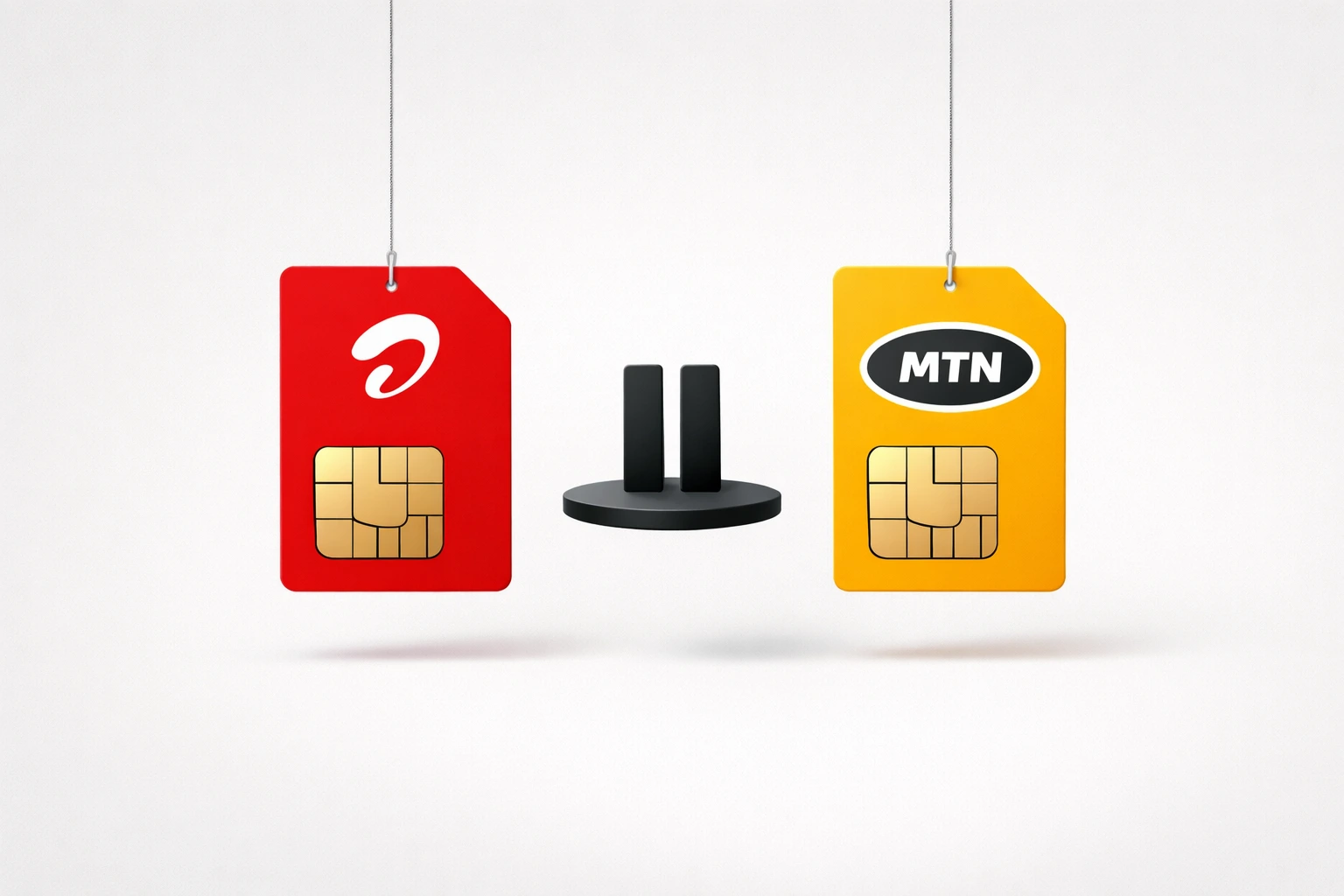
Airtel Nigeria has announced the temporary suspension of its airtime and data credit services, becoming the second major telecom operator after MTN to suspend such services.
The company disclosed this in a statement signed by its Director of Corporate Communications and CSR, Femi Adesina, issued on Friday, noting that the affected services previously allowed eligible prepaid subscribers to borrow airtime or data and repay on their next recharge.
The suspension comes a day after MTN Nigeria Communications Plc announced a similar move, citing the implementation of processes required under the Digital, Electronic, Online or Non-Traditional Consumer Lending Regulations, 2025.
The company also stated that the development is not expected to materially affect service standards across the country.
Commenting on the decision, Airtel Nigeria Director of Marketing, Ismail Adeshina, said the move was aimed at ensuring regulatory compliance.
“This is a necessary and responsible step as we align our operations with evolving requirements. Airtel Nigeria remains committed to the highest standards of compliance, transparency, and consumer protection, while continuing to innovate responsibly within Nigeria’s digital ecosystem,” he said.
Digital, Electronic, Online or Non-Traditional Consumer Lending Regulations, 2025
The 2025 framework issued by the Federal Competition and Consumer Protection Commission establishes a licensing and conduct regime for all digital consumer lending activities in Nigeria, regardless of sector.
At its core, the Regulations:
Mandate FCCPC approval before any entity can offer digital credit
Require full disclosure of pricing (interest, fees, penalties)
Prohibit abusive debt recovery practices (harassment, public shaming)
Enforce data privacy protections, limiting unlawful access to user data
Impose responsible lending obligations, including affordability checks
Apply strict penalties for non-compliance (fines, delisting, shutdowns)
Scope is intentionally broad—covering any credit extended via digital or automated channels, not just fintech loan apps.
How It Relates to Telcos
The Regulations materially affect telecom operators because they increasingly function as embedded credit providers, not just connectivity providers.
1. Airtime and Data Advances = Regulated Credit
Products like:
Airtime advance (“borrow credit”)
Data lending bundles
Device financing (pay-later smartphones)
are classified as consumer lending, bringing telcos directly under FCCPC oversight.
This means a telco offering airtime credit is legally treated similarly to a digital lender.
2. Licensing and Structural Implications
Telcos must now either:
Obtain FCCPC approval directly, or
Operate through licensed lending/fintech partners
This creates a compliance layer that many telcos previously did not have to navigate.
3. Pricing Transparency Requirements
Telcos must clearly disclose:
Service fees on airtime advances
Effective interest or cost of borrowing
Repayment deductions
Opaque fee structures (common in airtime lending) are no longer permissible.
4. Data Usage Restrictions
Telcos historically have deep access to subscriber data. Under the Regulations:
Data cannot be repurposed for lending decisions without lawful basis
Access to contacts or behavioral data must comply with privacy laws
Profiling for credit scoring must be transparent and justifiable
This constrains aggressive data monetization strategies.
5. Debt Recovery and Customer Engagement
Automatic deductions (e.g., from recharge) remain allowed, but:
Harassment via SMS blasts or contact-list shaming is prohibited

Communication must meet consumer protection standards
Strategic Impact on Telcos
The Regulations effectively push telcos toward Fintech-like compliance structures, Stronger partnerships with regulated lenders and more formalized digital financial services (DFS) offerings