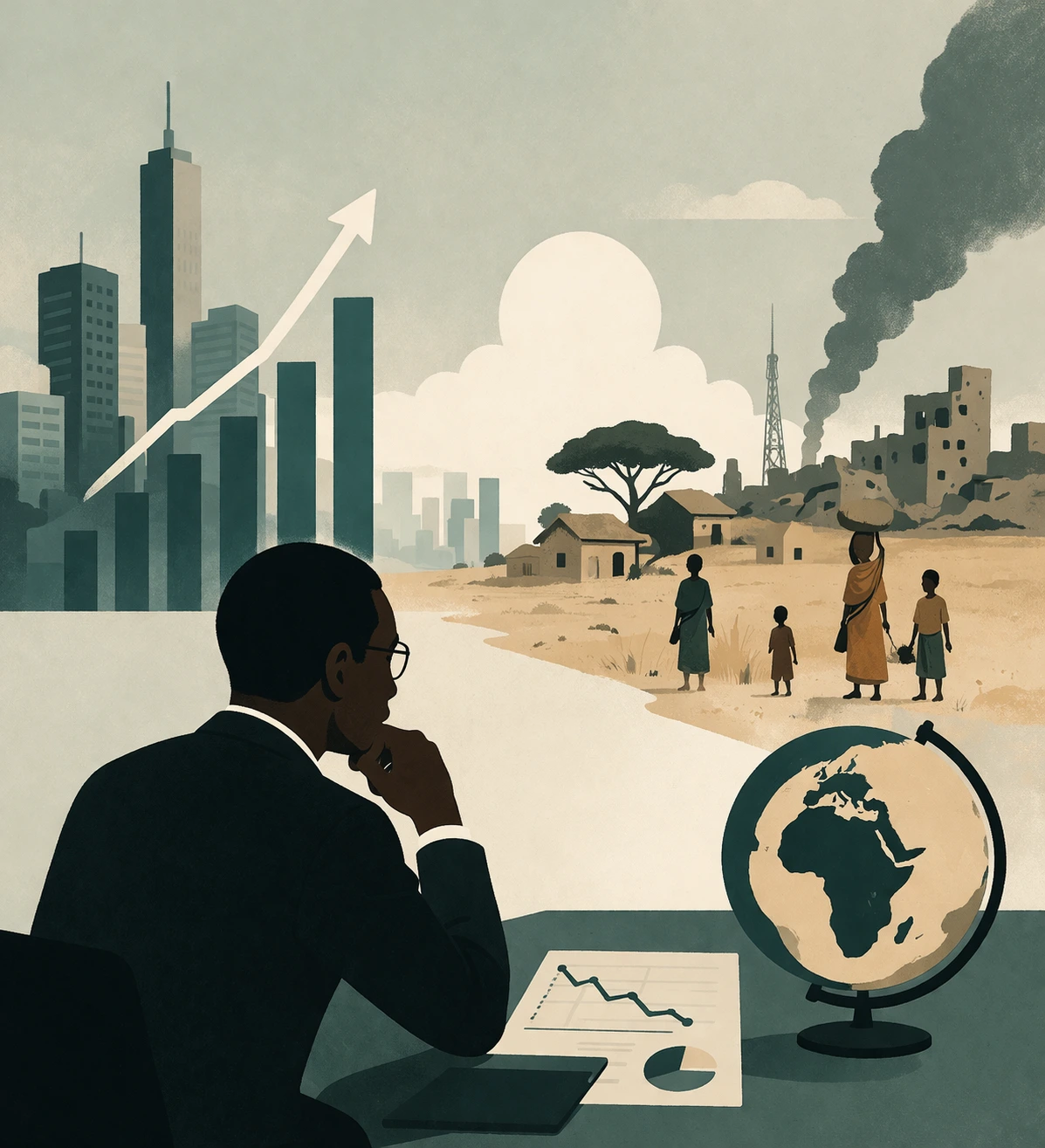
The World Bank has revised down Nigeria’s economic growth outlook while also approving a $300 million intervention to support internally displaced persons (IDPs) and host communities in the country’s conflict-affected northern region.
In its latest Africa Economic Update released in April 2026, the global lender projected that Nigeria’s economy will grow by 4.1 percent in 2026, a downgrade from its earlier estimate of 4.4 percent made in October 2025.
Growth projections for subsequent years were also adjusted, with 2027 forecast at 4.2 percent and 2028 at 4.3 percent.
Slower Growth Despite Signs of Stability
According to the report, Nigeria’s economic outlook reflects a mix of improving macroeconomic stability and lingering structural challenges.
The bank noted that sectors such as ICT, finance, and real estate are expected to remain the primary drivers of growth, while agriculture and industry may expand at a slower pace due to longstanding constraints.
Inflation, however, is projected to ease significantly—from about 23 percent in 2025 to 14.9 percent in 2026, with a further decline to 10.7 percent by 2028.
This trend is attributed to tighter monetary policies and improving supply conditions.
Despite this expected moderation in inflation, poverty levels remain high.
The World Bank cautioned that progress in reducing poverty could be gradual, especially as fuel prices rise amid ongoing tensions linked to conflicts in the Middle East.
External Risks and Policy Uncertainty
The report highlights several risks that could weigh on Nigeria’s economic trajectory, including volatile commodity prices, tightening global financial conditions, and domestic security concerns.
It also pointed to potential policy uncertainty ahead of the 2027 general elections as a factor that may dampen investor confidence.
While rising oil prices could improve Nigeria’s fiscal position and external balances, the benefits may be offset by capital flow volatility and broader global economic uncertainty.
$300 Million Boost for Northern Communities
Alongside its economic outlook, the World Bank approved $300 million in funding aimed at supporting internally displaced persons and the communities hosting them in northern Nigeria.
The intervention is expected to strengthen resilience, improve access to basic services, and support recovery efforts in areas affected by conflict and displacement.
Sub-Saharan Africa Outlook Also Revised
The report also indicates that economic growth across Sub-Saharan Africa is expected to average 4.1 percent in 2026, unchanged from 2025 but slightly lower than earlier projections.
Several major economies in the region—including Angola, Kenya, Mozambique, Nigeria, South Africa, and Zambia—saw downward revisions to their growth forecasts.
Overall, about 60 percent of countries in the region experienced declines in their 2026 projections.
Still, the World Bank noted that improved macroeconomic management—such as better inflation control, stronger currencies, and easing food and fuel prices—has helped sustain consumption and investment across the region.
However, rising geopolitical tensions, particularly in the Middle East, continue to pose risks through potential spikes in energy prices, trade disruptions, and renewed inflationary pressure.
Growth Drivers and Outlook
From a demand perspective, Nigeria’s growth in 2026 is expected to be driven largely by private consumption and investment.
Household consumption is projected to contribute 1.6 percentage points to GDP growth, while investment is expected to contribute 1.0 percentage point.

On the supply side, the services sector is forecast to account for about half of total economic growth, with finance, ICT, wholesale and retail trade, and tourism leading activity.
As Nigeria navigates a complex global and domestic landscape, the World Bank’s latest projections underscore cautious optimism—tempered by persistent vulnerabilities and the need for sustained economic reforms.