The five-year facility, arranged alongside Access Bank, is designed to refinance existing obligations, optimise the refinery’s capital structure, and align its financing with its operational phase and long-term expansion strategy.
At 650,000 barrels per day, the Dangote refinery is the largest in Africa and among the most ambitious private industrial investments ever undertaken on the continent. Since commencing operations in February 2024, it has moved from construction risk to operational execution—a transition that typically triggers a restructuring of project finance into longer-tenor, more stable debt instruments.
From Construction Financing to Balance Sheet Discipline
This refinancing marks a critical shift. During the construction phase, large-scale projects like the Dangote refinery rely on layered financing—often a mix of equity, short-term debt, and working capital facilities. As operations stabilise, the priority becomes balance sheet discipline: lowering financing costs, extending maturities, and improving liquidity.
Afreximbank’s dominant $2.5 billion participation—by far the largest in the syndicate—positions it as the anchor lender, reinforcing its role not just as a financier but as a strategic backer of African industrialisation.
The transaction also attracted a mix of African and international financial institutions, suggesting that despite Nigeria’s macroeconomic volatility, the refinery remains a bankable asset with global relevance.
Afreximbank’s Strategic Bet on Industrial Scale
For Afreximbank, the deal fits squarely within its long-standing mandate: to finance intra-African trade and reduce dependence on imports. The bank has invested approximately $15 billion in the Dangote Group since 2015, underscoring a sustained institutional conviction in indigenous industrial capacity.
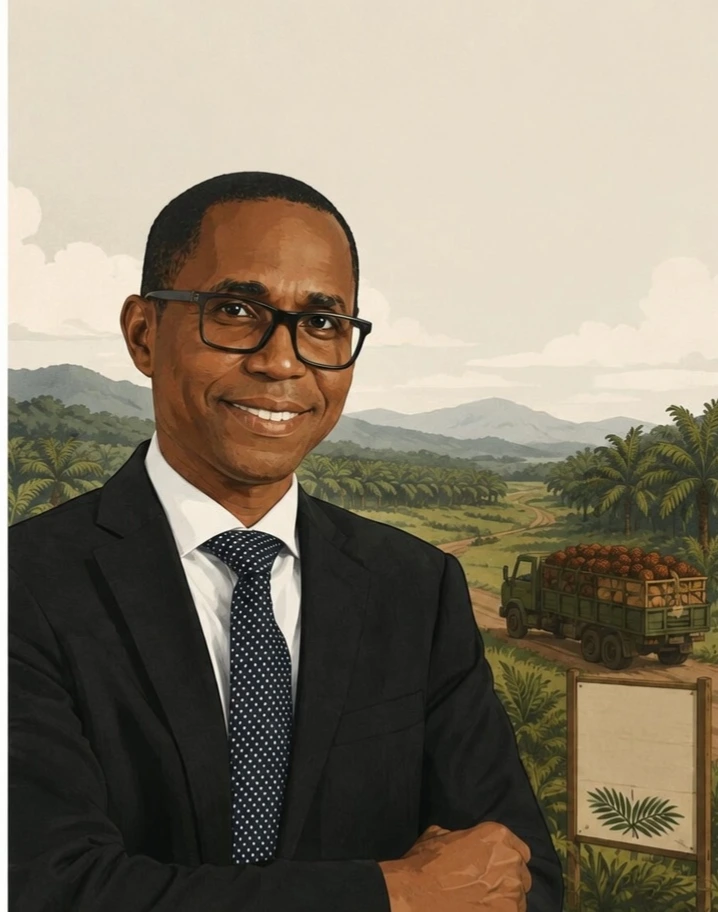
Dr. George Elombi, President of Afreximbank, framed the investment in explicitly developmental terms—arguing that backing African enterprises is central to building economic resilience and reducing reliance on external capital and supply chains.
This reflects a broader shift in African development finance thinking: away from fragmented, small-scale interventions toward large, vertically integrated industrial platforms capable of transforming entire value chains.
The Refinery’s Expanding Economic Role
The Dangote refinery is not merely a domestic project. Its scale positions it as a regional export hub for refined petroleum products, with implications for:
- Import substitution: reducing Nigeria’s long-standing dependence on imported fuel
- Foreign exchange stability: lowering demand for dollars used in fuel imports
- Intra-African trade: supplying refined products across West and Central Africa
- Industrial linkages: supporting petrochemicals, plastics, and downstream manufacturing
Afreximbank has already supported the refinery with a $1 billion working capital facility and advisory roles, including involvement in Nigeria’s “naira-for-crude” initiative—an arrangement aimed at reducing foreign currency exposure in energy transactions.
Financial Markets Signal Confidence—With Caveats
The strong subscription of the syndicated loan points to continued investor confidence. Yet the structure of the financing—and the broader context—suggests a more nuanced reading.
Large-scale refinancing of this nature is not simply about expansion; it is also about stabilisation. It reflects the need to manage debt sustainability in a high-interest-rate environment and to align financing with revenue generation cycles.
For Nigeria, the refinery remains both an economic asset and a macroeconomic variable. Its success could ease structural pressures—particularly in the foreign exchange market—but its financial performance will be closely watched, especially given the scale of capital deployed.
A Symbol of African Industrial Ambition
For Aliko Dangote, the refinancing marks another milestone in a project that has come to symbolise African industrial ambition at scale. The refinery is frequently cited as proof that African capital, expertise, and execution can deliver complex, globally competitive infrastructure.
“This financing positions the business for the next phase of its growth,” Dangote noted, emphasising the importance of a stronger financial foundation.
Yet beyond the corporate narrative lies a broader test: whether such flagship projects can catalyse wider industrial ecosystems, deepen local value chains, and ultimately translate into measurable economic transformation.